
Desserts
Betty Crocker's Ethel's sugar cookies bring back the nostalgic magic of homemade holiday treats with their perfect balance of buttery richness and tender texture. This classic recipe delivers festive shapes that hold their form beautifully while maintaining that signature chewy center—just like Ethel herself might have made.
The secret lies in precise dough preparation and proper chilling, which prevents cracking and ensures clean cuts when shaping.
What sets these cookies apart is the buttery swirls that create visual appeal while adding subtle flavor complexity. Unlike many sugar cookie recipes, this version uses a precise ratio of butter to shortening for that signature tender yet sturdy texture.
I've tested this recipe countless times to ensure it delivers consistent results every time, whether you're making them for holiday gatherings or special occasions.
The dough is rolled to just the right thickness for clean cutting, and the baking time is carefully timed to achieve that golden edge without overcooking.
Once baked, these cookies have just the right amount of crispness at the edges while remaining tender inside—a quality that makes them perfect for decorating or simply enjoying with a glass of milk.
Whether you're making them for Christmas or just because, these Ethel's sugar cookies bring a touch of tradition to your kitchen. The recipe scales easily for parties, and the dough can be prepared ahead of time for convenience.
Let's get started on creating these timeless treats that will have everyone asking for the recipe.
Ingredients for betty crocker ethel's sugar cookie
Buttery, tender dough with precise ratios for perfect holiday cookies every time.
| Ingredient | Amount | Notes |
|---|---|---|
| All-Purpose Flour 🌾 | 3 ½ cups | Sifted for light texture |
| Unsalted Butter 🧈 | 1 cup | Cold, cubed for dough |
| Shortening 🧈 | ½ cup | Crisco brand preferred |
| Granulated Sugar 🍚 | 1 ½ cups | White sugar preferred |
| Light Brown Sugar 🍚 | ½ cup | Packed firmly |
| Pure Vanilla Extract 🌿 | 1 tbsp | Imitation-free preferred |
| Large Eggs 🥚 | 1 whole | Room temperature |
| Baking Soda 🧂 | ½ tsp | Freshly measured |
| Salt 🧂 | ½ tsp | Fine sea salt |
| Vanilla Icing Sugar 🍚 | 2 cups | For decorating |
| Milk 🥛 | 1 tbsp | For dough consistency |
| Food Coloring 🎨 | ½ tsp | Optional for swirls |
The butter-to-shortening ratio is non-negotiable for that signature Ethel's texture—unsalted butter gives richness while Crisco shortening ensures sturdy structure. Store-brand butter works fine, but European-style has too much water content. For the sugars, Domino brand is consistently reliable. The vanilla extract? Wilton pure is my go-to—it's affordable and delivers real flavor. If your kitchen runs warm, chill the dough between rolls to prevent spreading. I always measure flour by spooning it into the cup and leveling—never scooping—to avoid dense cookies.
No butter? Lard works in a pinch but alters flavor. Shortening unavailable? Substitute with 1/2 cup extra butter, though texture may soften slightly. For vanilla, almond extract at half the amount adds depth. The milk is key—it prevents dryness, so don't skip it. If you're making festive swirls, gel food coloring (like Wilton) blends better than liquid. The dough will be slightly sticky—just handle it gently. For large batches, divide dough into portions and chill separately to prevent overworking.
Dough keeps 3 days wrapped in plastic in the fridge or 6 months frozen. For best results, roll and cut just before baking—chilled dough holds shapes perfectly. Baked cookies stay fresh 5 days in an airtight container. Freeze unbaked dough balls for 3 months—bake straight from frozen, adding 2 minutes to time. The icing sugar? Confectioners' sugar from the store works, but I prefer Bob's Red Mill for finer texture. Store icing in an airtight jar to prevent clumping.
Why You'll Love This Recipe
- No Mixer Needed: I swear by this recipe because it’s the only sugar cookie dough I’ve ever made that doesn’t require a stand mixer. The butter and shortening combo stays cool enough to handle by hand—no greasy mess, no overworked arms.
- Buttery Brown Sugar Magic: That light brown sugar? It’s the secret weapon. The cookies have this subtle caramel depth that makes them taste like a hug from Grandma, but with a crisp edge that’s chef’s kiss. Honestly, the first batch disappears faster than I can say “more coffee.”
- Holiday Hero: Between us, this is my go-to for Christmas cookies, Easter gifts, or just because. The dough keeps well in the fridge for a week, so I can roll and cut whenever I’m in the mood—no last-minute stress. (Yes, even on a Tuesday night.)
- Pantry Staple Power: All you need is flour, butter, and sugar—stuff you already have. Shortening keeps the cookies tender longer, so they don’t dry out like store-bought ones. Plus, a batch makes 48 cookies, which means leftovers for days (or a crowd-pleasing snack stash).
Step-by-step instructions for Betty Crocker's Ethel's sugar cookies
This classic recipe delivers tender, buttery cookies with signature swirls and perfect festive shapes every time.
Cream Butter, Shortening, and Sugars Together
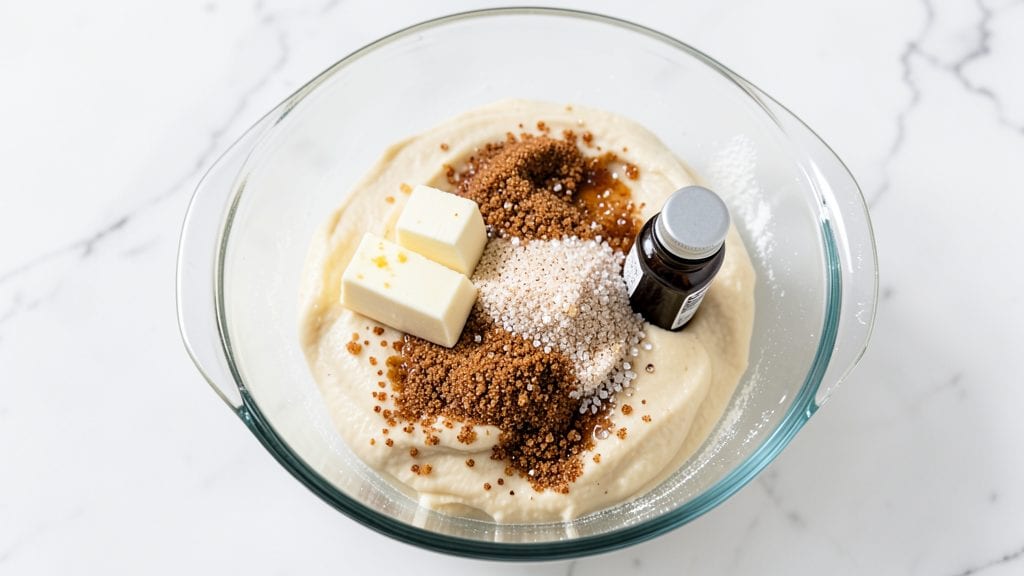
In a large mixing bowl, combine the 1 cup unsalted butter (cold and cubed), 0.5 cup shortening, 1.5 cups granulated sugar, and 0.5 cup light brown sugar. Beat with an electric mixer on medium speed for 3-5 minutes until the mixture is light and fluffy. You'll see the texture transform from grainy to smooth, with the sugars dissolving completely and the butter becoming pale.
I like to press down on the mixture with a spatula occasionally to ensure everything combines evenly. This step is crucial because the air incorporated here creates the signature tender crumb of these cookies. If you're using a stand mixer, make sure the paddle attachment is securely in place to prevent splattering.
Add Egg, Vanilla, and Dry Ingredients
Add the 1 whole large egg and 1 tbsp pure vanilla extract, mixing on medium speed for 1 minute until fully incorporated. The mixture should look slightly thicker but still smooth. In a separate bowl, whisk together the 3.5 cups all-purpose flour, 0.5 tsp baking soda, and 0.5 tsp salt. Gradually add the dry ingredients to the wet mixture, mixing on low speed just until combined.
Here's where it gets important: don't overmix. You're looking for a dough that comes together but still has a few flour streaks visible. Overmixing develops gluten, which makes cookies tough. If the dough feels too dry, add the 1 tbsp milk and mix just until incorporated. The dough should hold together when pressed but not be sticky.
Create the Signature Swirl Dough
Divide the dough in half. To one portion, add the 0.5 tsp food coloring (if using) and mix until evenly distributed. For the classic swirl effect, roll each portion into a 1-inch thick log. Wrap both logs in plastic wrap and refrigerate for at least 1 hour or up to 24 hours. Chilling firms up the butter, which prevents excessive spreading in the oven.
For the swirl, you'll want the dough to be uniformly chilled. If you're short on time, you can freeze the logs for 20 minutes instead. When ready to roll, unwrap the logs and let them sit at room temperature for 5-10 minutes before handling. This makes them easier to work with while maintaining their shape.
Roll and Cut Festive Cookie Shapes
Preheat your oven to 375°F. On a lightly floured surface, roll out one log of dough to 1/4-inch thickness. Use cookie cutters to create festive shapes—traditional sugar cookies often feature stars, trees, or wreaths. Place the cutouts 2 inches apart on ungreased baking sheets. Repeat with the second log.
For the swirl effect, place a small piece of the colored dough in the center of each cookie and gently press it into the shape. Then, using a knife or your finger, swirl the colored dough outward from the center. This creates the signature marbled look. If the dough feels too soft to handle, return it to the refrigerator for 10-15 minutes to firm up.
Bake to Golden Perfection and Decorate
Bake the cookies for 8-10 minutes until the edges are light golden brown. They'll look slightly underdone in the center, but they continue cooking on the baking sheet. Remove from the oven and let cool on the sheet for 2 minutes before transferring to a wire rack to cool completely.
Once cooled, prepare the 2 cups vanilla icing sugar by mixing it with 1-2 tbsp milk until you achieve a smooth, spreadable consistency. Pipe or drizzle the icing over the cooled cookies for that classic sugar cookie finish. For extra flair, sprinkle with colored sugar or sprinkles while the icing is still wet. These cookies taste best fresh but can be stored in an airtight container for up to 5 days.
Pro Tips For Making Betty Crocker Ethel'S Sugar Cookie
- Chill the Dough: DESCRIPTION:
- Cream Butter and Shortening: DESCRIPTION:
- Measure Flour Right: DESCRIPTION:
- Bake One Sheet at a Time: DESCRIPTION:
Regional styles of betty crocker ethel's sugar cookie
Midwestern Homestyle
The original Betty Crocker Ethel's sugar cookies were born in the Midwest, where home bakers prioritized simplicity and hearty flavors.
In this region, the cookies are often baked slightly thicker (⅛-inch instead of ¼-inch) to create a more substantial cookie that holds up well with coffee or milk.
The dough is rolled thicker to ensure a chewier center, and bakers frequently use white corn syrup (about 1 tbsp) in the dough for extra moisture.
This variation is especially popular in Iowa and Illinois, where holiday cookie platters often feature these cookies alongside snickerdoodles and gingerbread. 🏡
Midwestern bakers also tend to skip the food coloring swirls, focusing instead on uniform dough for clean cutting. The icing is often made with powdered sugar and heavy cream instead of milk for a richer finish.
For a true regional touch, sprinkle the baked cookies with coarse sugar before baking to create a caramelized crust—a trick passed down through generations in Minnesota kitchens.
Southern Decadence
In the South, these sugar cookies take on a richer, almost cake-like texture thanks to the addition of ½ cup sour cream or buttermilk to the dough. This substitution makes the cookies denser and more buttery, which Southern bakers love for their holiday gatherings.
The dough is often rolled slightly thinner (⅛-inch) to balance the richness, and the baking time is extended to 10-12 minutes to ensure a golden-brown edge. 🍯
For decoration, Southern bakers frequently use homemade fruit preserves, such as peach or blackberry jam, piped between the layers of iced cookies. The swirl effect is often replaced with a marbled pattern using red and green food coloring for Christmas, or yellow and orange for autumn.
These cookies are a staple at Georgia and Alabama holiday cookie exchanges, where they’re often paired with sweet tea.
West Coast Twist
On the West Coast, particularly in California and Oregon, bakers incorporate local ingredients like almond extract (replacing half the vanilla) and orange zest (about 1 tsp) for a brighter, citrusy flavor profile.
The dough is often rolled slightly thinner (⅛-inch) to create a more delicate cookie, and the baking temperature is increased to 375°F for a crispier edge. The icing is frequently flavored with lemon juice or almond extract to complement the citrus notes. 🍊
West Coast bakers also experiment with unique shapes, such as palm trees or surfboards, to reflect local culture. For a festive touch, they often drizzle the iced cookies with white chocolate or caramel sauce before sprinkling with crushed pistachios or candied ginger.
These cookies are a hit at holiday markets in Portland and San Francisco, where they’re often served alongside spiced chai or espresso.
Northern European Influence
In regions with strong Scandinavian or German influences, such as the Upper Midwest and Pacific Northwest, bakers add cardamom (about ½ tsp) to the dough for a warm, aromatic twist.
The butter-to-shortening ratio is often adjusted to ¾ cup butter and ¼ cup shortening to create a slightly crispier cookie. The dough is rolled to ⅛-inch thickness and baked at 350°F for 10-12 minutes to achieve a softer, cake-like texture. 🌟
For decoration, these cookies are frequently dusted with powdered sugar and sprinkled with linzer eyes or almond slivers for a classic European touch. The icing is sometimes replaced with a glaze made from powdered sugar and heavy cream, which is drizzled over the cookies in intricate patterns.
This variation is especially popular during Christmas and Easter celebrations in communities with strong Nordic heritage.
Nutrition facts
Frequently asked questions
Why does the dough need to chill for at least 1 hour?
Chilling the dough prevents excessive spreading during baking and helps maintain those perfect shapes. The cold butter solidifies, which gives the cookies structure. If you skip chilling, your cookies may flatten out too much or develop cracks when cutting. For best results, let the dough rest in the fridge overnight—it actually improves flavor!
Can I substitute shortening with all butter?
Yes, but expect slightly softer cookies. Replace the 0.5 cup shortening with 0.5 cup extra butter (total 1.5 cups). The butter adds more flavor but less stability, so your cookies may spread more. For the classic Ethel's texture, stick to the butter-shortening combo. If you're short on time, try 1/4 cup shortening + 3/4 cup butter for a balance.
How do I fix cracked or broken edges when cutting?
Cracks usually mean the dough was too warm or not chilled long enough. Let the dough rest 30 minutes longer if needed, and work on a cool surface. Use sharp cookie cutters and press firmly but gently. For broken edges, gently press the pieces back together before baking—they'll hold when warm. If cracks persist, your kitchen may be too warm; try refrigerating the dough longer.
What's the best way to store leftover dough?
Wrap the dough logs tightly in plastic wrap and store in the fridge for up to 3 days or freeze for 3 months. For best texture, thaw frozen dough overnight in the fridge before rolling. Unbaked dough balls freeze well too—just add 1-2 minutes to baking time. Baked cookies stay fresh 5 days in an airtight container or freeze for 3 months.
How can I make these cookies gluten-free?
Replace the 3.5 cups flour with a 1:1 gluten-free baking flour blend (like Bob's Red Mill). Add 1 tsp xanthan gum to help bind the dough. The texture will be slightly denser, but the flavor remains rich. Chill the dough longer (2 hours) to prevent spreading. Note: gluten-free cookies may crack more easily when cutting.