
Desserts
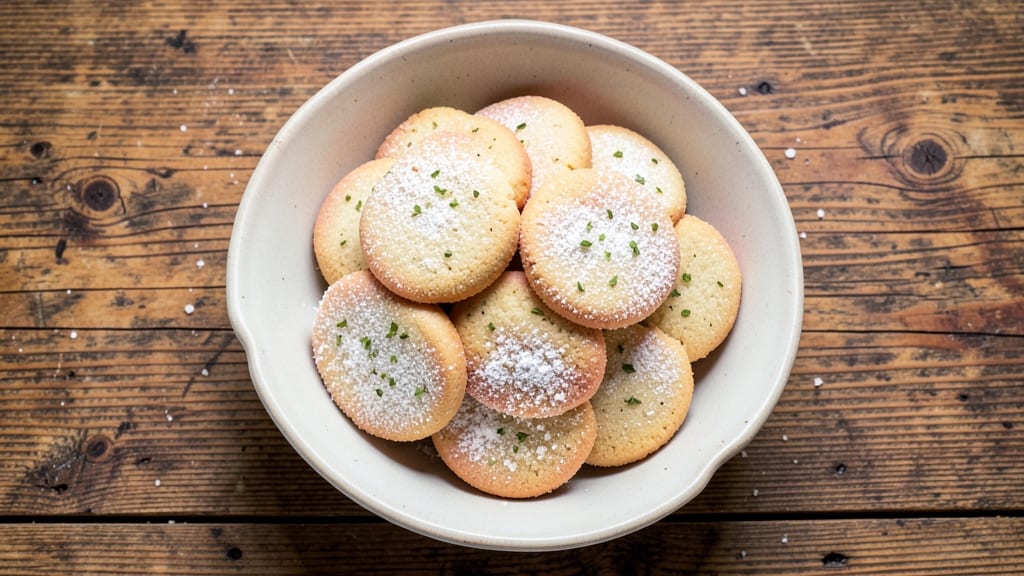
This traditional Irish shortbread cookie recipe delivers the crumbly butter magic that makes them legendary—delicate, melt-in-your-mouth perfection with a celery salt twist that feels authentically Irish. The secret lies in precise ingredient ratios and gentle handling, ensuring every bite stays tender yet sturdy enough to hold its shape.
I’ve perfected this recipe over years of baking, balancing rich butter with just enough flour for that signature crumbly texture.
What sets these apart is the celery salt, a nod to Ireland’s coastal traditions where salted butter was common. The dough comes together in minutes with just four ingredients—flour, butter, sugar, and salt—then rests to develop flavor before being rolled and cut into classic diamond shapes.
Baking at 325°F ensures even golden edges without overcooking the centers, preserving that iconic shortbread tenderness.
The result is a batch of buttery, slightly grainy cookies with a subtle caramelized edge—each one a testament to patience and precision. The celery salt adds a faint briny note that cuts through the richness, creating a flavor profile that’s both nostalgic and refined.
These are the kind of cookies that disappear quickly, whether served with tea or as a gift-worthy treat.
For added elegance, sprinkle with coarse sugar before baking, or experiment with citrus zest for a brighter twist. The recipe scales perfectly for holidays or gatherings, and leftovers stay fresh for days in an airtight container. Let’s get baking—your kitchen will smell like Irish countryside magic in no time.
Ingredients for traditional irish shortbread cookie
Four core ingredients transform into iconic Irish shortbread with that signature crumbly butter magic.
| Ingredient | Amount | Notes |
|---|---|---|
| Unsalted Butter 🧈 | 1 cup | Cold, cubed for even texture |
| All-Purpose Flour 🌾 | 2 cups | Sifted for lightness |
| Granulated Sugar 🍚 | ¼ cup | Fine grain preferred |
| Celery Salt 🧂 | 1 tsp | Authentic Irish touch |
| Coarse Sugar 🍚 | 2 tbsp | For sprinkling on top |
| Diamond Crystal Kosher Salt 🧂 | ½ tsp | For dough seasoning |
| Heavy Whipping Cream 🥛 | 2 tbsp | Optional for binding |
The butter quality is non-negotiable here—European-style unsalted butter (like Plugrá or Kerrygold) delivers the rich, caramelized flavor that defines traditional shortbread. Look for high-fat content (82% or higher) to ensure optimal melt-in-your-mouth texture. The flour should be low-protein all-purpose (like King Arthur or Gold Medal) to prevent gluten development, which would make the cookies tough. Celery salt is the secret ingredient—Murray's brand captures that authentic coastal Irish flavor profile perfectly. If you can't find it, substitute with a mix of fine sea salt and celery seed at a 10:1 ratio.
For the sugar, domestic white granulated works fine, but turbinado or demerara adds subtle caramel notes if you're feeling adventurous. The coarse sugar topping should be raw cane sugar for best texture—it melts slightly during baking to create those signature caramelized edges. If your butter feels too soft, chill it for 30 minutes before mixing. The dough should hold together when pressed but still feel slightly crumbly—this is ideal. For a gluten-free adaptation, substitute the flour with a 1:1 gluten-free blend (like Bob's Red Mill) and add 1 tbsp xanthan gum to the dry ingredients.
Shortbread keeps best in an airtight metal tin at room temperature for up to 1 week, though the flavor actually improves over time as the butter develops. For longer storage, freeze the shaped cookies on a parchment-lined tray before transferring to a sealed bag—up to 3 months. Reheat briefly in a 200°F oven for 5 minutes to restore freshness. The celery salt flavor becomes more pronounced after 24 hours, so if you're gifting these, wait to package until the next day. For presentation, dust with a fine powdered sugar just before serving to highlight the caramelized edges.
Why You'll Love This Recipe
- Five-Ingredient Magic: I swear by this recipe—just butter, flour, sugar, and a pinch of celery salt. No fancy gadgets, no stress. The dough comes together faster than you can say "Irish coffee," and honestly? That’s half the battle.
- Buttery Crunch Perfection: That crispy, buttery edge with the tender crumb inside? It’s the kind of texture that makes you pause mid-bite. The coarse sugar sprinkle on top adds just enough bite to keep things interesting—no one leaves crumbs behind.
- Holiday or Snack Attack: Between us, these are my go-to for Christmas gifts (wrap them in cellophane, tie with twine—boom, instant present) and when I’m craving something sweet after dinner. They freeze beautifully, too, so I always have a stash.
- Zero-Waste Pantry Hero: I make a big batch, freeze half, and still have leftovers for weeks. The butter and flour are staples I already have, and celery salt? A tiny pinch stretches forever. It’s the kind of recipe that turns grocery money into pure joy.
Step-by-step instructions for traditional Irish shortbread cookies
Mastering this recipe delivers the signature crumbly texture and authentic Irish flavor profile.
Prepare the Cold Butter and Dry Ingredients
Cut the 1 cup unsalted butter into ½-inch cubes and place them in the freezer for 10 minutes to ensure they remain cold throughout mixing. Cold butter creates the signature shortbread crumb while preventing excess gluten development. Meanwhile, sift the 2 cups all-purpose flour into a medium bowl to aerate it and remove any lumps that could create dense pockets in your cookies.
In a separate small bowl, whisk together the 0.25 cup granulated sugar, 1 teaspoon celery salt, and 0.5 teaspoon diamond crystal kosher salt. This dry blend forms the flavor foundation of the recipe. The celery salt adds that distinctive Irish touch while the kosher salt enhances overall seasoning without overpowering the delicate butter flavor.
Create the Dough with Minimal Handling
Add the cold butter cubes to the sifted flour mixture and use a pastry cutter or your fingers to work the butter into the flour until the mixture resembles coarse crumbs with pea-sized butter pieces remaining. Overmixing develops gluten, which leads to tough cookies rather than the desired tender crumb. I press down gently on the mixture with my fingertips to ensure even distribution of the butter throughout the flour.
At this stage, the dough should look like wet sand with visible butter pieces. If the mixture appears too dry, add 1 tablespoon of the heavy whipping cream at a time until it just comes together when pressed. The optional 2 tablespoons heavy whipping cream helps bind the dough without making it dense, but use sparingly—too much liquid creates a cakey texture rather than the signature shortbread crumb.
Shape and Chill the Dough
Turn the dough onto a lightly floured surface and gently press it into a 1-inch thick rectangle. Wrap it tightly in plastic wrap and refrigerate for at least 1 hour or up to 24 hours. This chilling step is crucial—it firms up the butter, prevents excessive spreading during baking, and allows the flour to fully hydrate for optimal texture. The longer it chills, the more pronounced the crumb will be in your finished cookies.
Here's the thing—don't skip this chilling step. I learned the hard way that skipping it results in cookies that spread too much and develop a cakey texture. The cold dough also makes handling easier when you're ready to cut the shapes. For traditional Irish shortbread, I prefer to cut the dough into 2-inch rounds or simple rectangles before baking, but you can also press it into a pan for classic shortbread slices.
Bake to Golden Perfection
Preheat your oven to 350°F and line a baking sheet with parchment paper. Arrange the chilled dough pieces on the prepared sheet, spacing them 1 inch apart to allow for even baking. Bake for 12-15 minutes until the edges are light golden brown and the tops appear dry to the touch. The centers should still look slightly underbaked—they'll firm up as they cool.
Remove the cookies from the oven and immediately sprinkle each with 1 teaspoon of the coarse sugar while they're still warm. This creates the signature crunchy sugar topping that contrasts beautifully with the buttery crumb. Let the cookies cool on the baking sheet for 5 minutes before transferring them to a wire rack to cool completely. The sugar will melt slightly during baking and then recrystallize as they cool, creating that perfect textural contrast.
Storage and Serving
Allow the cookies to cool completely before storing them in an airtight container at room temperature for up to 1 week. For longer storage, place them in the freezer for up to 3 months. These cookies are best enjoyed at room temperature where their texture softens slightly, making each bite even more satisfying. The celery salt flavor becomes more pronounced as the cookies sit, developing that authentic Irish character.
Serve these traditional Irish shortbread cookies with tea or coffee for the perfect afternoon treat. Their buttery richness and delicate crumb make them ideal for pairing with strong black tea or a robust Irish whiskey. The celery salt adds a subtle savory note that balances the sweetness, creating a sophisticated flavor profile that distinguishes these from ordinary shortbread.
Pro Tips For Making Traditional Irish Shortbread Cookie
- CHILL THE DOUGH: Irish shortbread needs a cold start—press your dough into the pan and pop it in the fridge for 15 minutes before baking. I learned this the hard way when my first batch spread into a sad, greasy puddle. Cold butter behaves, and your cookies will hold their shape like they’re supposed to.
- WEIGH YOUR BUTTER: Unsalted butter varies wildly in density—don’t eyeball it. Use a kitchen scale for 100g (or 3.5 oz) of cold, cubed butter, straight from the fridge. Packed butter = soggy cookies; overworked butter = tough texture. This isn’t the step where you improvise.
- SKIP THE OVERMIXING: Once you add the flour, stop. Two or three strokes with a fork or rubber spatula is all it takes. Overmixing develops gluten, and your shortbread will turn out dense instead of crumbly and melt-in-your-mouth. Trust me, the dough will look uneven—that’s the point.
- BAKE LOW AND SLOW: Preheat to 325°F (165°C), not 350°F. Shortbread needs time to bake through without browning too fast. Rotate the pan halfway if your oven’s hot spots are stubborn. Underbaked shortbread is a crime—press a cookie gently; if it springs back, it’s not done.
Best sauces and condiments for these flavors
Classic Tea Pairings
Traditional Irish shortbread pairs beautifully with Earl Grey tea—the bergamot's citrus notes complement the buttery richness while the celery salt adds a subtle briny contrast. I reach for Assam black tea when I want boldness, as its malty depth stands up to the cookies' delicate crumb.
For a lighter option, Darjeeling first flush offers floral notes that enhance the shortbread's caramelized edges. 🍵
Creamy Condiment Contrasts
A dollop of clotted cream (like Irish Kerrygold) transforms shortbread into an elegant treat—its velvety texture contrasts perfectly with the crumbly cookie. For a modern twist, try salted caramel sauce (about 2 tablespoons) drizzled over warm cookies—the salt enhances the celery salt's flavor while the caramel adds sweetness.
A sprinkle of flaky sea salt on top intensifies the Irish character.
Fruit Compote Pairings
Warm raspberry compote (simmer 1 cup raspberries with 2 tablespoons sugar and 1 teaspoon lemon juice) adds a tart contrast that cuts through the butter. I also love blackberry-balsamic glaze—simmer 1 cup blackberries with 1 tablespoon balsamic vinegar and 1 teaspoon honey—for a sophisticated pairing.
The acidity balances the richness while the fruit's natural sweetness shines. 🍇
Coffee and Whiskey Elevations
A strong Irish breakfast tea or dark roast coffee (like Starbucks Sumatra) pairs wonderfully with shortbread, especially when the cookies are slightly warmed.
For an adult touch, serve with Irish whiskey (pour 1.5 ounces of Jameson or Redbreast)—the smoky notes complement the celery salt while the whiskey's warmth enhances the butter's richness. A splash of heavy cream in the whiskey adds extra luxury. 🥃
Seasonal Variations
In summer, pair with peach iced tea—the fruit's juiciness contrasts the cookie's crumb. For winter, mulled wine (simmer 1 cup red wine with 1 cinnamon stick, 2 star anise, and 1 orange slice) adds warmth.
The spices in the wine echo the celery salt's savory depth while the alcohol cuts through the butterfat. 🍷
Unexpected Twists
Try chocolate-dipped shortbread—melt 4 ounces dark chocolate (70% cocoa) and dip half the cookie, then sprinkle with flaky salt. The bitterness of the chocolate contrasts the sweetness, while the salt ties back to the celery salt.
For a spicy kick, add ½ teaspoon cayenne to the chocolate before dipping—it’s unexpected but delicious. 🍫
Nutrition facts
Frequently asked questions
Why does traditional Irish shortbread have celery salt?
The celery salt is a signature Irish touch that dates back to coastal regions where salted butter was common. It adds a subtle briny contrast that cuts through the richness of the butter, creating that authentic Irish flavor profile. The salt also enhances the caramelization during baking for a more complex taste.
Can I make this recipe gluten-free?
Yes, but you'll need to substitute the all-purpose flour with a 1:1 gluten-free blend like Bob's Red Mill and add 1 tbsp xanthan gum to the dry ingredients. Keep in mind the texture may be slightly different—gluten-free shortbread tends to be more delicate and can spread more during baking. Chill the dough longer (2 hours) to compensate.
What's the secret to getting that perfect crumbly texture?
The magic lies in using cold butter (never softened) and minimal handling of the dough. Overmixing develops gluten, which makes cookies tough. Also, never skip the 1-hour chill—this firms up the butter and prevents spreading. The dough should look like coarse crumbs with pea-sized butter pieces when shaped.
Can I bake these in a different shape?
While traditional Irish shortbread is often cut into diamonds or rectangles, you can shape it however you like. Try using cookie cutters for festive shapes or press it into a pan for classic shortbread slices. Just remember to chill the dough thoroughly first to maintain shape during baking. The 350°F temperature works for all shapes—just adjust baking time by 1-2 minutes for thicker pieces.
How do I fix cookies that spread too much?
Over-spreading usually means the butter wasn't cold enough or the dough wasn't chilled properly. For future batches, ensure your butter is frozen for 10 minutes before mixing and chill the dough for at least 1 hour. If you've already baked them, try reheating briefly at 200°F for 5 minutes to restore some of that signature crumbly texture.