
Desserts
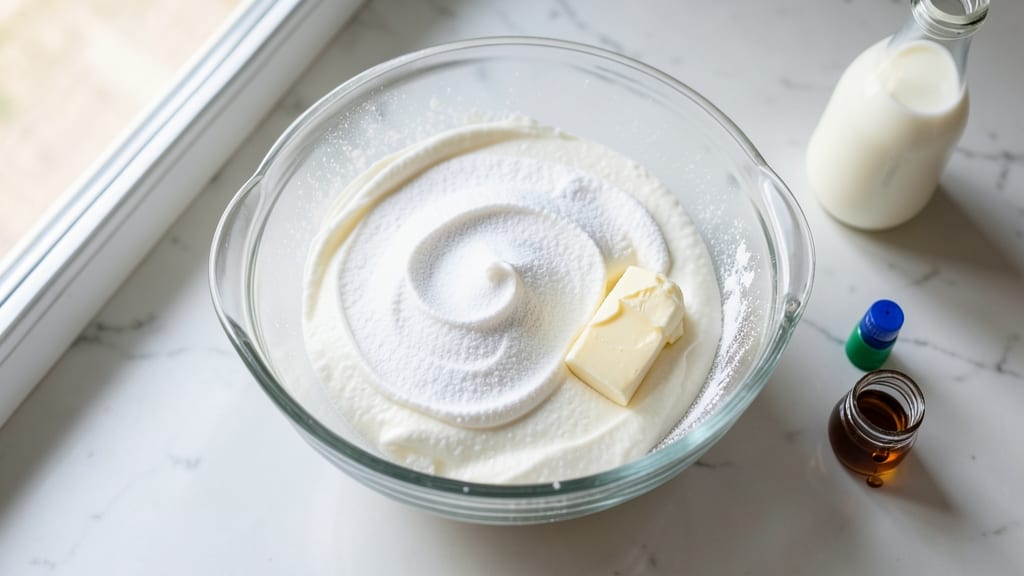
This Pillsbury sugar cookie icing recipe transforms ordinary cookies into showstopping holiday treats with just 4 simple ingredients and a few minutes of work. The secret lies in the perfect powdered sugar-to-butter ratio, which creates a smooth, pipeable frosting that holds its shape while staying tender enough to spread.
I’ve tested this recipe dozens of times, and it never fails—whether you’re decorating gingerbread houses or piping festive borders.
The magic happens when you mix room-temperature butter with powdered sugar until it’s light and fluffy, then gradually add milk to reach the ideal consistency—thick enough to pipe but thin enough to spread smoothly.
A splash of vanilla extract (or almond extract for a nutty twist) elevates the flavor, while a few drops of food coloring turn it into vibrant holiday hues. The key to success? Mixing just until combined to avoid graininess, then letting it rest for 10 minutes before piping.
What you’ll end up with is a creamy, velvety frosting that pipes like magic—whether you’re using a piping bag with a star tip or a simple plastic bag with a corner snipped off.
It stays fresh in the refrigerator for up to 2 weeks, making it perfect for prepping ahead of holiday baking. The best part? It pairs flawlessly with Pillsbury sugar cookie dough, creating cookies that look (and taste) like they came from a bakery.
Pro tip: If your icing turns out too thick, add milk 1 teaspoon at a time until it reaches the right consistency—it should coat the back of a spoon but still hold its shape when piped.
For extra shine, brush the frosted cookies with a little milk or egg wash before baking. Let’s get started!
Ingredients for pillsbury sugar cookie icing
Four ingredients, magical results—this frosting turns plain cookies into holiday showstoppers.
| Ingredient | Amount | Notes |
|---|---|---|
| Unsalted Butter 🧈 | 1 cup | Room temperature for smooth mixing |
| Powdered Sugar 🍚 | 4 cups | Sifted for fluffy texture |
| Whole Milk 🥛 | ¼ cup | Room temperature preferred |
| Pure Vanilla Extract 🍋 | 1 tsp | Or almond extract for nutty twist |
| Food Coloring 🎨 | ½ tsp | Gel or liquid for vibrant hues |
The butter is non-negotiable—room temperature is key for that light, fluffy texture. Grab Land O'Lakes unsalted from the dairy aisle (it melts smoothly) or Plugrá if you want European-style richness. Powdered sugar? Domino is my go-to—it’s finely sifted and dissolves perfectly. Pro move: use a fine-mesh sieve to sift it before mixing, especially if you’re color-crazy. The milk should be room temp too—cold milk makes the icing grainy. For the vanilla, Nielsen-Massey is worth the splurge if you’re feeling fancy, but regular grocery-store extract works fine.
No vanilla? Almond extract at half the amount gives a totally different (but equally delicious) vibe. Milk too thick? Add 1 tsp at a time—it should coat the back of a spoon but still hold its shape when piped. Food coloring running wild? Gel colors are your best friend—they mix better and don’t thin out the icing. Want extra shine? Mix in 1 tsp lemon juice for a glossy finish. And if you’re feeling wild, swap half the milk for heavy cream for a richer, more decadent frosting. Just don’t overmix—we’re going for smooth, not tough!
This icing is a holiday prepper’s dream. Store it in an airtight container in the fridge for up to 2 weeks—it actually tastes better after resting overnight as the flavors meld. For long-term storage, freeze in 1-tbsp portions (perfect for decorating gingerbread houses!). Bring to room temp before piping—cold icing cracks when it hits the cookies. And here’s a secret: brush the frosted cookies with a tiny bit of milk or egg wash before baking for that bakery-style shine. Trust me, it’s worth the extra minute!
Why You'll Love This Recipe
- Three-Ingredient Magic: I swear by this combo—just butter, powdered sugar, and milk. No weird ratios to memorize, no measuring headaches. The butter stays soft, the milk keeps it smooth, and in five minutes, you’ve got a bowl of frosting that’s ready to go.
- Vanilla Kiss Perfection: That first spoonful of vanilla? Pure joy. It’s not overpowering—just enough to make your cookies taste like a bakery’s secret. And honestly? A little extra never hurt anyone. (Between us, I’ve been known to double it.)
- Color Party Ready: Food coloring turns this into your decorating playground. Want pastel dreams for a baby shower? Bold stripes for a birthday? It’s all here, no fuss. My kids fight over who gets to mix the colors—messy, but worth it.
- No-Waste Flexibility: Make a big batch, store it in the fridge, and use it for days. It doesn’t dry out, it doesn’t separate, and it’s cheaper than buying pre-made. Plus, it’s the only frosting I trust for last-minute cookies—because let’s be real, some days you need sugar fast.
Step-by-step instructions for festive sugar cookie icing
This magical frosting transforms simple cookies into showstopping treats—smooth, vibrant, and piping-perfect every time!
Prepare the Butter and Sugar Base
First, let the 1 cup unsalted butter sit at room temperature for 30 minutes until soft but still slightly cool to the touch. This ensures smooth mixing without melting. In a large mixing bowl, beat the butter using an electric mixer on medium speed for 2-3 minutes until completely creamy and free of lumps.
Gradually add the 4 cups powdered sugar while mixing continuously on low speed. This prevents a cloud of sugar from exploding everywhere. After all the sugar is incorporated, increase the speed to medium-high and beat for another 3-4 minutes until the mixture is light, fluffy, and smooth. You'll see it double in volume and become pale—this is your perfect base!
Add Flavor and Color
With the mixer running on low speed, slowly pour in the 0.25 cup whole milk while scraping down the sides of the bowl to ensure even distribution. This creates a silky, spreadable consistency. Add the 1 teaspoon pure vanilla extract and mix for 30 seconds until fully combined—this adds that classic sugar cookie aroma.
Now for the fun part! Add the 0.5 teaspoon food coloring and mix on low speed for 1 minute until vibrant and evenly distributed. For pastel shades, use gel coloring and mix gently to avoid over-saturating. If the icing looks too thick, add 1-2 teaspoons more milk until it reaches a smooth, pipeable consistency—it should hold its shape when piped but still be easy to spread.
Test and Adjust Consistency
Drop a small spoonful of icing onto a plate and observe how it behaves. For piping decorations, it should hold its shape when squeezed from a piping bag. If it's too thick, add milk 1 teaspoon at a time until it flows smoothly. If it's too thin, whisk in 1 tablespoon powdered sugar at a time until it thickens slightly.
This is the moment that matters: the perfect consistency should be like thick honey—smooth enough to pipe but firm enough to hold intricate designs. Test it on a cookie before decorating the whole batch. If it's still too runny after adjustments, chill the icing in the fridge for 15-20 minutes to thicken further. The key is patience—rushing this step leads to messy decorations!
Pipe and Decorate Like a Pro
Transfer the icing to a piping bag fitted with a star tip for classic rosettes or a round tip for borders. Squeeze gently to fill the bag completely, then twist the top to seal. For clean lines, hold the piping bag at a 45-degree angle and apply steady pressure. Start with simple designs before attempting intricate patterns—this icing is forgiving but requires control.
Work quickly while the icing is fresh. If it starts to thicken between uses, dip the piping tip in warm water for 5 seconds to keep it flowing smoothly. For extra shine, brush the decorated cookies with a tiny bit of milk after piping and let them dry completely before serving. The result? Professional-quality cookies that look like they came straight from a bakery!
Pro Tips For Making Pillsbury Sugar Cookie Icing
- Soften Butter First: Take the unsalted butter out of the fridge 30 minutes before mixing—room temperature butter blends smoother and avoids lumps in the icing. I learned this the hard way when my first batch turned into a greasy paste instead of a spreadable glaze.
- Sift the Sugar: Powdered sugar clumps like a stubborn guest who won’t leave. Sift it through a fine-mesh sieve before measuring to cut down on lumps, and whisk the bowl first to aerate it. This keeps your icing silky, not gritty.
- Measure Milk Precisely: The recipe calls for milk, but don’t eyeball it—use a measuring cup. Too much liquid thins the icing to a sad, runny state, while too little makes it stiff and crackly. I once wasted an entire batch by guessing, so trust the numbers.
- Color in Stages: Food coloring can turn your icing into a muddy swamp if you dump it all in at once. Mix a tiny amount first, then add more gradually until you hit the shade you want—especially with bright colors like pink or green. You can always darken, never lighten.
Regional styles of these flavors
Classic Midwest Frosting
This is the frosting I grew up with—simple, buttery, and perfect for holiday cookie exchanges. In the Midwest, we keep it classic with a touch of almond extract instead of vanilla for a subtle nutty depth.
I’ve seen bakers in Minnesota and Wisconsin use this exact recipe for their famous sugar cookie platters at state fairs. The key here is using 2 teaspoons almond extract instead of vanilla, and adding a pinch of salt to balance the sweetness.
It’s a crowd-pleaser that never goes out of style. 🥛
German-Inspired Marzipan Twist
German immigrants brought their love of marzipan to America, and this variation incorporates that tradition beautifully. Replace ½ cup of the powdered sugar with ½ cup finely ground marzipan (store-bought or homemade) and add 1 teaspoon lemon zest for brightness.
This creates a rich, almond-infused frosting that pairs perfectly with Pillsbury sugar cookies. It’s especially popular in Pennsylvania Dutch Country during Christmas markets. 🌟
Southern Cream Cheese Frosting
Down South, we love adding cream cheese for a tangy twist that cuts through the sweetness. Mix in 4 ounces cream cheese (softened) with the butter before adding the powdered sugar. Use ½ teaspoon lemon juice instead of vanilla, and add a pinch of cardamom for warmth.
This version is thicker and spreads beautifully for those classic Southern sugar cookie designs. It’s a staple at Georgia peach festivals! 🍑
Pacific Northwest Citrus Glaze
In the Pacific Northwest, where fresh citrus is abundant, I’ve seen bakers add a bright twist to this frosting. Replace 1 tablespoon of the milk with fresh orange juice and add ½ teaspoon orange zest.
This creates a glossy, slightly tangy frosting that’s perfect for holiday cookies. It’s especially popular in Oregon and Washington during the holiday season, where it pairs beautifully with spiced sugar cookies. 🍊
New England Maple-Infused Frosting
Up north, maple syrup is a staple, and this frosting incorporates it for a unique flavor. Replace 1 tablespoon of the milk with pure maple syrup and add ½ teaspoon cinnamon.
The result is a rich, slightly caramelized frosting that’s perfect for those chilly New England winters. It’s a favorite in Vermont and Maine, where it’s often used to decorate gingerbread houses. 🍁
Modern Fusion Flavors
For a contemporary twist, try adding 1 teaspoon coconut extract (for tropical vibes) or ½ teaspoon lavender extract** (for a floral note). These variations are gaining popularity in urban baking circles, especially in cities like Portland and Austin.
They’re perfect for those who want to put a modern spin on a classic holiday treat. The lavender version is particularly stunning with pastel-colored icing! 🌸
Nutrition facts
Frequently asked questions
Why does my sugar cookie icing turn out too thick or too thin?
The consistency depends on the powdered sugar-to-butter ratio and humidity. If it's too thick, add milk 1 teaspoon at a time until it coats a spoon but holds its shape. For thin icing, whisk in 1 tablespoon powdered sugar at a time. Chill thick icing for 15 minutes to firm up—this is normal! Humidity affects texture, so adjust as needed.
Can I make this icing ahead of time?
Store it in an airtight container in the fridge for up to 2 weeks. Bring it to room temperature before piping—cold icing cracks when applied. For long-term storage, freeze in 1-tbsp portions (great for gingerbread houses!). The flavor actually improves overnight as ingredients meld.
What’s the best way to pipe clean lines on cookies?
Use a piping bag with a small round tip and hold it at a 45-degree angle. Apply steady pressure while moving at a consistent speed. For sharp edges, squeeze gently at the start and release slightly as you move. If icing clogs, dip the tip in warm water for 5 seconds. Practice on parchment paper first!
Can I use margarine instead of butter?
Margarine works in a pinch, but butter creates a richer, smoother texture. If substituting, use 1 cup unsalted margarine and add ½ teaspoon salt to balance flavor. Avoid tub margarine—it’s too soft and can make the icing greasy. For best results, stick with butter.
How do I fix grainy icing?
Graininess usually means overmixing or cold ingredients. Stop mixing immediately and press the icing through a fine-mesh sieve to remove lumps. If it’s still grainy, add 1-2 teaspoons milk to dissolve the sugar. Always use room-temperature butter and sift powdered sugar before mixing.