
Desserts
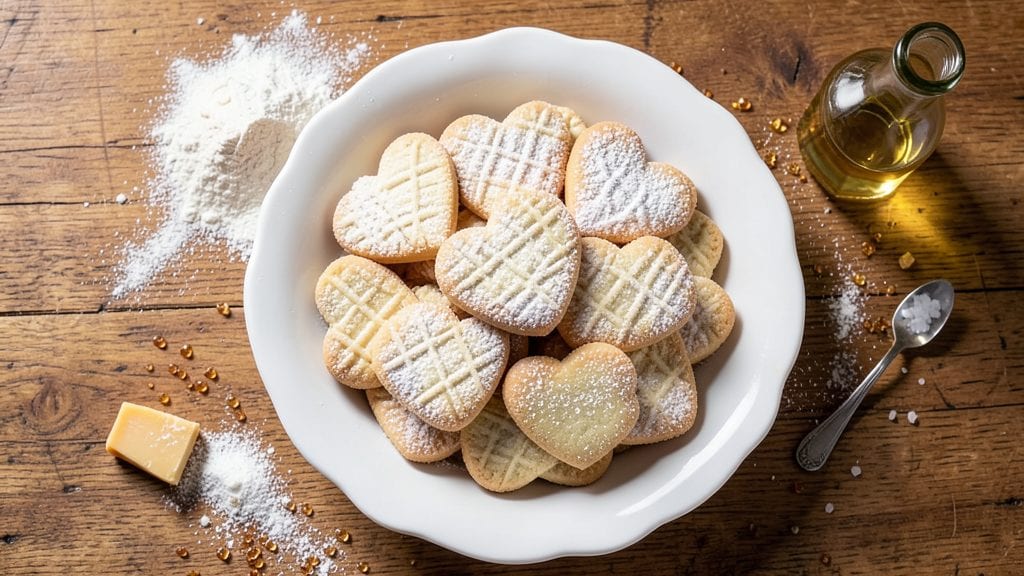
This heart shortbread cookies recipe delivers the perfect balance of buttery crunch and delicate vanilla edges—ideal for holidays or special occasions. The secret lies in cold butter and precise measurements, ensuring each bite offers that signature melt-in-your-mouth texture.
I’ve perfected this technique over years of baking, and it never fails to impress.
With just five simple ingredients—flour, butter, sugar, vanilla, and a pinch of salt—you’ll create cookies that are rich, tender, and effortlessly elegant. The dough comes together in minutes, and shaping the hearts is easier than you’d think with the right tools.
Baking at a precise 325°F ensures golden edges without overcooking.
What sets these apart is the vanilla-kissed finish, adding a subtle sweetness that enhances the buttery flavor. Once baked, the cookies stay crisp for days, making them perfect for gifting or stashing in holiday tins. The crumbly texture and rich taste make them a crowd-pleaser every time.
Whether you’re baking for Valentine’s Day, Christmas, or just because, these cookies are a foolproof way to add a touch of sophistication to any occasion. Let’s get started—your kitchen will smell like holiday magic in no time.
Ingredients for heart shortbread cookies
Five simple ingredients, one perfect heart-shaped cookie—crisp edges and buttery melt.
| Ingredient | Amount | Notes |
|---|---|---|
| All-Purpose Flour 🌾 | 2 ½ cups | Sifted for light texture |
| Unsalted Butter 🧈 | 1 cup | Cold, cubed, not softened |
| Granulated Sugar 🍚 | ½ cup | Superfine preferred for smoothness |
| Pure Vanilla Extract 🌿 | 1 tsp | High-quality, not imitation |
| Fine Sea Salt 🧂 | ½ tsp | Kosher or diamond crystal |
| Powdered Sugar 🍚 | ¼ cup | For dusting finished cookies |
| Heart-Shaped Cookie Cutter ❤️ | 1 whole | Metal, 2.5-inch size preferred |
| Parchment Paper 📄 | 1 sheet | For easy release and baking |
The butter is non-negotiable here. Use European-style butter like Plugrá or Land O’Lakes if you can—it has more fat, which gives those signature flaky layers. Grab it from Whole Foods or the dairy case at Kroger—just make sure it’s cold when you measure. I always cube it myself instead of using pre-sliced packs; the chunks melt slower and create better texture. The flour? King Arthur or Gold Medal brands are my go-tos—they’re finely milled and consistent. If you’re at Trader Joe’s, their organic all-purpose flour works perfectly too. Sift it before mixing to avoid dense cookies.
No superfine sugar? Pulse regular granulated sugar in a food processor for 10-15 seconds—it’ll be fine. Vanilla extract matters here; Nielsen-Massey or McCormick are reliable, but if you’ve got a fancy bottle from Williams Sonoma, go for it. Short on powdered sugar for dusting? Mix 1/3 cup granulated sugar with 2 tbsp cornstarch, then pulse in a food processor. The cookie cutter can be any shape, but 2.5-inch hearts are classic for holidays. If you don’t have one, a round cutter works—just trim the edges with kitchen shears for that heart shape. And trust me, don’t skip the chilling time—it’s what gives these their signature crispness.
These cookies stay crisp for 5-7 days in an airtight container at room temperature, but they’re even better after 2 days when the flavors meld. For gifting, wrap them in parchment-lined boxes tied with ribbon—looks festive, keeps them fresh. Freeze extras on a tray first, then transfer to a bag for up to 3 months. Pro tip: Reheat in a 300°F oven for 2-3 minutes to restore crispness if they soften. The vanilla flavor gets more pronounced over time, so they’re perfect for baking ahead.
Why You'll Love This Recipe
- Three-Ingredient Magic: I swear, the combo of cold butter, sugar, and flour—just mixed and pressed—is the closest thing to baking without effort. No eggs, no fuss, just a dough that comes together faster than you can say "holiday party."
- Butter-Kissed Bliss: That first bite? Pure, buttery happiness. The sugar caramelizes just enough to give it a subtle crunch, while the vanilla and salt make every bite taste like a hug from a bakery. (Between us, I’ve been known to eat them straight from the pan.)
- Holiday or Everyday: Cut them into hearts for Valentine’s Day, or keep them simple for a coffee break. They freeze like champs too—perfect for last-minute gifts or when you just need a treat without the baking drama.
- No-Waste Wonder: A single batch makes 24 cookies, and they keep for days in an airtight container. Even better? The dough doesn’t even need chilling, so you’re not stuck waiting around. Budget-friendly, foolproof, and always a crowd-pleaser.
Step-by-step instructions for heart shortbread cookies recipe
Here's how to create delicate, melt-in-your-mouth heart cookies with crisp edges and buttery centers.
Mix Dry Ingredients for Perfect Texture
In a medium bowl, whisk together the 2.5 cups all-purpose flour and 0.5 teaspoon fine sea salt. I always sift the flour first for a lighter texture—this prevents dense cookies. Give it a good stir with a whisk to remove any lumps and ensure even distribution of the salt throughout the dry ingredients.
The salt might seem like a small amount, but it's crucial for balancing the sweetness and enhancing the buttery flavor. Don't skip this step—proper mixing now means perfect texture later. Set the bowl aside while you prepare the butter mixture.
Cream Cold Butter and Sugar
In a large mixing bowl, combine the 1 cup unsalted butter (cold and cubed) with the 0.5 cup granulated sugar. Using a pastry cutter or your fingers, work the mixture until it resembles coarse crumbs with some pea-sized butter pieces remaining. This texture is key—you want just enough butter to coat the flour without melting completely.
I like to use my fingers for this part because it gives me better control over the texture. If the butter starts to soften too much, chill the bowl in the refrigerator for 5 minutes to firm it up again. The goal is to maintain that cold, crumbly consistency—this prevents the cookies from spreading too much in the oven.
Combine Wet and Dry Ingredients
Add the vanilla extract to the butter mixture and stir to combine. Then gradually add the dry ingredients, mixing with a wooden spoon or your hands until the mixture comes together into a soft, slightly crumbly dough. Be gentle with your mixing—overworking the dough develops gluten and makes the cookies tough.
Once combined, press the dough into a 1-inch thick disc and wrap it tightly in plastic wrap. Chill in the refrigerator for at least 1 hour (or up to 24 hours). This resting period is crucial—it allows the flour to hydrate and the butter to firm up, resulting in cookies that hold their shape beautifully when baked.
Roll and Cut Perfect Hearts
Preheat your oven to 325°F. On a lightly floured surface, roll out the chilled dough to about ¼-inch thickness. Use the heart-shaped cookie cutter to cut out shapes, gently pressing down as you cut. Place the cutouts onto a parchment-lined baking sheet, spacing them about 1 inch apart—they won't spread much, but this gives them room to bake evenly.
Here's a little trick I learned: dip your cookie cutter in flour between uses to prevent sticking. Also, don't worry if the dough feels slightly crumbly when rolling—it's normal with shortbread. The cookies will hold together beautifully when baked.
Bake to Golden Perfection
Bake the heart cookies for 12-15 minutes until the edges are light golden brown and just starting to turn golden around the edges. They should look slightly underbaked in the center—this ensures that beautiful buttery melt when you take your first bite.
Remove from the oven and let them cool on the baking sheet for 5 minutes before transferring to a wire rack. While still warm, dust the tops with ¼ cup powdered sugar for that signature vanilla-kissed finish. The powdered sugar should melt slightly into the edges, creating a delicate, sweet crust that contrasts perfectly with the buttery interior.
Cool and Store Properly
Allow the cookies to cool completely on the wire rack. Shortbread cookies continue to set as they cool, so patience here pays off with perfect texture. Once fully cooled, store them in an airtight container at room temperature for up to 5 days, or freeze for up to 3 months—they'll keep beautifully either way.
These cookies are perfect for Valentine's Day, Mother's Day, or anytime you want to share a little love. The combination of crisp edges, tender centers, and that vanilla powdered sugar finish makes them truly special. Enjoy them with a cup of tea or coffee for the ultimate treat!
Pro Tips For Making Heart Shortbread Cookies
- Chill the Dough: DESCRIPTION: I learned this the hard way—skipping the fridge for 30 minutes means your cookies will spread like pancakes. Even if you’re impatient (yes, even if you’re impatient like me), let that dough rest. The butter needs time to firm up, or your hearts will turn into sad, blobby discs.
- Pulse the Butter: DESCRIPTION: Don’t just cut the butter into flour like you’re chopping wood. Pulse it in the food processor until it looks like wet sand—no dry clumps, no visible chunks. This isn’t about texture; it’s about even baking. Dry butter = uneven cooking = some cookies tough, some mushy.
- Salt the Edges: DESCRIPTION: Sprinkle that fine sea salt after shaping, right on the edges of the dough hearts. The heat will draw it into the crust, giving you that perfect salty-sweet contrast. Skip this, and you’ll miss the best part—crunchy, buttery edges with a hint of sharpness.
- Press, Don’t Pack: DESCRIPTION: When shaping the dough, press it gently into the heart molds—just enough to hold the shape, not so hard you compact the flour. Overworking it makes the cookies dense. Think "firm but tender," like a handshake, not a vice grip. Your cookies will thank you with a lighter crumb.
Common mistakes when making great heart shortbread cookies
Skipping Chill Time
This is the most common mistake I see—rushing the 1-hour chill before rolling. The dough needs time to firm up so the butter doesn't melt prematurely in the oven. Without chilling, your cookies will spread excessively and lose that signature crisp texture.
I've had batches turn out flat and greasy because I forgot this step. If you're short on time, at least chill for 30 minutes—it makes a noticeable difference. 🌡️
Overworking the Dough
Shortbread dough is delicate, and overmixing develops gluten, leading to tough cookies instead of tender crumbly bites. I've ruined batches by using a food processor or mixing too vigorously by hand.
Stop mixing as soon as the dough comes together—it should look shaggy and slightly crumbly. If it feels sticky, add just 1 tablespoon more flour instead of working it more.
Using Warm Butter
The butter must be cold and cubed when you start mixing. If it's softened or melted, your cookies will spread too much and lose their shape. I once used butter straight from the fridge that was too warm, and my hearts turned into sad, misshapen blobs.
Keep your butter in the freezer for 10 minutes before measuring if your kitchen is warm. The goal is to maintain those pea-sized butter pieces throughout mixing.
Incorrect Oven Temperature
Shortbread is finicky about temperature—anything above 325°F will cause the butter to melt too quickly, leading to flat cookies. Below that, and they won't brown properly. I've had batches turn out pale and undercooked when my oven ran hot.
Always use an oven thermometer to confirm accuracy. If your oven runs hot, reduce to 300°F and check for doneness at 14 minutes.
Overbaking for Color
Golden edges are beautiful, but overbaking makes shortbread dry and crumbly. I've seen home bakers leave cookies in too long, thinking they needed more color. The moment the edges turn light golden is perfect—the centers should still look slightly underbaked.
For 2.5-inch hearts, 12-15 minutes is ideal. Pull them out when they look barely set—they'll firm up as they cool.
Skipping Powdered Sugar
That final dusting of powdered sugar isn't just decoration—it creates the signature vanilla-kissed crust that makes these cookies special. I've tasted batches without it, and while they're still delicious, they lack that professional finish.
Use ¼ cup powdered sugar while warm, and tap off any excess. For extra elegance, sift it through a fine-mesh sieve for an even coating. 💫
Nutrition facts
Frequently asked questions
Can I make these heart shortbread cookies without a heart-shaped cutter?
Use a round cutter and trim the edges with kitchen shears to create a heart shape. For a rustic look, try freehand cutting with a sharp knife after rolling the dough to ¼-inch thickness. Just be gentle—shortbread dough is delicate.
Why do my shortbread cookies turn out greasy?
Greasy cookies usually mean the butter melted too soon. Ensure your butter is cold and cubed when mixing, and never skip the 1-hour chill before rolling. If your kitchen is warm, chill the dough an extra 30 minutes to prevent spreading.
How do I store heart shortbread cookies for gifting?
Wrap them in parchment paper, then place in airtight containers with silica gel packets to keep them crisp. For a festive touch, tie with ribbon and add a handwritten tag. They’ll stay fresh for 5-7 days at room temperature or 3 months in the freezer.
Can I add food coloring to make them red for Valentine’s Day?
Yes, but use sparing amounts of gel food coloring mixed with the dough. Start with ½ teaspoon and adjust—too much can make them taste artificial. For a natural look, dust with powdered sugar after baking.