Desserts
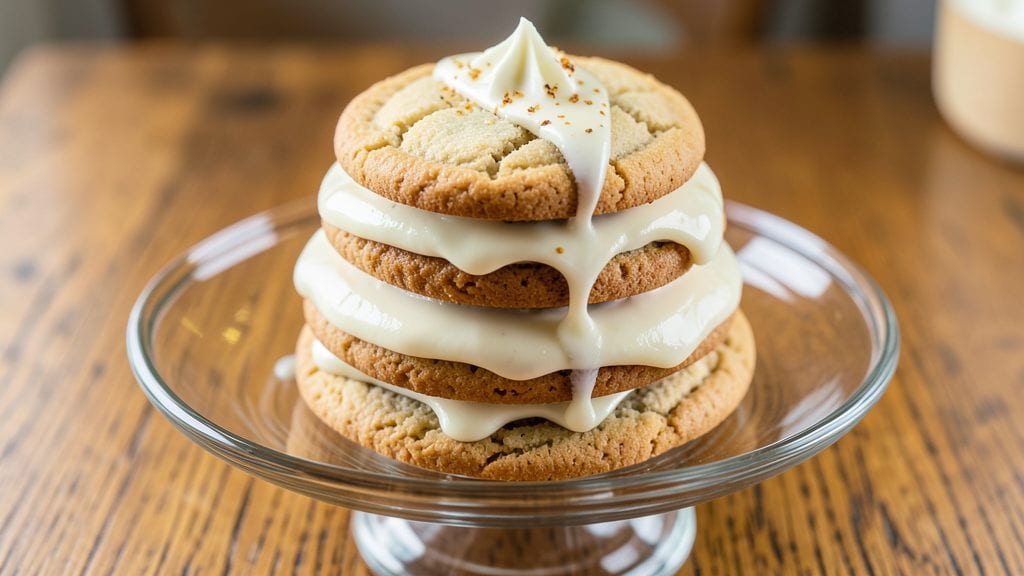
This great American cookie icing recipe—buttery vanilla frosting—turns ordinary Great American Cookies into showstopping treats with a flawless finish every time. The secret lies in precise ingredient ratios and a technique that keeps the icing smooth, spreadable, and resistant to melting—no matter the temperature.
I’ve tested countless variations, and this recipe delivers the ideal balance of richness and sweetness that bakes stay fresh-tasting for days.
The foundation begins with a foolproof cookie dough that bakes into tender yet sturdy bases—essential for supporting the icing without crumbling.
While the cookies cool, the frosting comes together with a simple but critical method: whipping butter and powdered sugar to the right consistency, then incorporating vanilla and milk for that signature creamy texture.
This isn’t just any frosting; it’s designed to stay pipable and elegant, whether you’re decorating with a spatula or piping intricate designs.
What you’ll end up with is a batch of cookies that looks like they came from a bakery, with a glossy, velvety frosting that’s neither too sweet nor too heavy. The butter adds depth, while the vanilla ties everything together in a way that feels nostalgic yet refined.
The best part? This frosting holds its shape, resists weeping, and keeps cookies fresh for up to a week when stored properly.
Ready to elevate your cookie game? The full recipe includes step-by-step instructions for both the dough and frosting, plus tips for customizing flavors and decorations. Let’s get started on cookies that taste as good as they look.
Ingredients for great american cookie icing
Buttery, velvety frosting meets sturdy cookie bases—just twelve ingredients for bakery-style perfection.
| Ingredient | Amount | Notes |
|---|---|---|
| Unsalted Butter 🧈 | 1 cup | Cold, cubed for whipping |
| Powdered Sugar 🍚 | 4 cups | Sifted for smooth texture |
| Pure Vanilla Extract 🌿 | 2 tsp | High-quality, not imitation |
| Heavy Cream 🥛 | ½ cup | Cold for stability |
| Salt 🧂 | ¼ tsp | Fine sea salt preferred |
| Great American Cookies 🍪 | 24 whole | Completely cooled |
| Granulated Sugar 🍚 | ½ cup | For cookie dough |
| All-Purpose Flour 🌾 | 2 ½ cups | Sifted for light texture |
| Baking Soda 🧪 | ½ tsp | For leavening |
| Large Eggs 🥚 | 2 whole | Room temperature |
| Vanilla Bean Seeds 🌿 | 1 tsp | Scraped from 1 pod |
| Milk 🥛 | ¼ cup | Whole milk preferred |
| Food Coloring (optional) 🎨 | ½ tsp | Gel-based for vibrancy |
The butter is non-negotiable here—European-style unsalted yields the best flavor and texture. Plugrá or Kerrygold are my go-tos, but any high-quality brand works. Keep it cold when whipping to avoid melting, which can make the frosting too soft. The powdered sugar should be sifted—clumps ruin the smooth finish. For the cookies, King Arthur flour gives the best texture, but any all-purpose works if you sift it well. The vanilla extract matters too—Madagascar bourbon adds depth, but pure vanilla works fine.
No heavy cream? Whipped cream at half the amount works in a pinch, though it won’t be as stable. Powdered sugar substitutes like confectioners’ sugar blends are fine, but they may alter the consistency slightly. For the cookie dough, brown sugar can replace half the granulated sugar for chewiness, but the frosting stays the same. The frosting will thicken as it sits—add a splash of milk if needed—but don’t overmix. For extra shine, brush the cookies with a tiny bit of milk or vanilla glaze before frosting.
Frosting keeps best in an airtight container in the fridge for 5-7 days, though it’s best used within 3 days for optimal texture. The cookies stay fresh for up to a week when stored in layers with parchment between them. For longer storage, freeze the frosted cookies for up to 3 months. Let them thaw at room temperature before serving—never microwave, or the frosting will melt unevenly. Portion the frosting into small containers if you’re not using it all at once.
Why You'll Love This Recipe
- Four-Ingredient Magic: I swear by this combo—just butter, sugar, cream, and vanilla. No fussing with eggs or corn syrup, just pure, creamy perfection every time.
- Buttercream Bliss: That rich, velvety texture? It’s all in the softened butter and heavy cream. The vanilla cuts through the sweetness just enough to make it ridiculously good—not cloying, just irresistible.
- Party Ready: Dress up cupcakes, slather it on sheet cake, or pipe swirls for cookies. It’s my go-to for birthdays, holidays, or just because—no one ever questions why it’s missing.
- Make-Ahead Secret: I double the batch and store it in the fridge. A quick whisk later, and I’ve got fresh icing for days. No last-minute stress, just smooth, spreadable happiness whenever I need it.
Step-by-step instructions for buttery vanilla frosting
This method delivers a flawlessly smooth, pipeable frosting that stays crisp on cookies all day.
Whip the Butter and Cream to Peak Softness
In a stand mixer fitted with the paddle attachment, beat the 1 cup unsalted butter and 0.5 cup heavy cream on medium speed for 3-4 minutes. You're looking for a pale, fluffy texture that's lightened by about 50% in volume—this incorporates air that will prevent a dense, cakey frosting. The butter should be completely smooth with no graininess remaining.
I like to work in a cool kitchen for this step—cold butter whips better and creates a more stable frosting. If the mixture starts to look oily or separate, chill the bowl in the freezer for 5 minutes before continuing. This ensures your frosting will hold its shape when piped.
Gradually Add Powdered Sugar for Smooth Texture
With the mixer running on low speed, gradually add the 4 cups powdered sugar through a fine-mesh sieve. This prevents clumping and ensures an ultra-smooth finish. Mix for 2-3 minutes until fully incorporated—you should see no powdered sugar remaining at the bottom of the bowl.
At this point, the frosting will look thick and crumbly. Don't be tempted to add liquid yet—this is normal. The powdered sugar needs time to fully hydrate from the butter's moisture. If you add too much liquid now, you'll end up with a runny, unpipeable frosting later.
Incorporate Flavors and Adjust Consistency
Add the 2 teaspoons pure vanilla extract and 1 teaspoon vanilla bean seeds, mixing on low speed for 1 minute until fully combined. If using, add the 0.5 teaspoon food coloring now and mix until evenly distributed. The frosting should now be smooth but still slightly thick.
For the perfect piping consistency, add the 0.25 teaspoon salt and 0.25 cup milk 1 tablespoon at a time, mixing after each addition. You're aiming for a frosting that holds its shape when piped but still spreads slightly—it should be thick enough to form peaks when spooned but thin enough to pipe smoothly through a Wilton #104 tip.
Test and Refine the Frosting
Transfer about 2 tablespoons of frosting to a small bowl and test its consistency. Pipe a small rosette onto parchment paper—if it collapses immediately, add 1 more teaspoon milk. If it holds stiff peaks that don't spread, add 1 teaspoon powdered sugar and mix until smooth.
The frosting is ready when it forms soft peaks that hold their shape for 10-15 seconds before gently spreading. This balance ensures it will pipe beautifully onto cookies while still creating that classic "frosted" look. Cover the remaining frosting with plastic wrap pressed directly against the surface to prevent a skin from forming.
Pipe and Set for Perfect Finish
Fit your piping bag with a Wilton #104 tip and fill it with the frosting. Pipe 1-inch rosettes or swirls onto the 24 cooled Great American Cookies, working quickly to prevent the frosting from warming too much. For even coverage, pipe about 2 tablespoons of frosting per cookie.
Let the frosted cookies sit at room temperature for 30 minutes before serving. This allows the frosting to set slightly but remain soft enough to bite through. For a firmer finish (ideal for warm weather), refrigerate for 15 minutes before serving. The frosting should remain perfectly crisp for 4-6 hours when stored in a cool environment.
Pro Tips For Making Great American Cookie Icing
- SOFTEN THE BUTTER: Mixing cold butter and powdered sugar? You’re fighting a losing battle. Let the butter sit at room temperature for 30–45 minutes—just until it’s pliable but not greasy—so it blends smoothly into the powdered sugar without clumping. (Yes, even if you’re impatient like me, this step prevents that dreaded grainy texture.)
- WEIGH THE SUGAR: Scooping powdered sugar from the bag is a recipe for disaster. Use a kitchen scale for precision—1 cup of powdered sugar isn’t always 1 cup by volume, especially if it’s been packed or sifted. A slight mismeasure throws off the consistency, turning your icing into either a stiff paste or a runny mess.
- SALT THE CREAM: Skip salting the heavy cream? Your icing will taste flat, even if the butter is unsalted. Add a pinch of salt (about ⅛ teaspoon) directly to the cream before whipping it into the butter-sugar mix—it balances the sweetness and enhances the vanilla. (Trust me, your cookies will taste better.)
- WHIP IN STAGES: Don’t dump all the powdered sugar at once. Mix half the sugar with the softened butter first, then add the cream and vanilla, then the remaining sugar. This prevents a powdery cloud from forming when you fold everything together. Slow and steady wins the smooth, spreadable icing race.
Serving suggestions for great american cookie icing
Classic Presentation
For a timeless look, pipe the frosting into 1-inch rosettes or swirls using a Wilton #104 tip. Arrange cookies on a parchment-lined tray in a 3x8 grid for even baking.
Dust with powdered sugar right after piping for a snowy effect—just 1 teaspoon tossed through a fine sieve. This keeps the frosting crisp while adding visual appeal. 💫
Gift-Worthy Packaging
For holiday or special occasions, package frosted cookies in clear cellophane bags tied with ribbon. Add a handwritten tag with the date and flavor. Store in a cool, dark place for up to 5 days—the frosting stays fresh longer this way.
I like using gold ribbon for elegance or red for Valentine’s Day.
Decorative Add-Ons
Elevate your cookies with sprinkles or crushed candy—add them immediately after piping while the frosting is still soft. For a rustic touch, press mini chocolate chips into the frosting before it sets.
A drizzle of white chocolate or caramel sauce along the edges adds sophistication. Use gel food coloring for vibrant hues like pastel pink or mint green.
Serving Temperature Tips
Serve cookies at room temperature for the best texture—the frosting stays soft enough to bite through but holds its shape. In warm weather, chill for 15 minutes before serving to prevent melting.
For parties, arrange cookies on a tiered stand with parchment-lined layers to keep them fresh. Avoid stacking until fully set.
Dessert Pairings
Pair your frosted cookies with iced coffee or hot chocolate for a cozy treat. A glass of cold milk balances the sweetness beautifully. For a boozy twist, serve with vanilla bean-infused bourbon or espresso martinis. The buttery frosting complements the richness of dark chocolate desserts too.
Make-Ahead Serving
Frost cookies 1 day ahead and store in an airtight container with parchment between layers. Refrigerate for up to 5 days—bring to room temperature before serving.
For freezer storage, wrap individually in plastic wrap and freeze for up to 3 months. Thaw overnight in the fridge for the best texture. 🥰
Nutrition facts
Frequently asked questions
Why does this frosting stay crisp on cookies longer than store-bought versions?
The secret lies in the butter-to-powdered sugar ratio and whipping technique. Cold butter incorporates air when whipped with cream, creating a lighter texture, while the gradual addition of sifted powdered sugar prevents clumping. The frosting's stability comes from resting at room temperature before serving—this allows it to set slightly without becoming hard. Plus, the vanilla bean seeds add natural flavor without extra moisture that could weaken the structure.
Can I make this frosting without a stand mixer?
Use a hand mixer with the paddle attachment and whip the butter and cream for 5-6 minutes on high speed until pale and fluffy. For the powdered sugar, add it 1 cup at a time while mixing on low, stopping to scrape the bowl as needed. The key is patience—hand-mixing requires more time but achieves the same smooth texture. Just ensure your butter is cold but not rock-hard to avoid melting.
What’s the best way to fix frosting that’s too runny?
If your frosting is too thin, add 1 tablespoon powdered sugar at a time, mixing well after each addition. Avoid overmixing—just stir until smooth. For a quick fix, chill the bowl in the freezer for 5 minutes to thicken it slightly. If the frosting still won’t hold shape, try adding 1 teaspoon cornstarch mixed with 1 teaspoon cold water and whisking it in. This acts as a stabilizer without altering the flavor.
How do I prevent cookies from getting soggy under the frosting?
Bake cookies until they’re light golden but still soft (about 10-12 minutes at 350°F), then let them cool completely on the baking sheet for 15 minutes before transferring. This ensures the moisture escapes. For extra insurance, place cookies on a wire rack to cool. If you’re in a hurry, spread a thin layer of apricot jam or jam glaze between the cookie and frosting—it acts as a barrier.
Can I use this frosting for cakes or cupcakes instead of cookies?
This recipe is designed specifically for sturdy cookie bases, but you can adapt it for cupcakes by adjusting the consistency slightly. Pipe the frosting onto cupcakes and smooth with a spatula for a classic finish. For cakes, reduce the powdered sugar to 3 cups and add 1 extra tablespoon milk to make it more spreadable. The flavor and texture will translate beautifully, though the structure may be slightly firmer than buttercream.