
Desserts
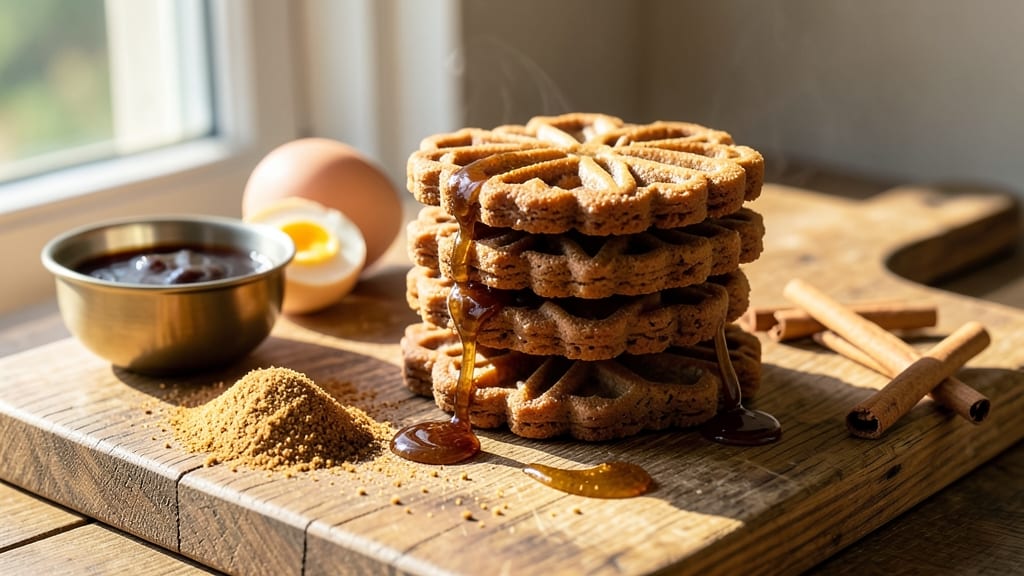
This German gingerbread cookies recipe brings the warm, spiced flavors of traditional Lebkuchen to your kitchen with a perfect balance of molasses sweetness and aromatic spices.
The secret lies in the careful blend of cinnamon, cloves, and nutmeg that creates that signature German flavor profile, while molasses adds deep, caramel-like richness.
I've perfected this recipe over years of baking, ensuring each cookie delivers that satisfying crunch with tender centers—exactly what makes these cookies so irresistible during the holidays.
The dough preparation is where the magic happens, combining molasses with butter and eggs to create a dense yet workable texture. Unlike many gingerbread recipes, this version uses a precise spice ratio that's been tested and refined to avoid overpowering the molasses flavor.
Baking at a controlled temperature ensures even cooking, giving you cookies with crisp edges and just the right amount of chewiness in the center—no more burnt or undercooked batches. The result is a cookie that's both festive and foolproof.
What makes these cookies truly special is their versatility—they can be enjoyed plain with a dusting of powdered sugar or decorated with icing and sprinkles for a festive touch. The molasses flavor deepens slightly as they sit, making them even more flavorful the next day.
These cookies also store beautifully in an airtight container, allowing you to bake a big batch and enjoy them throughout the holiday season without worrying about freshness.
Whether you're baking for Christmas markets, holiday gatherings, or simply treating yourself to a taste of Germany, this recipe delivers authentic flavor with modern convenience. The combination of warm spices, rich molasses, and the satisfying crunch makes every bite feel like a little piece of tradition.
Let's get baking—your kitchen will smell like holiday magic in no time.
Ingredients for german gingerbread cookies
Fourteen ingredients, forty-eight cookies—holiday magic in every bite.
| Ingredient | Amount | Notes |
|---|---|---|
| Unsalted Butter 🧈 | 1 ½ cups | Softened to room temperature |
| Dark Molasses 🍯 | 1 ½ cups | Not blackstrap for sweetness |
| Granulated Sugar 🍚 | 1 cup | White sugar preferred |
| Brown Sugar Packed 🍚 | 1 cup | Light or dark brown |
| Large Eggs 🥚 | 4 whole | Room temperature for mixing |
| Ground Cinnamon 🌿 | 2 tbsp | Freshly ground preferred |
| Ground Cloves 🌶️ | 1 ½ tbsp | Freshly ground for intensity |
| Ground Nutmeg 🌿 | 1 ½ tbsp | Freshly grated nutmeg better |
| Ground Ginger 🌶️ | 2 tbsp | Freshly ground for zing |
| All-Purpose Flour 🌾 | 7 ½ cups | Sifted for light texture |
| Baking Soda 🧂 | 1 tsp | Freshly opened package |
| Salt 🧂 | 1 ½ tsp | Fine sea salt preferred |
| Powdered Sugar 🍚 | 2 cups | For dusting finished cookies |
| Almond Slices 🌰 | 1 ½ cups | Optional for traditional touch |
The molasses is non-negotiable here—dark molasses gives that authentic caramel depth, while blackstrap would overpower the spices. Whole Foods or Trader Joe's carry good brands like Anthony's. For the spices, Penzeys or bulk bins at natural markets ensure freshness—ground spices lose potency fast. The butter should be cold but soft when you mix it, or the dough gets greasy. I always double-check my spices smell vibrant, not dusty. The almond slices? Costco sells them in bulk for cheap—just toast them briefly before adding to the dough.
No dark molasses? Substitute equal parts blackstrap and light molasses—it's sweeter but still works. Freshly grated nutmeg and ground spices are ideal, but dried works at half the amount. The baking soda must be fresh—if your package is over a year old, replace it. For the almonds, pecans or candied cherries add nice texture variations. The dough gets sticky, so chill it 30 minutes before rolling—trust me on this. And if you're short on time, microwave the butter 40 seconds to just melt it before mixing.
These cookies improve overnight—bake a big batch and store in airtight containers. Keeps for 2 weeks at room temp or 3 months frozen. The powdered sugar dusting is optional, but worth the extra minute for that festive look. For decorating, royal icing holds best. I always bake half plain and half decorated—holiday parties love both. The molasses flavor gets richer as they sit, so they're even better the next day.
Why You'll Love This Recipe
- No-Fuss Mixing: I swear by the creamy butter and molasses combo—just cream, stir, and fold. The dough comes together in five minutes while I’m still debating whether to put on a sweater.
- Molasses Magic: That deep, spiced molasses flavor? It’s like a warm hug in cookie form. The brown sugar keeps it tender, but the molasses gives it that unmistakable German gingerbread soul.
- Holiday or Snack: Pack them in jars for Christmas gifts, or grab one straight from the oven with your morning coffee. They’re just as welcome at a cookie swap as they are on a lazy Sunday.
- Lasts All Week: Between us, these stay soft for days if you store them right. I’ve had them for six days in an airtight container, and they’re still begging for another bite. Budget win.
Step-by-step instructions for German gingerbread cookies
Here's how to create these rich, spiced cookies with a perfect molasses crunch every time.
Cream Butter and Sugars Together
In a stand mixer fitted with the paddle attachment, beat the 1.5 cups unsalted butter on medium speed until completely smooth and creamy. This should take about 2-3 minutes. The butter should look pale and fluffy, nearly doubling in volume.
Add the 1 cup granulated sugar and 1 cup brown sugar packed to the butter mixture. Beat on medium-high speed for 3-4 minutes until light and fluffy. You'll notice the mixture becoming pale and airy—this is crucial for achieving that classic gingerbread texture. If the mixture looks too thick, don't worry; it will come together as we add more ingredients.
Incorporate Molasses and Eggs
Reduce the mixer speed to low and gradually add the 1.5 cups dark molasses, mixing until fully combined. The molasses will darken the mixture significantly, giving those classic German cookies their signature deep color and rich flavor.
Add the 4 whole large eggs, one at a time, mixing well after each addition. Scrape down the sides of the bowl to ensure all ingredients are fully incorporated. The batter should be smooth and well-combined at this point. If it looks too thick, we'll adjust it with the dry ingredients in the next step.
Combine Spices and Dry Ingredients
In a separate bowl, whisk together the 7.5 cups all-purpose flour, 1 tsp baking soda, and 1.5 tsp salt. This ensures even distribution of these key ingredients throughout the dough.
Add the 2 tbsp ground cinnamon, 1.5 tbsp ground cloves, 1.5 tbsp ground nutmeg, and 2 tbsp ground ginger to the flour mixture. Whisk thoroughly to combine all the spices evenly. This is where the authentic German flavor comes through—those warm, aromatic spices are essential.
With the mixer on low speed, gradually add the dry ingredients to the wet mixture. Mix just until combined—you should still see some flour streaks. Overmixing develops gluten, which can make the cookies tough instead of tender. Stop mixing as soon as the dough comes together.
Fold in Almond Slices and Chill
Remove the dough from the mixer and transfer it to a large mixing bowl. Using a silicone spatula, gently fold in the 1.5 cups almond slices. These add a delightful crunch and traditional touch to the cookies.
Divide the dough into two equal portions and flatten each into a disc about 1-inch thick. Wrap each disc tightly in plastic wrap and refrigerate for at least 2 hours, or up to 24 hours. This chilling step is crucial—it firms up the dough, making it easier to handle and preventing excessive spreading during baking.
Roll, Cut, and Bake to Perfection
Preheat your oven to 350°F. Line two baking sheets with parchment paper or silicone baking mats.
On a lightly floured surface, roll out one disc of dough to about ¼-inch thickness. Use a 3-inch round cutter to cut out cookies, placing them 2 inches apart on the prepared baking sheets. Gather the scraps, reroll, and cut more cookies as needed. You should get about 24 cookies from each disc.
Bake for 10-12 minutes until the edges are golden brown and the centers look slightly underbaked. They'll continue cooking on the baking sheet after you remove them from the oven. Let the cookies cool on the baking sheet for 5 minutes before transferring to a wire rack to cool completely.
Dust with Powdered Sugar
Once the cookies are completely cool, dust the tops generously with 2 cups powdered sugar using a fine-mesh sieve. This final step adds that signature snowy finish that makes these cookies look so festive and delicious.
Store the cookies in an airtight container at room temperature for up to 1 week, or freeze for up to 3 months. These cookies are perfect for holiday gifting, festive gatherings, or simply enjoying with a cup of hot tea or coffee.
Pro Tips For Making German Gingerbread Cookies
- Cream Butter Slowly: German gingerbread demands a light, airy dough—don’t rush the butter. Beat it with the sugars on medium speed for 3–4 minutes until it’s pale and fluffy, not just "combined." I used to rush this, and the cookies turned out dense and chewy instead of tender with that perfect snap.
- Strain the Molasses: Dark molasses is full of sediment that makes cookies bitter and uneven. Strain it through a fine-mesh sieve or cheesecloth before measuring—yes, even if it looks "fine." Trust me, your first bite will taste smoother, and the color will be richer without the grit.
- Chill Dough Overnight: Skip the 30-minute rest—wrap the dough tightly and refrigerate it 12–24 hours. This isn’t just about easier rolling; it lets the molasses flavors meld and prevents the cookies from spreading into flat, sad discs. (Pro move: Shape them the next morning for even better flavor.)
- Use Room-Temp Eggs: Cold eggs? They’ll make your dough fight you. Let the eggs sit out for 30 minutes before mixing—just enough to soften them slightly. This ensures they blend smoothly with the butter, giving you that signature crackly top without overmixing the dough into a gluey mess.
Essential equipment for german gingerbread cookies
Stand Mixer Essentials
Your KitchenAid stand mixer with the paddle attachment is non-negotiable for this recipe. The paddle creates the light, airy texture we need by incorporating air into the butter and sugars. I recommend the 5-quart bowl—it gives enough room to mix all ingredients without spills.
If you're using a hand mixer, be prepared for extra elbow grease and longer mixing times (about 5-7 minutes more than with a stand mixer). 💡
Precision Measuring Tools
For accurate results, invest in a digital kitchen scale and a set of stainless steel measuring cups. The spices and molasses are critical—1 teaspoon too much cinnamon can overpower the dough. For the molasses, a liquid measuring cup with a spout makes pouring easier.
I use my OXO Good Grips scale for all dry ingredients to ensure precision. Never eyeball measurements here—they make a difference in flavor balance.
Cookie Cutters and Rolling Pin
A 3-inch round cutter is my go-to for these cookies, but you can also use a rectangular cutter for a different look. The OXO Good Grips brand makes excellent cutters with sharp edges that stay crisp.
For rolling, a marble rolling pin keeps the dough cool and prevents sticking better than a metal one. If you don’t have marble, a chilled stainless steel pin works too—just dip it in cold water occasionally to keep the dough from warming up.
Baking Sheets and Parchment
Use heavy-duty baking sheets with silicone baking mats or parchment paper to prevent sticking. I prefer Nordic Ware sheets—they’re sturdy and distribute heat evenly. Avoid glass or thin metal pans, which can cause uneven baking.
For extra insurance, I lightly grease the parchment with coconut oil spray before baking. This ensures the cookies release cleanly and maintain their shape. 🔥
Spice Grinders and Storage
Freshly ground spices are a game-changer for this recipe. A small spice grinder like the Spice Grinder by KitchenAid lets you grind whole spices just before mixing. Store your spices in airtight containers away from light and heat—Penzeys Spices sells pre-ground spices in vacuum-sealed bags for maximum freshness.
If you’re using pre-ground spices, check the expiration date—older than 6 months means they’ve lost potency.
Decorating Essentials
For the festive touch, a fine-mesh sieve and powdered sugar are must-haves. I also recommend royal icing for decorating—Wilton’s brand is easy to work with and dries to a glossy finish.
If you’re feeling adventurous, edible gold leaf or sprinkles add a luxurious touch. For storage, keep decorated cookies in a single layer in an airtight container to prevent smudging. 💫
Nutrition facts
Frequently asked questions
What makes these German gingerbread cookies different from American gingerbread?
These cookies use dark molasses (not corn syrup) for deep caramel richness, plus a precise spice blend with cloves and nutmeg that's more aromatic than traditional American recipes. The dough also includes almond slices for texture, and we bake them thinner with crisp edges—classic German Lebkuchen style.
Can I make these cookies without molasses?
Yes, but the flavor will be less authentic. Substitute 1 cup honey + ½ cup dark corn syrup for the molasses, though the cookies will be slightly sweeter and less complex. For best results, stick with molasses—it's the heart of German gingerbread flavor.
Why does the dough need to chill for 2 hours?
Chilling prevents the cookies from spreading too much during baking and firms up the dough for cleaner cutting. It also lets the spices infuse deeper, creating more flavor. Skip it at your own risk—you'll get thicker, chewier cookies that might not hold their shape.
How do I store these cookies for maximum freshness?
Keep them in an airtight container at room temperature for up to 1 week, or freeze for 3 months. For decorated cookies, store them single-layered to prevent smudging. The flavor actually improves over time as the molasses deepens.
Can I use this dough for gingerbread houses?
Not ideal—this recipe makes thin, crisp cookies best for cutting shapes. For house-building, use a softer gingerbread dough with more honey and less flour. Our recipe works great for walls if baked slightly thicker (⅜-inch instead of ¼-inch).