
Desserts
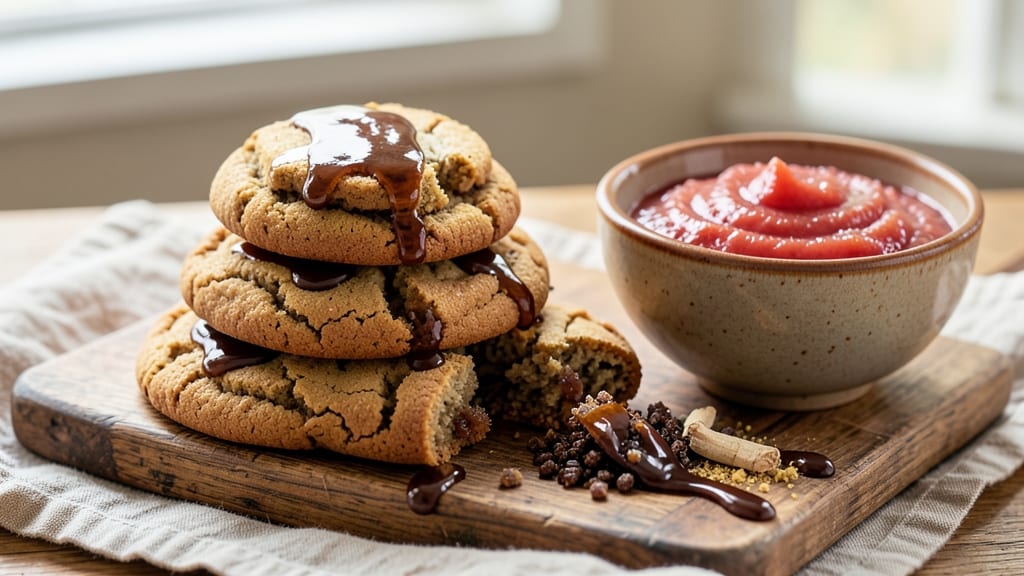
This eggless gingerbread cookie recipe delivers all the warm, spiced magic of traditional gingerbread—without a single egg in sight. ✨ The secret lies in a clever binding substitute that keeps the cookies tender yet sturdy, while molasses and cinnamon create that signature deep, caramelized flavor.
I developed this version after years of baking holiday cookies for dietary-restricted guests, and it’s now my go-to recipe for chewy, molasses-kissed cookies that crunch just right.
The beauty of this recipe is its simplicity: no eggs, no fuss, just a few pantry staples and a foolproof method for achieving that perfect balance of spice and sweetness. Applesauce or flaxseed acts as the binder, ensuring the dough holds together while keeping the texture rich and satisfying.
Baking at 350°F for 8–10 minutes guarantees a golden, crackly edge with a soft, chewy center—just like the cookies you remember from childhood.
What sets these apart is the depth of flavor—molasses and ginger work together to create a warm, aromatic cookie that’s perfect for the holidays or a cozy winter treat. The dough is easy to handle, rolls smoothly, and cuts into classic gingerbread shapes without sticking.
Whether you’re baking for a celebration or just craving a taste of nostalgia, these cookies deliver on every promise.
Pair them with a glass of cold milk or a cup of spiced tea for the ultimate comfort experience. Ready to bake? Let’s get started with a recipe that proves eggless doesn’t mean flavorless—just better.
Ingredients for eggless gingerbread cookie
Pantry staples and a few spice cabinet essentials—this eggless gingerbread delivers all the warmth and crunch you crave!
| Ingredient | Amount | Notes |
|---|---|---|
| All-Purpose Flour 🌾 | 3 ½ cups | Sifted for light texture |
| Unsweetened Applesauce 🍎 | ½ cup | Unsweetened, for binding |
| Dark Brown Sugar 🍚 | 1 ¼ cups | Packed, for chewy texture |
| Molasses 🍯 | ½ cup | Unsulphured for authentic flavor |
| Granulated Sugar 🍬 | ½ cup | For crisp edges |
| Ground Ginger 🌿 | 2 tsp | Freshly ground preferred |
| Ground Cinnamon 🌶️ | 1 ½ tsp | Freshly toasted for warmth |
| Ground Cloves 🌶️ | ½ tsp | Lightly toasted for depth |
| Ground Nutmeg 🌶️ | ½ tsp | Freshly grated for aroma |
| Baking Soda 🧂 | 1 tsp | For lift and crispness |
| Salt 🧂 | ½ tsp | Fine sea salt preferred |
| Vanilla Extract 🌸 | 1 tbsp | Pure, high-quality vanilla |
| Unsalted Butter 🧈 | ¾ cup | Cold, cubed for texture |
| Oat Flour 🌾 | ¼ cup | Optional for extra chew |
Molasses is the soul of these cookies, so grab the unsulphured kind—it’s sweeter and more aromatic. I always stock up at Whole Foods or Trader Joe's because their selection is top-notch. The ground spices? Toast them lightly in a dry pan before mixing—this wakes up their flavors and makes a HUGE difference. Freshly ground ginger and cinnamon are ideal, but if you’re using pre-ground, check the date. Old spices taste like dust, and we’re going for bold, aromatic flavor here. The butter should be cold and cubed—this ensures the dough stays firm and easy to handle, even without eggs.
No applesauce? Unflavored applesauce works best—the sweetened kind can throw off the balance. Short on molasses? Maple syrup at half the amount gets you close, but it won’t have that deep, caramelized kick. Swapping out the oat flour? Skip it or use extra all-purpose flour—it’s not critical, but it adds a lovely chewiness. For the spices, if you’re missing one, double up on cinnamon or ginger to keep that warm, cozy vibe. And if you’re feeling fancy, add a pinch of cardamom—it pairs beautifully with the gingerbread flavors. The dough is forgiving, so don’t stress if measurements aren’t perfect.
This dough keeps beautifully in the fridge for 5 days, wrapped tightly in plastic. For longer storage, freeze portions for up to 3 months—just thaw overnight before baking. The cookies reheat wonderfully in a 200°F oven for 5 minutes if they’ve lost their crunch. I like to bake half the batch, then freeze the dough balls for later—perfect for holiday baking when you’re short on time. Store baked cookies in an airtight container with a slice of bread to keep them soft. Trust me, they’ll disappear fast!
Why You'll Love This Recipe
- No Eggs, No Stress: I swear by this trick—swapping eggs for applesauce keeps the cookies tender but still sturdy enough to handle shipping. No cracking, no mess, just mix and bake.
- Molasses Magic: That deep, caramelized kick from molasses? It’s the secret weapon here. The cookies taste like holiday nostalgia in every bite, and honestly, the darker the molasses, the richer the flavor.
- Holiday or Snack Attack: These work for Christmas cookies, but they’re also my go-to when I need something sweet after dinner. Freeze half the batch, and you’ve got instant treats for months—no last-minute baking required.
- Budget-Friendly Staples: Flour, sugar, and applesauce? I’m talking cheap, reliable ingredients that won’t break the bank. Plus, the molasses adds luxury without the price tag—win-win for my wallet.
Step-by-step instructions for eggless gingerbread cookies
Here's how to mix, shape, and bake these spiced molasses cookies to golden perfection!
👨🍳 Step 1: Mix the Wet Ingredients for Perfect Binding
In a medium saucepan, combine the 0.5 cup unsweetened applesauce, 0.75 cup unsalted butter, 1.25 cups dark brown sugar, and 0.5 cup molasses over low heat. Stir constantly for 3-4 minutes until the butter melts completely and the mixture reaches 160°F—it should thicken slightly and smell like warm gingerbread. Here's the thing—this step builds the cookie's structure without eggs. If it looks too thin, simmer for another minute until it coats the back of a spoon.
Remove from heat and stir in the 1 tbsp vanilla extract. Let it cool for 5 minutes—this prevents the butter from cooking the flour prematurely. I know it seems weird to wait, but trust me, it makes a difference in texture. While it cools, measure out the 0.5 cup granulated sugar and 0.25 cup oat flour—these will add that signature crunch and chew.
👨🍳 Step 2: Combine Dry Ingredients for Maximum Flavor
In a large bowl, whisk together the 3.5 cups all-purpose flour, 1 tsp baking soda, 0.5 tsp salt, 2 tsp ground ginger, 1.5 tsp ground cinnamon, 0.5 tsp ground cloves, and 0.5 tsp ground nutmeg. Sift the flour first for a lighter texture—this prevents dense cookies. The spices should smell warm and aromatic; if they don't, toast them lightly in a dry pan for 30 seconds before mixing.
Make a well in the center and pour in the cooled wet mixture. Add the 0.5 cup granulated sugar and 0.25 cup oat flour to the well. Using a wooden spoon or silicone spatula, gently fold everything together until just combined—you should still see dry flour streaks. Overmixing develops gluten, which makes cookies tough. The dough will be thick and sticky, but that's exactly what we want for chewy cookies.
🥘 Step 3: Chill the Dough for Easier Handling
Divide the dough into two equal portions and wrap each tightly in plastic wrap. Refrigerate for at least 1 hour (up to 24 hours). This step is non-negotiable—chilling firms up the dough so it holds its shape when you cut the cookies. It also lets the flavors meld, making each bite more complex. If you're short on time, freeze the dough for 30 minutes instead, but it won't be as easy to work with.
While the dough chills, preheat your oven to 350°F and line two baking sheets with parchment paper. Use a lightly floured work surface to prevent sticking—just enough to keep the dough from clinging, but not so much that it dries out. Here's the moment that matters: the dough should be cold but pliable when you're ready to roll.
🔥 Step 4: Roll and Cut for Classic Gingerbread Shapes
Roll one portion of dough to about ¼-inch thickness on a floured surface. Use a gingerbread cookie cutter (or a round cutter if you don't have one) to cut out shapes. Place them 2 inches apart on the prepared baking sheets—this gives them room to spread slightly. For extra flair, use a fork to make crisscross patterns on the tops before baking. Real talk: if the dough sticks, add just a tiny bit more flour to your work surface.
Bake for 10-12 minutes until the edges are golden brown and the centers look just slightly underdone. The cookies will continue cooking on the hot sheet after you remove them. Don't walk away—ovens vary, and you want that perfect balance of crisp edges and soft centers. You'll know they're done when they pull away from the parchment paper easily.
⏰ Step 5: Cool and Enjoy for Maximum Crunch
Let the cookies cool on the baking sheets for 5 minutes before transferring them to a wire rack to cool completely. This resting period is crucial—it allows the cookies to set properly and develop that signature crunch. If you can't wait, eat one warm, but you'll miss out on the best texture. Store any leftovers in an airtight container for up to 5 days, or freeze for up to 3 months—they taste even better the next day!
Serve these molasses-kissed cookies with a cup of chai or a glass of cold milk. Each bite delivers warm spices, chewy texture, and that perfect balance of sweet and molasses-rich flavor. You've got this—these cookies are easier than they look, and they'll impress everyone who tries them!
Pro Tips For Making Eggless Gingerbread Cookie
- Mix Applesauce Last: Stir the unsweetened applesauce into the dry ingredients after combining everything else—this keeps the dough from turning into a sticky mess too soon. I learned this the hard way when my first batch looked like cookie dough batter instead of a manageable dough.
- Use Warm Molasses: Heat the molasses in a small saucepan for 30 seconds to loosen it—cold molasses thickens like syrup and measures inaccurately. My grandmother swore by this, and it actually makes the flavor sing without altering the recipe’s balance.
- Chill Dough Fully: Wrap the dough in plastic and refrigerate for at least 2 hours (overnight is ideal)—this prevents spreading and helps the gingerbread hold its shape when baking. I used to skip this, and my cookies turned into thin, crispy pancakes.
- Bake One Sheet: Spread cookies on a single baking sheet with 1-inch gaps—crowding traps steam and makes them soggy. If your oven’s too small, bake in batches, but don’t stack them; they’ll lose their texture. (Yes, even if you’re impatient like me.)
Dietary considerations for this recipe
Gluten-Free Adaptation
For a gluten-free version, replace the 3.5 cups all-purpose flour with a 1:1 gluten-free flour blend like King Arthur Measure for Measure or Bob’s Red Mill. Add ½ cup oat flour to improve texture and bind the dough.
Use xanthan gum (¼ tsp) if your blend doesn’t include it—this prevents crumbling. Chill the dough longer (2 hours) since gluten-free flours absorb moisture differently. 🌾
Nut-Free Substitutions
Oat flour adds chewiness but contains gluten and nuts. Skip it entirely or swap for extra all-purpose flour if avoiding nuts. For a nut-free, gluten-free option, blend ½ cup almond-free oat flour (certified gluten-free) or ½ cup ground sunflower seeds for texture.
Both work well but may alter the dough’s stickiness—adjust with 1 extra tbsp applesauce if needed.
Dairy-Free Binding
Replace unsalted butter with vegan butter (like Miyoko’s or Earth Balance) for a dairy-free version. For extra richness, use ½ cup coconut oil (solid) + ½ cup vegan butter. Chill the dough 30 minutes longer since plant-based fats melt faster.
The flavor stays true, but the texture becomes slightly softer—balance with 1 extra minute in the oven for crisp edges. 🧈
Refined Sugar Reduction
Cut ½ cup granulated sugar to ¼ cup and add ¼ cup coconut sugar for a lower-glycemic option. The molasses already provides natural sweetness, so this keeps the cookies flavorful without spiking blood sugar.
For extra caramel notes, add 1 tbsp maple syrup to the wet ingredients. Test one cookie first—reduce baking time by 1 minute if edges brown too quickly.
Vegan-Friendly Boost
To make these fully vegan, ensure all ingredients are plant-based: use vegan butter, unsweetened applesauce, and molasses (check for bone char filtering if concerned). For binding, ¼ cup aquafaba (chickpea brine) replaces eggs perfectly—whisk it into the wet ingredients before combining with dry.
The cookies hold their shape beautifully and taste just as rich. ✨
Nutrition facts
Frequently asked questions
Can I make these gingerbread cookies without molasses?
You can substitute ½ cup molasses with ½ cup maple syrup or ½ cup honey, but the flavor will be less rich and caramel-like. For the best results, stick with molasses—it’s essential for that signature warm, spiced taste. If you’re avoiding molasses entirely, reduce the sweetness slightly by cutting 1 tablespoon granulated sugar from the recipe.
Why does my dough keep sticking to the rolling pin?
Sticky dough is normal with eggless recipes, but a few tricks help: use a lightly floured work surface and roll the dough between two sheets of parchment paper. If it’s still sticking, chill the dough 15 minutes longer or add 1 tablespoon extra flour (or oat flour) to the recipe. Avoid over-flouring, though—too much can make the cookies dry. A damp paper towel under the dough can also prevent sticking while rolling.
How do I store these cookies to keep them soft?
Store baked cookies in an airtight container with a slice of bread or a piece of apple to maintain moisture. They’ll stay fresh for 5 days at room temperature or up to 3 months in the freezer. For extra crunch, reheat in a 200°F oven for 5 minutes. Avoid refrigerating—it makes them dry out faster. The dough itself keeps for 5 days in the fridge or 3 months in the freezer, wrapped tightly in plastic.
Can I use this recipe for gingerbread houses?
This dough works for small gingerbread houses, but it’s not ideal for large structures. For better stability, increase the oat flour to ½ cup and add 1 extra tablespoon applesauce for binding. Chill the dough 2 hours longer and bake at 325°F for 12–14 minutes to prevent spreading. For extra strength, brush baked pieces with egg wash (or aquafaba) before assembling.
What’s the secret to getting that perfect chewy texture?
The chewiness comes from brown sugar, applesauce, and oat flour, but timing matters too. Bake at 350°F for 10–12 minutes—edges should be golden while centers stay soft. Let cookies cool 5 minutes on the sheet before transferring to a rack. For extra chew, press a fork into the tops before baking to create crisscross patterns that slow moisture loss.