
Desserts
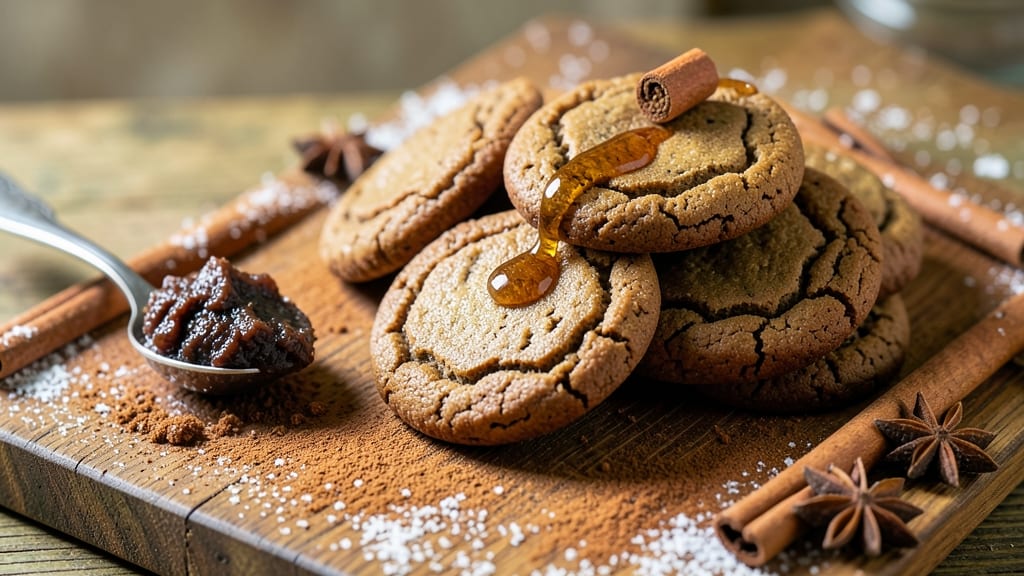
This traditional gingerbread cookie recipe delivers the warm, spiced molasses magic that makes holiday baking unforgettable. The secret lies in balancing molasses depth with classic gingerbread spices—cinnamon, ginger, and clove—creating cookies that taste like nostalgia in every bite.
I've perfected this recipe over years of holiday baking, ensuring each batch stays perfectly tender yet crisp at the edges.
The dough comes together in just 15 minutes with simple ingredients, but the real magic happens during baking. A precise 350°F oven ensures even cooking while maintaining that signature chewy texture.
The molasses adds natural sweetness, while the spice blend delivers warmth without overpowering. These aren't just cookies—they're a taste of tradition that brings people together.
By the time they emerge from the oven, you'll have cookies with a golden-brown crust and a tender, spiced center that melts in your mouth. The aroma alone fills the kitchen with holiday cheer, and the flavor—rich, slightly sweet, with a kick of spice—is impossible to resist.
Whether dusted with powdered sugar or left as-is, these cookies are the heart of any holiday spread.
Pair them with warm milk, serve as gifts, or use as a base for festive decorating. The recipe scales perfectly for baking parties or meal prep, ensuring you'll have fresh cookies ready whenever the craving strikes. Let's get baking—tradition starts here.
Ingredients for traditional gingerbread cookie
Unsulphured molasses and fresh spices transform simple pantry staples into holiday magic.
| Ingredient | Amount | Notes |
|---|---|---|
| Unsalted Butter 🧈 | ½ cup | Cold, cubed for even baking |
| Dark Brown Sugar 🍚 | 1 cup | Packed firmly for accuracy |
| Molasses 🍯 | ½ cup | Unsulphured for authentic flavor |
| Large Eggs 🥚 | 1 whole | Room temperature for blending |
| All-Purpose Flour 🌾 | 3 ½ cups | Sifted for light texture |
| Ground Cinnamon 🌿 | 1 ½ tsp | Freshly ground preferred |
| Ground Ginger 🌶️ | 1 ½ tsp | Freshly grated better |
| Ground Cloves 🌿 | ½ tsp | Whole cloves ground finely |
| Baking Soda 🧂 | 1 tsp | Pure, unadulterated |
| Diamond Crystal Kosher Salt 🧂 | ½ tsp | Fine grain for balance |
| Vanilla Extract 🍯 | 1 tsp | Pure, alcohol-based |
| Powdered Sugar 🍚 | ¼ cup | For dusting finished cookies |
The molasses is non-negotiable—unsulphured delivers that authentic depth of flavor. Whole Foods or specialty markets stock the best quality, but any reputable grocery store carries it. Look for bottles labeled 'unsulphured' or 'unrefined'—these contain the natural sugars and impurities that create that signature molasses taste. Penzeys offers a premium option if you're willing to splurge. Freshly ground spices make all the difference, so invest in small quantities of ground cinnamon, ginger, and cloves from bulk bins. The butter should be cold and cubed—this ensures proper texture without spreading during baking. For the sugar, pack it firmly into the measuring cup to achieve the perfect consistency.
No unsulphured molasses? Blackstrap molasses works in a pinch, though it has a stronger flavor. Substituting with regular molasses will yield a sweeter cookie with less depth. Fresh ginger root can be grated for a more vibrant flavor—use one-third the amount of ground ginger. For cloves, whole cloves ground in a spice grinder provide superior flavor to pre-ground. The baking soda and salt are standard, but Diamond Crystal kosher salt dissolves more easily than table salt. Vanilla extract should be pure—alcohol-based extracts have better flavor stability than imitation extracts.
Store the dough in an airtight container in the refrigerator for up to 5 days—it actually improves in flavor. For longer storage, freeze the dough in portions for up to 3 months. The powdered sugar keeps indefinitely in a cool, dry place. Baked cookies can be stored in an airtight container at room temperature for 1 week or frozen for 6 months. To maintain freshness, place a slice of bread in the container with the cookies—it absorbs moisture and keeps them tender.
Why You'll Love This Recipe
- No-Fuss Mixing: I swear by this recipe—just cream the butter and sugar, toss in the molasses, and fold in the dry stuff. No egg whites to whip, no fancy techniques, just a dough that comes together faster than I can put on a holiday playlist.
- Molasses Magic: That deep, caramelized kick from the molasses? It’s the star. The cookies stay soft in the middle with just enough chew, and trust me, the first bite at room temp is where it shines—like a spiced hug for your taste buds.
- Holiday or Snack: These work for everything. Wrap them in pretty paper for Christmas gifts, stash them in jars for teacher treats, or just grab one straight from the bag when you need a pick-me-up. (Yes, even on a Tuesday night.)
- Pantry Staples: Honestly, you’re probably already stocked. Butter, sugar, flour—check. Molasses? One bottle lasts me all year. And the dough keeps for days, so I make a big batch and freeze half. Less stress, more cookies.
Step-by-step instructions for traditional gingerbread cookies
Here's the method that delivers authentic molasses-spiced gingerbread with crisp edges and tender centers.
Cream Butter and Sugars for Maximum Flavor Development
In a stand mixer fitted with the paddle attachment, combine the 0.5 cup unsalted butter and 1 cup dark brown sugar on medium speed. Beat for 3-4 minutes until the mixture becomes light and fluffy, nearly doubling in volume. The butter should be completely incorporated, leaving no visible lumps.
This creaming process is crucial for developing the gingerbread's signature texture. The air incorporated at this stage creates those signature crackly tops while ensuring a tender crumb. I like to scrape down the sides of the bowl with a silicone spatula every 30 seconds to ensure even mixing and proper aeration.
Incorporate Molasses and Egg for Moisture Balance
Add the 0.5 cup molasses and 1 whole large egg to the creamed mixture. Mix on medium speed for 1-2 minutes until fully combined and smooth. The molasses will initially appear as thick streaks, but it will gradually emulsify into the butter mixture.
Here's the thing—molasses is dense and can make the dough too heavy if not properly incorporated. Mix just until combined to avoid developing gluten in the flour prematurely. The egg acts as a binder and adds moisture that prevents the cookies from becoming dry during baking.
Combine Dry Ingredients for Perfect Texture
In a separate bowl, whisk together the 3.5 cups all-purpose flour, 1.5 teaspoons ground cinnamon, 1.5 teaspoons ground ginger, 0.5 teaspoon ground cloves, 1 teaspoon baking soda, and 0.5 teaspoon diamond crystal kosher salt. Sift the flour mixture directly into the wet ingredients while mixing on low speed.
I always sift the dry ingredients to prevent lumps and ensure even distribution of the spices. The baking soda will react with the molasses and create lift, while the spices provide that authentic gingerbread warmth. Mix just until the dry ingredients are incorporated—overmixing develops gluten and results in tough cookies.
Add Vanilla and Chill the Dough
Remove the bowl from the mixer and stir in the 1 teaspoon vanilla extract using a silicone spatula. This step ensures the vanilla flavor is evenly distributed throughout the dough. Cover the bowl with plastic wrap and refrigerate for at least 1 hour or up to 24 hours for best results.
Chilling the dough is essential for two reasons: it firms up the butter so the cookies maintain their shape during baking, and it allows the flour to fully hydrate, resulting in a more tender cookie. The longer you chill the dough, the more pronounced the gingerbread flavor becomes as the spices meld with the other ingredients.
Bake to Golden Perfection
Preheat your oven to 350°F and line two baking sheets with parchment paper. Using a cookie scoop or tablespoon, portion the chilled dough into 1-inch balls and place them 2 inches apart on the prepared baking sheets. Flatten each ball slightly with your palm to create ½-inch thick cookies.
Bake for 10-12 minutes until the edges are deep golden brown and the centers appear slightly underbaked. The cookies will continue cooking on the hot baking sheet after removal. Let them cool on the baking sheet for 5 minutes before transferring to a wire rack to cool completely. Dust with 0.25 cup powdered sugar just before serving for that classic gingerbread finish.
Pro Tips For Making Traditional Gingerbread Cookie
- CHILL THE DOUGH: After mixing everything, pop the dough in the fridge for at least 1 hour—2 hours if you can swing it. I learned this the hard way when my first batch spread like a pancake on the baking sheet. Cold dough holds its shape, and the flavors meld better overnight, too.
- WEIGH THE FLOUR: Scoop that flour straight from the bag and level it off with a knife—don’t pack it down. I used to eyeball it, and my cookies turned out dense or crumbly. A kitchen scale takes the guesswork out, but even measuring cups work if you fluff the flour first.
- SKIP THE OVERMIXING: Once you add the flour, stop stirring the second it’s just combined. Overworking the dough makes gingerbread tough and chewy. Two turns of a spoon is all it takes—your dough should look shaggy, not smooth.
- USE ROOM-TEMP BUTTER: Take the butter out of the fridge 30 minutes before mixing—it should be soft but not greasy. Cold butter creates pockets of steam that make cookies spread, while overly warm butter dissolves into the sugar and ruins the texture. Stick your finger in: if it leaves a slight dent, you’re golden.
Creative variations of traditional gingerbread cookie
Spiced Rum Infusion
For an adult-friendly twist, replace 1 tablespoon of molasses with 1 tablespoon dark spiced rum (I recommend Kahlúa or Captain Morgan Spiced Rum). The alcohol burns off during baking, leaving behind warm caramel notes that complement the gingerbread spices perfectly.
Add the rum after creaming the butter and sugar—this ensures even distribution throughout the dough. 🍷
Chocolate-Dipped Decadence
After baking, dip half of each cookie into melted dark chocolate (I use 70% cacao Ghirardelli) and sprinkle with crushed candied ginger or flaky sea salt before the chocolate sets.
The chocolate pairs beautifully with the molasses and spices, creating a sophisticated yet approachable variation. Let the chocolate harden on parchment paper for 10 minutes before serving.
Cranberry-Orange Zing
Fold ½ cup dried cranberries and 1 tablespoon finely grated orange zest into the dough after mixing in the dry ingredients. The tartness of the cranberries cuts through the sweetness, while the orange zest adds a bright, citrusy note that elevates the classic gingerbread flavor.
This variation is especially festive and pairs wonderfully with holiday cheese boards. 🍊
Snickerdoodle Fusion
Add ½ teaspoon ground nutmeg and ¼ teaspoon ground allspice to the spice blend, then roll the baked cookies in a mixture of 2 tablespoons granulated sugar and 1 teaspoon cinnamon.
This fusion creates a cookie with the warmth of gingerbread and the cozy sweetness of snickerdoodles. The sugar coating caramelizes slightly during baking, adding an extra layer of texture and flavor.
Gingerbread Cookie Thumbprints
Create thumbprint cookies by pressing your thumb into the center of each baked cookie to form a well. Fill the wells with jam (I love raspberry or apricot preserves) and top with a dollop of whipped cream or a small piece of white chocolate.
This variation adds a playful, interactive element that’s perfect for kids or holiday gatherings. The jam provides a fruity contrast to the spiced cookie.
Gluten-Free Adaptation
For a gluten-free version, replace the all-purpose flour with a 1:1 gluten-free baking flour blend (I use King Arthur Measure for Measure). Add ½ teaspoon xanthan gum to help bind the dough.
The texture will be slightly denser, but the molasses and spices still shine. Bake these for 1-2 minutes longer than the original recipe to ensure they’re fully set. 🌱
Nutrition facts
Frequently asked questions
Why does my gingerbread dough taste too sweet?
The molasses is naturally sweet, but if your dough tastes overwhelmingly sugary, try reducing the brown sugar by 1 tablespoon or increasing the spices by ¼ teaspoon. The spices (especially ginger and cinnamon) balance sweetness beautifully. Also, ensure you're using unsulphured molasses—it has a deeper, less sweet flavor than regular molasses.
Can I make these cookies without molasses?
Yes, but the flavor won't be authentic. Replace the ½ cup molasses with ½ cup honey or ⅓ cup maple syrup for a similar depth, though the texture may be slightly different. For a closer match, use ¼ cup molasses + ¼ cup honey to retain some of the signature molasses warmth.
How do I store gingerbread cookies to keep them soft?
Store baked cookies in an airtight container with a slice of bread to absorb moisture. For longer freshness, place a damp paper towel in the container. Cookies stay tender for 1 week at room temperature or 6 months in the freezer. Reheat in a 300°F oven for 3-5 minutes to restore freshness.
What's the best way to decorate these cookies?
Classic options include dusting with powdered sugar or drizzling with melted white chocolate. For festive flair, use a piping bag with royal icing to create borders or holiday designs. Let decorations set for 1-2 hours before serving to prevent smudging.
Can I use this dough for gingerbread houses?
This recipe works well for small gingerbread houses, but you'll need to adjust the baking time to 8-10 minutes for thinner pieces. Chill the dough longer (24 hours) for better structural integrity. Use a cookie cutter and bake pieces directly on parchment-lined trays for easy assembly.