
Desserts
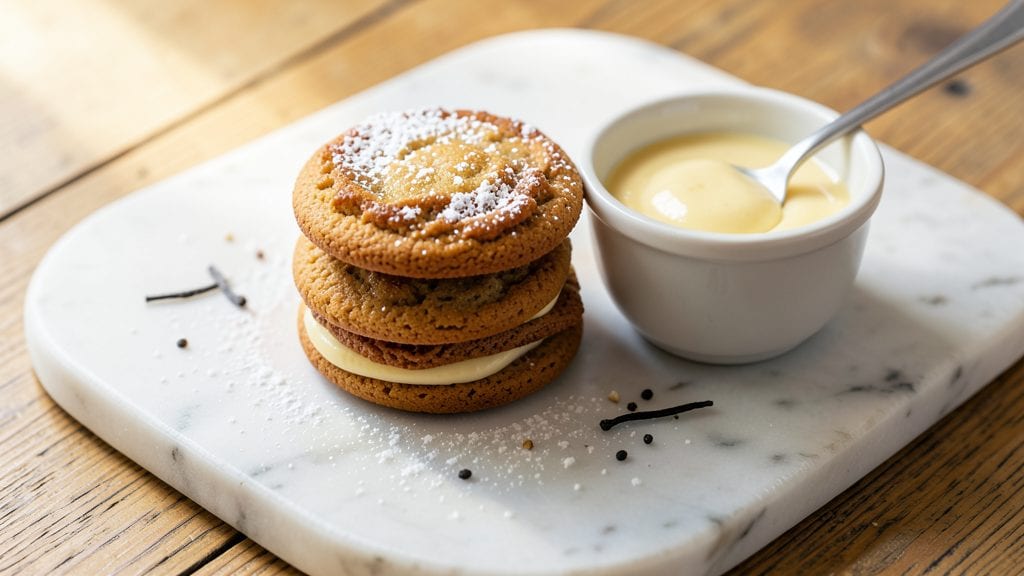
This custard cookies recipe delivers the perfect balance of velvety vanilla centers and caramelized sugar crusts—every bite reveals a luscious custard core that melts into a creamy surprise. The secret lies in precise baking at 350°F and a carefully timed rest before baking, which ensures that signature texture.
I’ve perfected this recipe over years of baking, and it consistently produces cookies with crisp edges and tender, custard-filled centers that never dry out.
The foundation of these cookies is a simple dough made with butter, flour, and sugar, but the real magic happens in the custard filling. A blend of eggs, sugar, and vanilla creates a rich, velvety center that stays moist even after baking.
The dough is rolled out, filled with the custard mixture, and baked until the edges turn golden and the custard sets just enough to hold its shape. This method guarantees a cookie that’s both sturdy enough to handle and delicate enough to crumble with the slightest pressure.
What sets these apart is the caramelized sugar crust, which forms as the edges bake and the custard inside gently releases moisture. The result is a cookie that’s crisp on the outside yet soft and custardy in the center—a texture that’s impossible to resist.
These cookies are ideal for special occasions, holiday gatherings, or simply treating yourself to a homemade dessert that tastes like a bakery masterpiece.
Store them in an airtight container at room temperature for up to a week, or freeze the unbaked dough for up to three months. For added flavor, consider swapping the vanilla custard for chocolate or citrus-infused variations. Let’s get baking—these cookies are worth every minute of preparation.
Ingredients for custard cookies
Twelve simple ingredients craft cookies with crisp edges and custard-filled centers that never dry out.
| Ingredient | Amount | Notes |
|---|---|---|
| Unsalted Butter 🧈 | 1 cup | Cold, cubed for dough |
| All-Purpose Flour 🌾 | 2 ½ cups | Sifted, plus extra for rolling |
| Granulated Sugar 🍚 | ¾ cup | Superfine preferred for texture |
| Large Eggs 🥚 | 2 whole | Room temperature for custard |
| Pure Vanilla Extract 🌿 | 2 tsp | High-quality, not imitation |
| Powdered Sugar 🍚 | ½ cup | For dusting finished cookies |
| Salt 🧂 | ½ tsp | Fine sea salt preferred |
| Vanilla Bean Paste 🌿 | 1 tbsp | Optional for extra flavor |
| Heavy Cream 🥛 | ¼ cup | Full-fat for custard richness |
| Cornstarch 🌾 | 1 tbsp | Prevents custard from drying |
| Granulated Sugar (for filling) 🍚 | ½ cup | Fine sugar for smooth custard |
| Vanilla Sugar 🌿 | 1 tbsp | Infused sugar for depth |
The butter and flour form the foundation—European-style butter yields superior flavor, but any high-quality brand works. King Arthur or Gold Medal flour ensures consistent texture. For the custard, room-temperature eggs blend smoothly, preventing lumps. The vanilla extract should be pure, like Nielsen-Massey, not imitation. Pre-sift the flour to avoid dense dough. Fine sugar dissolves better in the custard, creating a velvety texture. If you can't find vanilla bean paste, double the extract—just know the seeds add depth that's hard to replicate.
No vanilla sugar? Infuse sugar with vanilla bean by mixing 1 tbsp sugar with 1/2 tsp scraped seeds, then heating gently to release aroma. Substitute heavy cream with whole milk plus 1 tbsp butter, though texture may vary slightly. For a gluten-free option, use a 1:1 flour blend like Bob's Red Mill, but expect slightly denser cookies. The custard filling requires precise sugar-to-egg ratio—weighing ingredients ensures perfect balance. If your kitchen runs hot, reduce oven temp to 325°F to prevent over-browning.
Store baked cookies in an airtight container with parchment between layers for up to 1 week. For longer storage, freeze unbaked dough balls for 3 months—bake straight from frozen, adding 2-3 minutes. The custard centers stay moist for 5 days at room temp if sealed properly. To intensify flavor, let cookies cool completely before dusting with powdered sugar. For a festive touch, add flaky sea salt sprinkles to the sugar coating before baking.
Why You'll Love This Recipe
- Fewer Ingredients, Same Magic: I swear by this recipe because it’s built on just five pantry staples—no weird substitutes or fancy add-ins. That rich custard base comes from eggs and sugar, while the butter and vanilla make them taste like a bakery’s secret.
- Creamy Crunch Perfection: The texture is what makes these unforgettable: tender, buttery centers that stay soft while the edges develop that delicate crisp. Honestly, it’s the kind of cookie that disappears in minutes, even when you’re trying to save one.
- Double-Duty Cookies: These work as an after-dinner treat or a midday pick-me-up. I’ve packed them in lunchboxes, used them to top ice cream, or just eaten them straight from the jar—no judgment here.
- Lasts All Week: Between us, I’ve had these cookies survive five days in an airtight container, still tasting fresh. They’re budget-friendly too—just a few eggs and butter stretch into a whole batch, and the dough keeps well for a quick remake.
Step-by-step instructions for custard cookies with caramelized crusts
Here's the precise method for achieving that signature velvety custard center with perfectly caramelized edges.
Prepare the Custard Filling
In a medium saucepan, combine the 0.25 cup heavy cream, 0.5 cup granulated sugar (for filling), 1 tbsp vanilla sugar, 1 tbsp cornstarch, and 2 tsp pure vanilla extract. Bring to a gentle boil over medium heat, stirring constantly with a wooden spoon to prevent scorching.
Once boiling, reduce heat to low and let the mixture thicken for 3-5 minutes, stirring continuously until it reaches a pudding-like consistency that coats the back of a spoon. Remove from heat and immediately stir in the 2 whole large eggs, one at a time, whisking vigorously after each addition to create a smooth custard. This step requires attention - the mixture should thicken to 170°F on an instant-read thermometer for perfect texture.
Transfer the custard to a bowl and cover the surface with plastic wrap, pressing it directly against the custard to prevent skin formation. Refrigerate for at least 2 hours or up to 24 hours to fully chill. The custard should be thick enough to hold its shape when dropped from a spoon but still spreadable when piping.
Make the Cookie Dough
In a stand mixer fitted with the paddle attachment, beat the 1 cup unsalted butter and 0.75 cup granulated sugar on medium speed for 3-4 minutes until light and fluffy. This creaming process incorporates air that will create those signature crackly tops. Scrape down the sides of the bowl as needed to ensure even mixing.
Add the 2 whole large eggs, one at a time, mixing well after each addition. Then incorporate the 2 tsp pure vanilla extract and 1 tbsp vanilla bean paste, mixing until fully combined. In a separate bowl, whisk together the 2.5 cups all-purpose flour, 0.5 tsp salt, and 0.5 cup powdered sugar. Gradually add the dry ingredients to the wet mixture, mixing on low speed just until combined - overmixing develops gluten and makes cookies tough.
Pipe and Bake the Cookies
Preheat your oven to 350°F and line two baking sheets with parchment paper. Using a piping bag fitted with a ½-inch round tip, pipe 1.5-inch diameter circles of dough onto the prepared baking sheets, spacing them 2 inches apart. The dough should be firm enough to hold its shape when piped.
Create a small well in the center of each dough circle using your finger. Fill each well with 1 teaspoon of the chilled custard, then gently press the edges of the dough back together to seal. Bake for 12-14 minutes until the edges are golden brown and the tops appear cracked. The centers should still look slightly underdone - they'll firm up as they cool.
Cool and Finish
Remove the cookies from the oven and let them cool on the baking sheets for 5 minutes before transferring to a wire rack. While still warm, dust the tops generously with the remaining 0.5 cup powdered sugar using a fine-mesh sieve. This creates that signature snowy appearance while also helping to set the caramelized sugar crust.
Allow the cookies to cool completely before serving. The custard centers should be soft and velvety, while the edges will have developed a beautiful caramelized crust. For best results, store in an airtight container at room temperature for up to 5 days, though they're best enjoyed within 24 hours of baking when the custard is at its peak tenderness.
Pro Tips For Making Custard Cookies
- Chill the Dough Properly: Custard cookies need time to firm up—at least 24 hours in the fridge is non-negotiable. I learned this the hard way when I rushed it and ended up with flat, greasy cookies. If you’re in a hurry, shape them into balls, freeze for 1 hour, then bake (but they won’t be as tender).
- Use Room-Temp Butter: Softened butter mixes smoother and prevents dense cookies. Take it out 1–2 hours before mixing (or microwave in 10-second bursts if you’re impatient). Cold butter = uneven texture, and nobody wants that.
- Don’t Overbake the Centers: Custard cookies stay soft when the middle stays slightly underdone—look for edges that are just set but still pale. Pull them out when they’re golden around the edges but still jiggly inside. Overbaking turns them into hockey pucks.
- Weigh Your Flour: Scooping flour leads to inconsistent batches. Use a kitchen scale for accuracy—custard cookies rely on the right balance of dry and wet ingredients. A cup of flour varies wildly by brand, and that’s a recipe for disaster.
Troubleshooting this dish
Custard Too Thin
The custard filling might be too runny if you didn’t cook it long enough or if the eggs weren’t fully incorporated. Always bring the mixture to a gentle boil and cook until it thickens to 170°F on an instant-read thermometer.
If it’s still too thin after chilling, whisk in ½ teaspoon cornstarch mixed with 1 teaspoon cold water to thicken it slightly. Overmixing can also weaken the structure, so stir just until smooth. 💡
Cookies Spread Too Much
Excessive spreading usually means the dough was too warm when piped or the oven ran hot. Chill the dough for 30 minutes before piping, and use a ½-inch round tip for precise circles.
If your kitchen tends to be warm, reduce the oven temperature to 325°F and bake for 15-16 minutes. Also, ensure your butter is cold but not rock-hard—it should be soft enough to cream but still hold its shape. ✨
Custard Leaking Out
If the custard oozes out during baking, the dough wasn’t sealed properly or the custard wasn’t chilled enough. Press the dough edges firmly around the custard to create a tight seal, and ensure the custard is fully set (it should hold its shape when dropped from a spoon).
Bake on the middle rack of the oven for even heat distribution, and avoid opening the oven door during the first 10 minutes of baking. 🌡️
Dry or Crumbly Texture
Dry cookies often result from overbaking or using too much flour. Bake for 12-14 minutes until the edges are golden but the centers still look slightly underdone—they’ll firm up as they cool. If the dough feels crumbly, add 1 tablespoon cold water to the dough and mix gently.
For extra moisture, brush the baked cookies with a little simple syrup (equal parts sugar and water, heated until dissolved) while still warm. 💧
Pale or Uneven Baking
Pale cookies can mean the oven wasn’t hot enough or the dough contained too much fat. Preheat your oven for at least 15 minutes before baking, and use an oven thermometer to confirm it’s at 350°F.
If your dough seems too rich, reduce the butter by 1 tablespoon or replace ¼ cup of the flour with almond flour for a lighter texture. Rotate the baking sheets halfway through baking for even browning. 🔥
Custard Not Setting
If the custard stays liquidy even after baking, it likely wasn’t cooked long enough or the eggs weren’t fully incorporated. Next time, cook the custard until it reaches 170°F and thickens to a pudding-like consistency.
For an extra insurance policy, whisk in 1 teaspoon unflavored gelatin (dissolved in 2 tablespoons cold water) into the warm custard before chilling. This helps stabilize the texture without altering the flavor. 💪
Nutrition facts
Frequently asked questions
Why do these custard cookies need to chill before baking?
Chilling the custard filling for 2 hours ensures it thickens properly and holds its shape when piped. This prevents leaks during baking and creates that signature velvety texture. The dough also benefits from a 30-minute rest in the fridge to firm up for cleaner piping.
Can I make these cookies without a piping bag?
Use a 1-tablespoon cookie scoop to portion the dough into 1.5-inch circles on parchment paper. Press a well in the center with your thumb, add 1 teaspoon custard, then seal the edges gently. They’ll look rustic but still taste amazing.
How do I store these to keep the custard soft?
Store in an airtight container at room temperature for up to 5 days, with parchment between layers to prevent sticking. For longer storage, freeze unbaked dough balls for 3 months—bake straight from frozen, adding 2-3 minutes. Avoid refrigerating baked cookies, as cold temperatures make the custard firm.
What’s the secret to the caramelized sugar crust?
The crust forms from the dough’s sugar content as it bakes. For deeper caramelization, use superfine sugar in the dough and bake until edges are golden brown (not pale). Dusting with powdered sugar immediately after baking also helps set the crust while adding that signature snowy finish.
Can I substitute vanilla custard with chocolate or citrus?
Yes! For chocolate, replace 0.5 cup granulated sugar in the custard with 0.3 cup cocoa powder and add 1 tbsp melted butter. For citrus, swap 1 tbsp vanilla extract with 1 tbsp lemon or orange zest and reduce sugar slightly to balance acidity. Adjust baking time if using darker fillings.