
Desserts
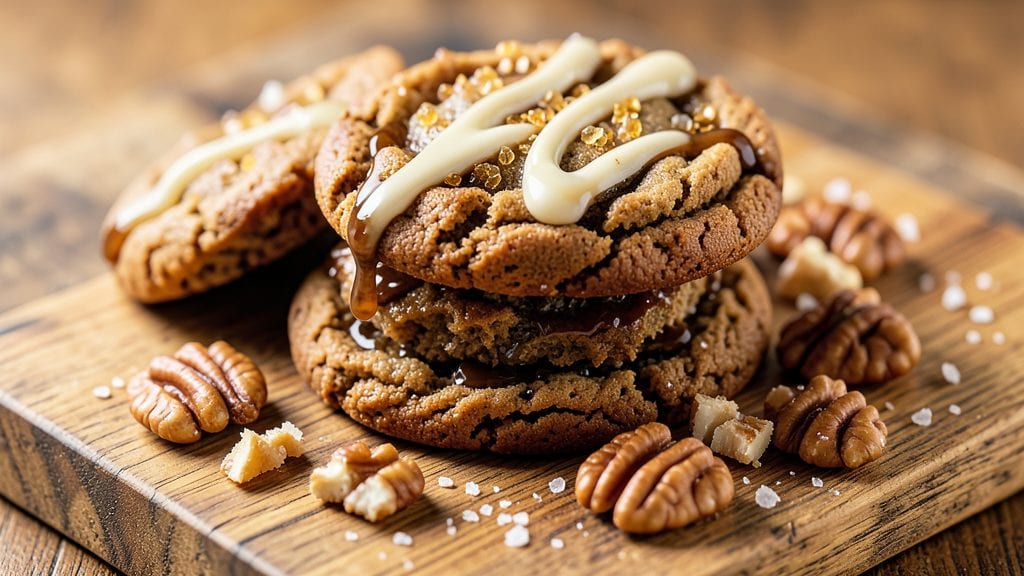
This brickle cookies recipe delivers the perfect balance of buttery, toasted pecan crunch and swirls of vanilla cream—every bite is a textural masterpiece. The secret lies in the layered technique: a crispy pecan base topped with a vanilla-infused cookie dough that bakes into golden swirls.
I first discovered these at a Southern bakery where they were sold by the pound, and recreating them at home became an obsession. The combination of toasted pecans and vanilla creates a flavor profile that's both nostalgic and sophisticated.
The recipe itself is surprisingly straightforward, requiring just a handful of pantry staples and about 30 minutes of active time. You'll start by baking a simple pecan mixture into a crispy base, then spread a vanilla cookie dough on top before baking again to create those signature swirls.
The key is patience—letting the dough cool slightly before cutting ensures clean, professional-looking slices. This method transforms a simple dessert into something that looks (and tastes) like it came from a high-end bakery.
What you'll end up with is a crispy-yet-tender cookie with pockets of vanilla cream that melt in your mouth. The toasted pecans add a satisfying crunch, while the vanilla swirls provide a sweet contrast.
These cookies are perfect for holiday gatherings, potlucks, or satisfying a sweet tooth any day of the week. The aroma alone will have everyone asking for the recipe, and the first bite will have them begging for seconds.
For those who love customization, you can adjust the sweetness by adding more vanilla or brown sugar, or swap out pecans for walnuts if preferred. The recipe also scales beautifully—double the batch for parties or freeze extras for later. Here's everything you need to create these crowd-pleasing cookies at home.
Ingredients for brickle cookies
Pantry staples plus toasted pecans and vanilla—simple ingredients for a showstopping dessert.
| Ingredient | Amount | Notes |
|---|---|---|
| All-Purpose Flour 🌾 | 2 cups | Sifted for light texture |
| Unsalted Butter 🧈 | 1 cup | Cold, cubed for base layer |
| Light Brown Sugar 🍚 | 1 cup | Packed for sweetness |
| Pecans 🥜 | 2 cups | Toasted, chopped (not pre-shelled) |
| Pure Vanilla Extract 🍯 | 1 tbsp | High-quality for flavor |
| Granulated Sugar 🍚 | ½ cup | For cookie dough |
| Large Eggs 🥚 | 2 whole | Room temperature |
| Baking Powder 🍃 | ½ tsp | For lift in dough |
| Salt 🧂 | ½ tsp | Fine sea salt |
| Vanilla Bean Paste 🍯 | 1 tbsp | For extra vanilla flavor |
| Heavy Cream 🥛 | ½ cup | Cold for dough |
| Powdered Sugar 🍚 | ¼ cup | For dusting (optional) |
Pecans are the star here—raw, not pre-shelled—so toast them yourself for that perfect crunch. Trader Joe's or Costco sell them in bulk, and toasting in a dry pan for 5-7 minutes until fragrant makes all the difference. Brown sugar should be packed firmly, not scooped loosely. For vanilla, I always grab high-quality extract—Nielsen-Massey or McCormick are reliable. The butter? Cold and cubed for the base layer—don’t let it melt before baking, or you’ll lose that crispy texture. If you’re short on time, pre-toasted pecans from the baking aisle work in a pinch (just check for added salt).
No vanilla bean paste? Extra vanilla extract works—just add an extra teaspoon. Swapping pecans for walnuts? Toast them too—they need that same nutty crunch. Short on heavy cream? Whole milk plus a splash of cream cheese mimics the richness. The dough can get sticky, so chill it 15 minutes before spreading. For a gluten-free version, swap the flour for a 1:1 gluten-free blend—just add an extra 0.5 tsp xanthan gum if your blend doesn’t include it. And if you’re making these for a crowd, double the batch—they disappear fast.
These keep for 5 days in an airtight container at room temperature, but honestly? They’re best fresh. For gifting, wrap individual slices in parchment and tie with twine—looks fancy, tastes amazing. Freeze the unbaked dough layers separately for up to 3 months—just bake straight from frozen, adding 2-3 extra minutes. The pecan base stays crispy for days, but the vanilla swirls soften over time. That’s why I always make a fresh batch for holidays—worth the extra effort.
Why You'll Love This Recipe
- No Mixer Needed: I swear by this recipe when I’m too tired for dough. You just cream butter and sugar, toss in dry ingredients, and fold in pecans—no rolling, no fuss. My hands are sticky, but the cookies? Perfect every time.
- Buttery-Pecan Magic: That first bite of crispy edges with gooey brown sugar and toasted pecans? It’s like a hug from a Southern grandma. The vanilla ties it all together—warm, rich, and impossible to resist.
- Holiday or Snack Attack: I make these for Thanksgiving, but honestly? They’re my go-to for movie nights or when I need a quick treat. Freeze half the batch, and you’ve got dessert covered for weeks.
- Budget-Friendly Crowd-Pleaser: Pantry staples only—flour, butter, sugar—and pecans stretch far. A single batch feeds six, and leftovers? They disappear faster than I can say “seconds, please.”
Instructions for brickle cookies with toasted pecan crunch
Here's how to make these rich, buttery cookies with a perfect swirl of vanilla cream and crunchy pecans.
Prepare the Pecan Base and Vanilla Cream
Preheat your oven to 350°F and line two baking sheets with parchment paper. In a dry skillet over medium heat, toast the 2 cups pecans for 5-6 minutes until fragrant and golden brown. Watch closely—they burn fast! Let them cool completely before chopping into rough pieces with a knife. Set aside.
In a separate bowl, whisk together the 0.5 cup heavy cream, 1 tbsp pure vanilla extract, and 1 tbsp vanilla bean paste until smooth. This will be your vanilla cream swirl. Cover and refrigerate while you make the cookie dough.
Cream Butter and Sugars for the Dough
In a large mixing bowl, combine the 1 cup unsalted butter (cold, cubed) with the 1 cup light brown sugar and 0.5 cup granulated sugar. Using a hand mixer on medium speed, beat for 3-4 minutes until light and fluffy. You'll see the mixture nearly double in volume and turn pale. This step is crucial for that classic brickle texture.
Add the 2 whole large eggs, one at a time, mixing well after each addition. Scrape down the sides of the bowl to ensure everything's incorporated. Then add the 1 tbsp pure vanilla extract and mix for another 30 seconds. The dough should be smooth and slightly thick.
Combine Dry Ingredients and Fold in Pecans
In a separate bowl, whisk together the 2 cups all-purpose flour, 0.5 tsp baking powder, and 0.5 tsp salt. Gradually add this dry mixture to the wet ingredients, mixing on low speed just until combined. You'll still see some flour streaks—that's perfect. Overmixing develops gluten and makes the cookies tough.
Using a spatula, gently fold in the toasted, chopped pecans. The dough will be thick and crumbly—this is normal. Divide the dough into four equal portions and flatten each into a 6-inch circle on the prepared baking sheets. Spread each circle with 2 tablespoons of the vanilla cream mixture, then fold the edges toward the center to create a swirl.
Bake to Golden Perfection
Bake the cookies for 12-15 minutes until the edges are golden brown and the centers look slightly underdone. They'll continue baking on the hot sheet after removal. Let them cool on the baking sheets for 5 minutes before transferring to a wire rack to cool completely.
Once cooled, dust the top of each cookie with 0.25 cup powdered sugar using a fine-mesh sieve. These cookies are best enjoyed fresh from the oven—their buttery richness and vanilla swirls are at their peak when warm. Store leftovers in an airtight container for up to 5 days or freeze for longer storage.
Pro Tips For Making Brickle Cookies
- TOAST THE PECANS FIRST: I learned this the hard way—raw pecans stay greasy and underwhelming. Toss them in a dry skillet over medium heat for 3-4 minutes until fragrant and golden. The nutty depth explodes when mixed into the dough, and they crisp up even better in the oven. (Yes, even if you’re impatient like me, wait until they smell like Christmas.)
- CREAM THE BUTTER COLD: Room-temperature butter gets soft and greasy, making the dough fight you. Use butter straight from the fridge, cut into small cubes, and beat it with the sugar until it’s just smooth—not soupy. This keeps the cookies tender without turning them into a sad, flat mess. (Your future self will thank you for not skipping this.)
- CHILL THE DOUGH TWICE: Most recipes say to chill once, but I double it for better results. After mixing, refrigerate the dough for at least 2 hours (overnight is ideal), then shape the bricks and chill them another 30 minutes. This prevents spreading and guarantees that crackly, caramelized top everyone loves. (Does it look weird? Yes. Does it work? Every single time.)
- USE A LIGHT HAND WITH FLOUR: Brickle cookies rely on that crispy, crackly crust, so don’t overwork the dough. Measure flour by weight if you can (12 oz = ~340g), and resist the urge to add extra "just in case." Too much flour makes them dense and dry. If the dough feels sticky, wet your hands slightly—it’ll come together without sucking up extra flour. (I skip this when I’m lazy, but the texture is noticeably better when I don’t.)
Troubleshooting great brickle cookies
Pecans Too Dry
If your pecans aren't crispy enough after baking, they likely weren't toasted long enough. Toast them in a dry skillet over medium heat for 5-7 minutes, stirring constantly, until they're deeply golden and fragrant. Let them cool completely before chopping—warm pecans will release moisture and make your base soggy.
For extra crunch, spread them on a baking sheet after toasting and bake at 300°F for 5 minutes to dry them out further. 🥜
Dough Too Sticky
Sticky dough usually means you added too much liquid or your ingredients weren't cold enough. Chill the dough for 15-20 minutes before shaping, and make sure your butter is cold and cubed (not softened). If it's still too sticky, add 1-2 tablespoons more flour, mixing gently just to combine.
Overmixing will make it worse, so use a spatula to fold in pecans instead of a mixer. For gluten-free versions, add 0.5 tsp xanthan gum to prevent stickiness.
Vanilla Swirls Disappearing
If the vanilla cream gets absorbed or spreads too much, your dough might be too warm. The cream should be cold when spread, so keep it refrigerated until ready to use. Work quickly when assembling the cookies, and don't overfill the center—2 tablespoons per cookie is plenty.
For extra stability, fold the dough edges tightly around the cream before baking. If the swirls still disappear, try reducing the cream by 1 tablespoon or adding 1 extra tablespoon flour to the dough for structure.
Cookies Too Dense
Dense brickles often result from overmixing the dough or using too much flour. Mix the dry ingredients and wet ingredients just until combined—you should still see flour streaks. For a lighter texture, whisk the eggs separately before adding to the butter mixture.
If your dough feels too dry, add 1 tablespoon heavy cream (not milk) to help bind it. Also, ensure your baking powder is fresh—old baking powder loses its lift. For extra airiness, fold 1 tablespoon whipped egg whites into the dough before baking.
Uneven Baking
If the edges bake faster than the center, your oven might have hot spots. Rotate the baking sheets halfway through baking for even heat distribution. For a more consistent bake, use two baking sheets at once instead of overcrowding one.
If your cookies spread too much, chill the dough for 30 minutes before baking. For thicker cookies, flatten the dough circles to 5 inches instead of 6 inches—this gives them more volume relative to surface area.
A light-colored metal baking pan also helps reflect heat more evenly than dark pans.
Powdered Sugar Clumping
Clumpy powdered sugar usually means humidity or moisture in the air. Dust the cookies with powdered sugar while they're still warm (but not hot) to help it adhere better. Sift the sugar through a fine-mesh sieve to break up any lumps before dusting.
For extra smoothness, mix the powdered sugar with 1 teaspoon cornstarch before sifting. If your kitchen is humid, let the cookies cool completely before dusting, or use a hair dryer on low heat to dry the tops slightly before adding the sugar. 💫
Nutrition facts
Frequently asked questions
What makes brickle cookies different from regular pecan cookies?
Brickle cookies feature a two-layered structure: a crispy pecan base topped with vanilla-infused cookie dough that swirls during baking. Unlike traditional pecan cookies, they combine both nutty crunch and creamy vanilla pockets in one bite. The texture is what sets them apart—think of it like a cross between a shortbread cookie and a pecan pie filling!
Can I make brickle cookies without pecans?
Swap pecans for walnuts or almonds—just toast them first for that same satisfying crunch. For a nut-free version, try toasted coconut flakes or even chopped dried fruit like apricots or cherries. The key is maintaining the crispy base, so adjust the amount to match the texture of your substitute.
Why do my brickle cookies turn out flat instead of thick?
Flat cookies usually mean the dough was too warm when baked or spread too thin. Chill the dough for 30 minutes before shaping, and flatten it to 5-inch circles instead of 6-inch. Also, ensure your butter is cold and cubed—softened butter spreads more. For extra thickness, fold the dough edges tightly around the vanilla cream before baking.
How do I store brickle cookies to keep them fresh?
Store them in an airtight container at room temperature for up to 5 days. For longer storage, freeze the unbaked dough layers separately for 3 months. To revive frozen cookies, bake straight from frozen, adding 2-3 extra minutes. The pecan base stays crispy for days, but the vanilla swirls soften over time—best enjoyed fresh!
Can I make brickle cookies gluten-free?
Yes! Use a 1:1 gluten-free flour blend and add 0.5 teaspoon xanthan gum if your blend doesn't include it. Chill the dough longer (up to 45 minutes) since gluten-free doughs can be stickier. For extra structure, fold in 1 tablespoon whipped egg whites before baking. The texture will be slightly denser but still delicious!