
Desserts
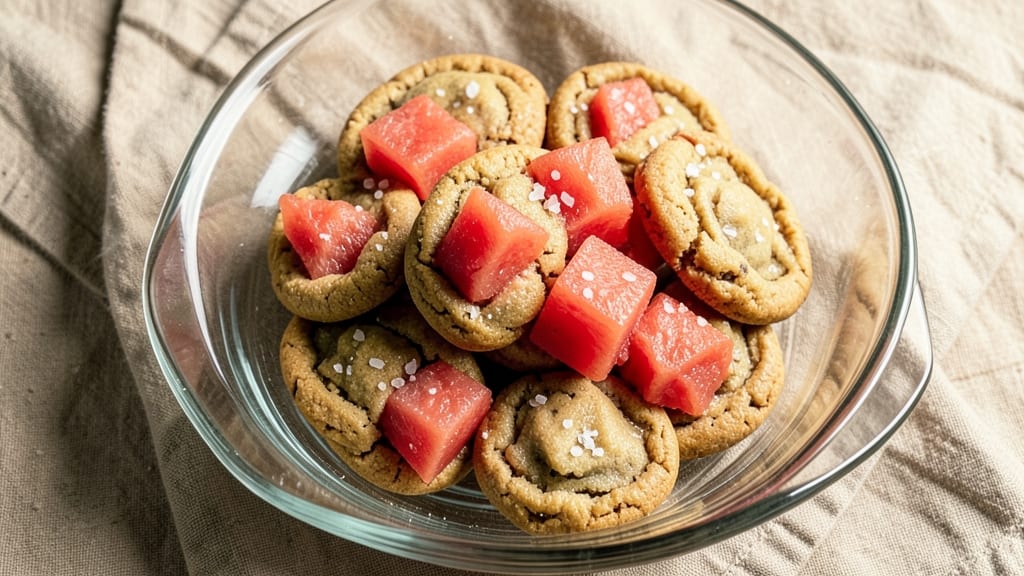
This vegan watermelon cookies recipe brings summer's brightest flavors into every bite with juicy watermelon pieces and a tender, chewy texture. The secret lies in blending fresh watermelon puree with plant-based ingredients to create cookies that taste like a refreshing treat rather than a dense dessert.
I developed this recipe after craving something light enough for hot afternoons but still satisfying enough to hold its own as a dessert.
The beauty of these cookies is their simplicity—just 8 ingredients, no special equipment, and a baking time of 12 minutes at 350°F. The watermelon puree adds natural sweetness and moisture, while the almond flour base keeps them tender yet sturdy.
What makes them truly special is how the watermelon flavor shines through without overpowering the cookie's structure, creating a perfect balance of fruit and baked goodness.
By the time they emerge from the oven, you'll have cookies with juicy watermelon pockets, lightly caramelized edges, and a subtle sweetness that's impossible to resist. The texture is chewy yet tender, with just enough bite to make them satisfying.
These aren't just cookies—they're a celebration of summer in every bite, and they're surprisingly easy to make.
For extra zing, try adding lime zest or a pinch of chili powder to the dough, or drizzle with coconut milk for a tropical twist. Perfect for picnics, potlucks, or just enjoying with a glass of iced tea on a sunny afternoon. Let's get baking!
Ingredients for watermelon cookies
Eight simple ingredients transform summer's brightest fruit into chewy, refreshing cookies perfect for hot afternoons.
| Ingredient | Amount | Notes |
|---|---|---|
| Fresh Watermelon 🍉 | 2 cups | Seedless, cubed (1-inch pieces) |
| Almond Flour 🌰 | 2 cups | Fine, blanched preferred |
| Coconut Sugar 🍯 | ½ cup | Lightly packed for sweetness |
| Extra-Virgin Coconut Oil 🥥 | ½ cup | Solid, not melted for dough |
| Flaxseed Meal 🌾 | 2 tbsp | Ground flaxseed for binding |
| Unflavored Almond Milk 🥛 | ¼ cup | For flax egg mixture |
| Vanilla Extract 🌿 | 1 tsp | Pure Madagascar preferred |
| Diamond Crystal Kosher Salt 🧂 | ½ tsp | Fine grain for balance |
| Lime Zest 🍋 | 1 tsp | Freshly grated for brightness |
Watermelon quality is non-negotiable—look for seedless varieties with vibrant red flesh, not pale or watery fruit. Trader Joe's and Whole Foods carry excellent options year-round, but summer farmers' markets offer the sweetest selections. Cube the watermelon into uniform 1-inch pieces; consistency ensures even baking. For optimal flavor, use watermelon at peak ripeness—when it yields slightly to gentle thumb pressure. The almond flour should be fine and blanched; brands like Bob's Red Mill or Anthony's Goods deliver the best texture. Store your almond flour in the freezer to preserve freshness, preventing rancidity that dulls flavor.
No fresh watermelon? Frozen seedless watermelon cubes work in a pinch—thaw completely before using. Substituting coconut sugar? Maple syrup or agave nectar at half the amount maintains moisture, though texture may vary slightly. For a nut-free option, replace almond flour with oat flour or gluten-free 1:1 blend, though texture will be denser. The flax egg mixture must rest for 5 minutes to thicken properly; don't skip this step or your cookies may spread excessively. Lime zest can be substituted with lemon zest at double the amount, but lime's unique citrus notes are ideal here. Store-bought vanilla extract is fine, but homemade vanilla bean paste elevates the flavor profile dramatically.
These cookies keep remarkably well—store in an airtight container with parchment paper between layers for up to 5 days at room temperature. For longer storage, freeze portions for up to 3 months; thaw at room temperature before serving. The watermelon pieces remain juicy when baked, but for extra moisture, brush cookies with a light coating of coconut milk glaze after baking. Reheat briefly in a 300°F oven for 2-3 minutes to restore chewiness if they've dried out. Portion dough into 1-tablespoon balls for consistent size; overmixing develops gluten and makes cookies tough.
Why You'll Love This Recipe
- No-Fuss Mixing: I swear, these cookies take less effort than opening a bag of store-bought. Blend the watermelon pulp with almond flour, a touch of coconut sugar, and flaxseed meal—no eggs, no butter, no fuss. The coconut oil binds everything together while you’re still scrolling through your phone.
- Sweet-Tart Magic: That first bite of juicy watermelon with the buttery crunch of almond flour? It’s like summer in cookie form. The coconut sugar caramelizes just enough to balance the melon’s brightness, and the flaxseed adds a subtle nuttiness that ties it all together.
- Picnic Perfect: Between us, these are my go-to for potlucks, kids’ lunchboxes, or even a last-minute dessert when guests show up. They hold up surprisingly well (no one expects them to be too fresh) and taste just as good cold as they do warm.
- Pantry-Friendly Flex: Honestly, I make a double batch and freeze half—they thaw in minutes and still taste fresh. Plus, using almond flour and coconut sugar stretches my budget further than flour-and-sugar cookies, and the watermelon’s natural sweetness means I don’t need extra sugar. Win.
Step-by-step instructions for refreshing summer bites
Transform simple ingredients into vibrant cookies with a juicy watermelon surprise inside.
Prepare the Flax Egg Mixture
In a small bowl, combine the 2 tablespoons flaxseed meal with the 0.25 cup unflavored almond milk. Stir vigorously and let it sit for 10 minutes until it thickens into a gel-like consistency. This flax egg acts as the binder in our flourless dough, replacing traditional eggs while keeping the texture tender. You'll know it's ready when it holds its shape briefly when spooned—it should resemble raw egg whites in viscosity.
While the flax egg thickens, measure out the 2 cups almond flour and 0.5 cup coconut sugar in a separate bowl. Sift them together lightly to aerate the mixture—this prevents dense cookies. The almond flour gives structure while maintaining a delicate crumb, and the coconut sugar adds natural caramel notes that complement the watermelon's sweetness.
Mix the Dough and Fold in Watermelon
Add the thickened flax egg to the almond flour mixture and stir until fully incorporated. The dough will be crumbly at first, but don't overmix—just combine until no dry spots remain. Here's the thing: the dough shouldn't be sticky or form a ball, which is normal for almond flour-based recipes.
Next, fold in the 2 cups fresh watermelon (cubed) using a silicone spatula. Work gently to avoid crushing the fruit pieces—you want them to remain intact for that surprise burst of juice when bitten. Add the 1 teaspoon lime zest and 0.5 teaspoon diamond crystal kosher salt now, distributing them evenly. The lime zest brightens the flavor profile while the salt enhances the natural sweetness of both the watermelon and coconut sugar.
Incorporate the Coconut Oil and Vanilla
Cut the 0.5 cup extra-virgin coconut oil into small cubes and let it soften slightly at room temperature for 5-7 minutes. This ensures it blends smoothly without melting completely. Add the softened coconut oil to the dough and mix with your hands or a spatula until fully combined. The coconut oil adds richness and helps create that signature tender crumb.
Add the 1 teaspoon vanilla extract and mix until the dough comes together. The vanilla deepens the flavor complexity, creating a warm contrast to the cool watermelon. At this stage, the dough should be soft but not sticky—if it's too dry, add 1 teaspoon unflavored almond milk at a time until it holds together when pressed. The dough will be slightly moist, which is ideal for these cookies.
Chill the Dough for Perfect Texture
Cover the dough with plastic wrap and refrigerate for at least 1 hour, or up to 24 hours for best results. Chilling allows the flavors to meld and prevents the cookies from spreading too much in the oven. This step is crucial—it ensures the watermelon pieces stay intact during baking and gives you that perfect balance of chewy and crispy texture.
While the dough chills, preheat your oven to 350°F and line two baking sheets with parchment paper. The oven temperature is critical here: too high, and the outer edges will burn before the centers set; too low, and the cookies won't develop that lovely golden hue. Trust the 350°F setting for consistent results every time.
Shape and Bake the Cookies
Using a cookie scoop or tablespoon, portion the chilled dough into 1-inch balls and place them 2 inches apart on the prepared baking sheets. The spacing allows room for spreading while ensuring each cookie maintains its shape. Gently flatten each ball with your palm to about ½-inch thickness—this creates a uniform base for even baking.
Bake for 12-14 minutes, rotating the pans halfway through, until the edges are golden brown and the centers look slightly underdone. The watermelon will release juices during baking, so watch closely after 10 minutes—you want the cookies to set but not dry out completely. They should pull away from the parchment paper easily when gently lifted.
Let the cookies cool on the baking sheets for 5 minutes before transferring to a wire rack. The residual heat will finish setting the cookies while keeping the watermelon juicy inside. Serve warm for the ultimate experience—each bite delivers a perfect balance of chewy almond flour cookie and refreshing watermelon surprise.
Pro Tips For Making Watermelon Cookies
- Pulse the Watermelon: DESCRIPTION: Blend the flesh into a smooth purée—no chunks—before mixing with almond flour. I learned this the hard way: even small seeds or fibrous bits turn these cookies gummy. Run the watermelon through a fine-mesh sieve if your blender struggles.
- Chill the Dough: DESCRIPTION: Let the mixture sit in the fridge for 20 minutes before baking. The coconut oil can get too soft at room temp, and these cookies spread like wildfire. A quick rest keeps them from turning into pancakes.
- Skip the Overmixing: DESCRIPTION: Stir the flaxseed meal into the wet ingredients first, then fold in the almond flour—just until combined. Overworking the dough makes the texture dense. Think "gentle" here, not "thorough."
- Bake at 325°F: DESCRIPTION: Too hot, and the coconut sugar burns before the edges set. Too cool, and the centers stay doughy. 325°F is the sweet spot—rotate the pan halfway for even color. (Yes, even if you’re impatient like me.)
Best sauces and condiments for these flavors
Citrus Glaze Magic
Brighten your watermelon cookies with a lime or lemon glaze made from 2 tablespoons powdered coconut sugar mixed with 1 tablespoon lime juice and 1 teaspoon water. Brush this glaze over the warm cookies right after baking—it adds a tangy spark that cuts through the sweetness.
For extra shine, add ½ teaspoon lime zest to the glaze mixture. This glaze also helps lock in moisture, keeping the watermelon pieces juicy longer. 🍋
Spiced Coconut Drizzle
For a tropical twist, melt ¼ cup coconut milk with 1 tablespoon coconut sugar and a pinch of ground cinnamon or cayenne pepper over low heat. Once smooth, drizzle over cooled cookies for a creamy, spiced finish.
The coconut milk enhances the watermelon flavor while the spices add warmth. This drizzle works especially well with the lime zest in the dough, creating a perfect summer flavor profile.
Chocolate-Dipped Contrast
Melt ½ cup dairy-free dark chocolate (70% cocoa or higher) with 1 teaspoon coconut oil for a silky texture. Dip half of each cookie into the melted chocolate and place on parchment paper to set.
The rich, bitter chocolate contrasts beautifully with the sweet watermelon, adding depth to each bite. For extra flair, sprinkle with crushed pistachios or toasted coconut flakes before the chocolate sets.
Honey-Lime Swirl
Mix 1 tablespoon raw honey with 1 teaspoon lime juice and a pinch of sea salt to create a swirl topping. After baking, use a toothpick to swirl the mixture into the warm cookies before they cool completely.
The honey adds a subtle caramel note that pairs perfectly with the watermelon's natural sweetness, while the lime keeps the flavor fresh and bright. This topping is especially effective if you omit the lime zest from the dough.
Vanilla Bean Frosting
Whip ½ cup powdered coconut sugar with 2 tablespoons softened coconut oil and 1 teaspoon vanilla bean paste until smooth. Pipe or spread this frosting over cooled cookies for a delicate, vanilla-infused finish.
The vanilla bean paste adds a luxurious depth that complements the watermelon's freshness. For a lighter touch, dust with powdered coconut sugar after frosting for a snowy effect.
Fresh Fruit Garnish
Top your baked cookies with tiny watermelon cubes or berries (like raspberries or blueberries) for a pop of color and extra fruit flavor. Place the garnishes on immediately after baking while the cookies are still warm—they'll stick slightly to the surface.
This not only adds visual appeal but also gives an extra burst of fresh fruit with every bite. For a tropical vibe, use mango slices or passion fruit pulp instead. 🍓
Nutrition facts
Frequently asked questions
Can I make these watermelon treats without almond flour?
For a nut-free version, swap the 2 cups almond flour with 2 cups oat flour or a 1:1 gluten-free baking blend. The texture will be slightly denser, but still delicious. If using oat flour, pulse it in a food processor first to create a fine texture similar to almond flour.
Why do my watermelon cookies turn out too dry?
Overbaking is the most common cause. These cookies are done when edges are golden but centers still look slightly soft (12-14 minutes at 350°F). Remove them promptly and let cool on the baking sheet for 5 minutes before transferring. For extra moisture, brush warm cookies with a light coconut milk glaze.
How can I make these cookies nut-free AND egg-free?
This recipe already meets both requirements! The flax egg replaces traditional eggs, and almond flour can be substituted as mentioned above. For extra binding power, add 1 extra tablespoon flaxseed meal to the dough. The coconut oil provides richness without dairy, making these perfect for multiple dietary needs.
Can I use frozen watermelon instead of fresh?
Yes, but thaw it completely first and drain excess liquid. Frozen watermelon works in a pinch, though fresh yields better texture. For optimal results, use seedless watermelon at peak ripeness—it should have vibrant red flesh and yield slightly to gentle pressure. The flavor difference is noticeable!
What's the best way to store these cookies?
Keep them fresh in an airtight container with parchment paper between layers for up to 5 days at room temperature. For longer storage, freeze portions for 3 months. Thaw at room temperature—no microwave needed! The watermelon pieces stay juicy when properly stored.