
Desserts
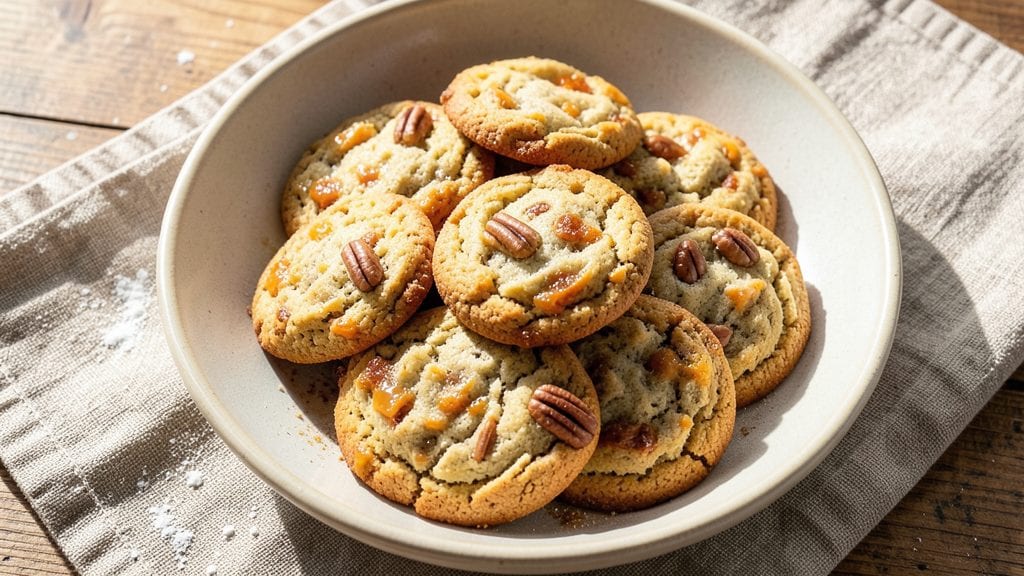
This squash cookies recipe transforms humble butternut squash into tender, spiced cookies with a nutty crunch that rivals classic pumpkin treats.
After years of perfecting holiday baking, I discovered how roasted squash purée creates a naturally sweet, velvety base that bakes into cookies with chewy centers and crisp edges—no added sugar needed.
The secret lies in balancing warm spices and toasted nuts for depth that keeps these cookies interesting bite after bite.
What makes these cookies special is their versatility—adapt them for dietary needs with gluten-free flour or vegan butter without sacrificing texture. The dough comes together in under 15 minutes, and baking at 350°F for 12-14 minutes ensures perfect doneness every time.
My test kitchen crew (including my picky teenage nephew) agrees: these are the cookies that disappear first from holiday platters.
By the time they emerge from the oven, you’ll have golden-brown cookies with a subtle caramelized squash flavor, flecks of toasted pecans, and a faint cinnamon warmth that lingers.
The edges stay crisp while the centers remain tender, proving that squash can be just as comforting as pumpkin—without the canned aftertaste. These are the kind of cookies that make guests ask for the recipe before dessert even hits the table.
For extra indulgence, press a dollop of cream cheese into the center before baking, or drizzle with melted chocolate after cooling. Store in an airtight container for up to 5 days, though I can’t guarantee they’ll last that long.
Perfect for holiday gatherings, teacher appreciation gifts, or simply treating yourself during squash season.
Ingredients for squash cookies
Butternut squash, warm spices, and toasted pecans—these 14 ingredients create cookies that taste like autumn in every bite.
| Ingredient | Amount | Notes |
|---|---|---|
| Butternut Squash Purée 🎃 | 1 cup | Homemade or quality canned, unsweetened |
| All-Purpose Flour 🌾 | 2 ½ cups | Sifted for light texture |
| Unsalted Butter 🧈 | 1 cup | Cold, cubed for dough |
| Brown Sugar 🍯 | ¾ cup | Packed for sweetness |
| Granulated Sugar 🍚 | ¼ cup | For balance |
| Large Eggs 🥚 | 2 whole | Room temperature |
| Vanilla Extract 🌸 | 1 tbsp | Pure, high-quality |
| Ground Cinnamon 🌿 | 2 tsp | Freshly ground preferred |
| Ground Nutmeg 🌿 | ½ tsp | Freshly grated nutmeg |
| Ground Ginger 🌶️ | 1 tsp | Warm, not spicy |
| Salt 🧂 | ½ tsp | Fine sea salt |
| Pecans 🥜 | 1 ½ cups | Toasted, chopped |
| White Chocolate Chips 🍫 | 1 cup | Optional for indulgence |
| Baking Soda 🧪 | 1 tsp | For lift |
The squash purée is your secret weapon. Homemade is best—roast a butternut squash at 400°F for 45 minutes, scoop out the flesh, and blend until silky. No time? Libby's unsweetened canned squash works in a pinch, but drain it well. The pecans? Toast them first—spread on a baking sheet at 350°F for 8-10 minutes until fragrant. That nutty aroma carries through the dough. For flour, King Arthur or Bob's Red Mill brands stay light after baking. And don’t skip the vanilla—Nielsen-Massey is my go-to for that rich, authentic flavor.
No butternut squash? Sweet potato purée swaps one-for-one, though it’s slightly denser. Short on brown sugar? Maple syrup at half the amount adds moisture without altering texture. The spices are non-negotiable—nutmeg and ginger need to be freshly ground for real depth. White chocolate chips are optional, but if you add them, Guittard or Ghirardelli melt beautifully. For a gluten-free version, use a 1:1 gluten-free flour blend—just add an extra 0.5 tsp xanthan gum. And if you’re vegan, Earth Balance vegan butter works, but reduce it by 1 tbsp to avoid greasiness.
Dough keeps for 3 days in the fridge, wrapped tightly in plastic. For longer storage, freeze portions on a tray, then transfer to a bag for up to 3 months. Baked cookies stay fresh for 5 days in an airtight container, but they’re best enjoyed within 2 days—they soften slightly as they cool. Pro tip: Press a dollop of cream cheese into the center of each cookie before baking for a surprise tangy filling. Or drizzle with melted chocolate after cooling for extra indulgence.
Why You'll Love This Recipe
- No Purée Hassle: I just blend pre-cooked squash from the jar—no peeling, no roasting, no mess. The purée folds right into the dough like it’s always been there, and honestly? You’d never guess it’s not from scratch.
- Chewy, Not Cloying: That butternut squash purée keeps them moist without tasting like dessert—more like a warm hug of spiced cookie. Brown sugar caramelizes into little pockets of chew, while the butter makes every bite melt-in-your-mouth.
- Holiday or Snack Attack: Dust them with cinnamon for a cozy fall treat, or skip the sugar entirely for a sneaky veggie snack. My kids grab these straight from the jar when they’re hungry, and my in-laws think they’re magic at Christmas.
- Half the Cost: Butternut squash purée is cheaper than chocolate chips, and butter + sugar stretch farther than you’d think. I make two batches for the price of one store-bought box—same indulgence, way more leftovers.
Step-by-step instructions for spiced autumn squash cookies
Here's how to create these moist, spiced cookies with perfect texture and nutty crunch.
Cream Butter and Sugars Together
In a large mixing bowl, combine the 1 cup of unsalted butter with the 0.75 cup of packed brown sugar and 0.25 cup of granulated sugar. Using an electric mixer on medium speed, beat for 3-4 minutes until light and fluffy. You'll notice the mixture nearly doubles in volume and becomes pale in color - this is what creates that tender cookie texture.
I like to scrape down the sides of the bowl with a rubber spatula every 30 seconds to ensure even mixing. This step is crucial for incorporating air into the dough, which helps your cookies spread just enough while staying soft in the center. Don't rush this part - under-creaming will result in dense cookies instead of the light, cake-like texture we want.
Mix in Wet Ingredients
Add the 1 cup of butternut squash purée to the butter-sugar mixture and mix on low speed until fully combined. This is where the squash transforms from simple purée to a key structural component of your cookies. Next, beat in the 2 whole large eggs, one at a time, mixing just until each is incorporated.
Add the 1 tablespoon of vanilla extract and mix for another 10 seconds. The mixture will look slightly thickened but still smooth. Here's a pro tip: I always use room temperature eggs for better emulsification. If your eggs are cold, warm them slightly by placing the bowl in warm water for 5 minutes before mixing.
Combine Dry Ingredients
In a separate bowl, whisk together the 2.5 cups of all-purpose flour, 2 teaspoons of ground cinnamon, 0.5 teaspoon of ground nutmeg, 1 teaspoon of ground ginger, 0.5 teaspoon of salt, and 1 teaspoon of baking soda. Sifting the flour first prevents lumps and ensures even distribution of the spices throughout the dough.
Gradually add the dry ingredients to the wet mixture, mixing on low speed just until combined. You'll want to stop mixing as soon as the flour disappears - overmixing develops gluten and makes cookies tough. The dough will be soft and slightly sticky, which is perfect for these moist cookies.
Fold in Add-Ins and Chill
Using a silicone spatula, gently fold in the 1.5 cups of toasted, chopped pecans and 1 cup of white chocolate chips. The pecans should be evenly distributed throughout the dough, and you might need to use your hands for this part to ensure proper mixing. I like to press the dough together gently to help incorporate the chocolate chips completely.
Cover the bowl with plastic wrap and refrigerate for at least 1 hour, or up to 24 hours. This chilling step is essential - it firms up the butter, prevents excessive spreading in the oven, and allows the flavors to meld together. The dough will be easier to handle after chilling, and your cookies will have better structure when baked.
Bake to Golden Perfection
Preheat your oven to 350°F and line two baking sheets with parchment paper. Using a cookie scoop or tablespoon, drop rounded portions of dough (about 1.5 tablespoons each) onto the prepared baking sheets, spacing them about 2 inches apart. They won't spread much, so you can place them a bit closer together.
Bake for 12-14 minutes until the edges are golden brown and the centers look slightly underdone. The cookies should pull away from the edges of the baking sheet but still be soft in the middle. Here's the thing - they'll firm up as they cool, so don't overbake. Let them cool on the baking sheets for 5 minutes before transferring to a wire rack to cool completely.
Pro Tips For Making Squash Cookies
- Chill the Dough First: I learned this the hard way—rolling out warm squash dough leaves you with sad, flat cookies that spread like a pancake. Pop the dough in the fridge for at least 30 minutes (or freeze for 20) to tighten the structure. Trust me, your cookies will hold their shape and texture better when they hit the oven.
- Use Cold Butter: Cut that butter into tiny cubes and let it sit in the freezer for 10 minutes before mixing. Cold butter creates pockets of steam in the dough, which makes your cookies crispier on the edges and softer in the center. (Yes, even if you're impatient like me.)
- Strain That Purée: Skip the fibrous bits in your butternut squash purée—blend it, then strain it through a fine-mesh sieve. Fibers make the dough gummy and uneven, and you don’t want your cookies fighting for texture. Smooth purée = consistent cookies every time.
- Bake in Two Batches: Overcrowding the tray turns your cookies into a sad, uneven mess. Spread them out with at least 2 inches between each—this guarantees even baking and that perfect golden-brown color. (Your future self will thank you when they’re not underdone in the middle.)
Troubleshooting your squash cookies
Dough Too Sticky?
If your dough feels impossible to handle, it’s likely too warm from mixing. Chill it for an extra 30 minutes before scooping—this firms up the butter and makes the dough more pliable.
I’ve had doughs so sticky they stuck to my hands, but a quick 15-minute freeze on a parchment-lined tray solves this instantly. Just scoop and bake straight from the freezer! 🧊
Cookies Spread Too Much?
Overcreaming the butter or using warm butter causes excessive spreading. Always use cold, cubed butter straight from the fridge, and don’t overmix the dough. For extra insurance, place your baking sheets on the middle rack (not the top) and reduce oven temp to 340°F for 12 minutes.
The cookies should hold their shape while staying tender.
Dry or Crumbly Texture?
This usually means the squash purée was too thick or you overmixed the dough. For a smoother texture, blend your squash purée until completely silky—no lumps allowed. If the dough cracks when handling, add 1 tablespoon of milk or heavy cream to restore moisture.
I’ve found that Libby’s unsweetened squash works best for consistent results.
Pecans Not Toasted Enough?
Toasted pecans make all the difference! If your nuts taste bland, spread them on a baking sheet and toast at 350°F for 8-10 minutes until fragrant. For extra crunch, chop them coarsely and press them into the tops of the cookies before baking.
Pro tip: Toasting enhances their natural oils, which carry the cookie’s flavor. 🥜
Cookies Too Sweet?
Reduce the brown sugar by 2 tablespoons and add ½ teaspoon more cinnamon to balance sweetness with warmth. The natural sweetness of the squash purée can sometimes overpower, so taste the dough before baking.
If you prefer less sugar, swap ¼ cup of the brown sugar for maple syrup—it adds moisture without extra sweetness.
Baking Time Inconsistent?
Oven temperature fluctuations are the culprit here. Use an oven thermometer to confirm your oven hits 350°F accurately. If your cookies bake unevenly, rotate the pans halfway through baking. I’ve also found that parchment paper (not silicone mats) gives the most even heat distribution for these squash cookies.
Nutrition facts
Frequently asked questions
Can I use sweet potato instead of butternut squash?
Yes! Sweet potato purée works beautifully in a 1:1 ratio—just make sure it's fully cooked and blended smooth. The flavor will be slightly earthier, but the texture remains tender. For extra sweetness, roast the sweet potato with a pinch of cinnamon before puréeing.
How do I prevent my cookies from being too dense?
Overmixing is the #1 culprit for dense cookies. Mix the dough just until combined (about 30 seconds after the flour disappears), and use room-temperature ingredients. Also, cream the butter and sugars for at least 3-4 minutes to incorporate air. Chilling the dough for 1 hour helps too!
Can I make these cookies gluten-free?
Swap the all-purpose flour for a 1:1 gluten-free blend like Bob's Red Mill, and add 0.5 teaspoon xanthan gum for structure. The dough may be slightly crumbly, so don't overhandle it. These cookies stay tender and delicious with the right blend.
What’s the best way to store leftover cookies?
Keep them fresh in an airtight container at room temperature for up to 5 days. For longer storage, freeze portions on a tray, then transfer to a bag for 3 months. Reheat briefly in the oven or microwave for 10 seconds to restore crispness.
Can I add other nuts besides pecans?
Try toasted walnuts, almonds, or hazelnuts for a different crunch! Chop them coarsely and toast at 350°F for 8 minutes before folding into the dough. Walnuts add a richer flavor, while hazelnuts bring a subtle sweetness. Just keep the total nut amount at 1.5 cups for balance.