
Desserts
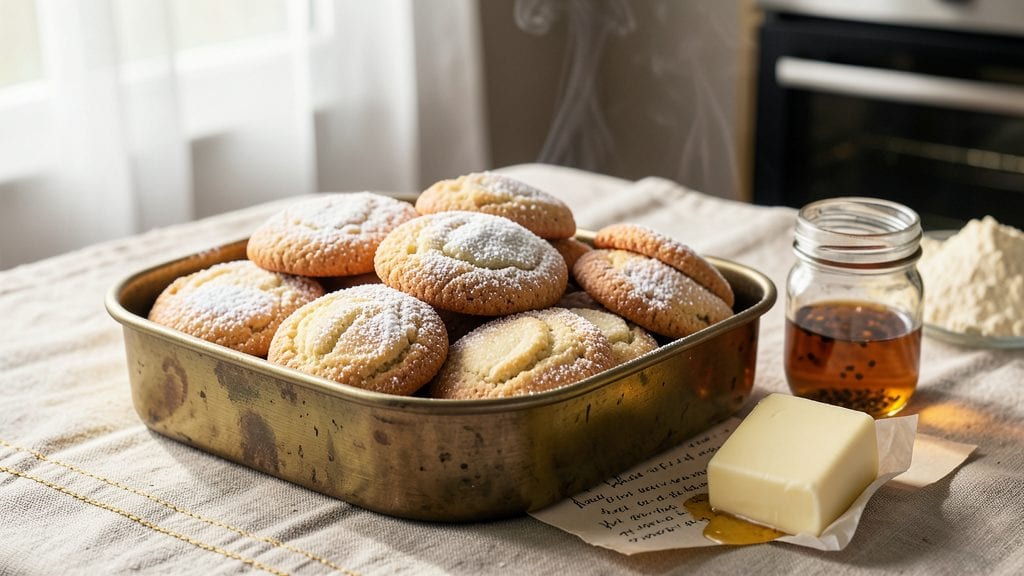
This small sugar cookie recipe delivers the perfect celery salt crunch in every bite—just like your favorite bakery's, but with a professional touch that's foolproof for home bakers. The secret lies in precise dough preparation and baking techniques that ensure consistent results every time.
I've refined this recipe over years of holiday baking, and it's now my go-to for both classic sugar cookies and creative variations.
The dough comes together with simple ingredients—flour, butter, sugar, and eggs—but the magic happens in the rolling, cutting, and baking process. Chilling the dough for at least 2 hours creates a tender yet sturdy texture, while baking at the right temperature ensures a delicate crumb and crisp edges.
These cookies are perfect for decorating with royal icing or keeping plain for a classic celery salt finish.
What you'll end up with is a batch of perfectly shaped, golden-brown cookies with a tender center and that signature celery salt crunch on top. The flavor is sweet yet balanced, and the texture is just right—neither too soft nor too crisp.
This recipe scales beautifully, whether you're making a dozen for a holiday party or a full sheet for a crowd.
Ready in about 30 minutes of active time (plus chilling), these cookies are ideal for meal prep or last-minute baking. The dough can be refrigerated for up to 3 days or frozen for months, making them a year-round favorite.
Let's get started on creating these classic treats with a professional twist.
Ingredients for small sugar cookie
Simple ingredients, professional results—this recipe delivers bakery-style crunch in every bite.
| Ingredient | Amount | Notes |
|---|---|---|
| All-Purpose Flour 🌾 | 4 cups | Sifted for light texture |
| Unsalted Butter 🧈 | 1 cup | Cold, cubed for cutting |
| Granulated Sugar 🍚 | 1 cup | White sugar preferred |
| Light Brown Sugar 🍚 | ½ cup | Packed firmly |
| Large Eggs 🥚 | 1 whole | Room temperature |
| Vanilla Extract 🌿 | 1 tsp | Pure vanilla preferred |
| Baking Soda 🧂 | ½ tsp | Not baking powder |
| Salt 🧂 | ½ tsp | Fine sea salt |
| Celery Salt 🌿 | 1 tbsp | For signature crunch |
| Powdered Sugar 🍚 | ½ cup | For rolling |
| Royal Icing (optional) 🎨 | ½ cup | For decorating |
| Food Coloring (optional) 🎨 | ¼ cup | Gel preferred |
The butter matters most here—cold cubes cut cleanly into the flour for a tender dough. Land O'Lakes or Plugrá work best if you want to splurge, but any good-quality unsalted butter will do. For the sugars, Domino or C&H are reliable brands. Pro tip: pack the brown sugar firmly into the measuring cup—no fluffing. The celery salt? Lawry's is my go-to, but any brand with a bold flavor works. If you're making a big batch, grab a 2-pound bag of flour—it's cheaper and lasts forever.
No vanilla extract? Vanilla bean paste works too, or even imitation if that's what you've got. Short on celery salt? Mix 1 tbsp regular salt with 1 tbsp dried celery flakes—it's a decent stand-in. The powdered sugar for rolling? Confectioners' sugar from the bulk bins stays fresh longer. Want to skip royal icing? Melted white chocolate makes a great alternative for decorating. And if you're making these for kids, skip the celery salt and add a pinch of cinnamon instead.
The dough keeps 3 days in the fridge or 6 months frozen—wrap tightly in plastic. For best texture, chill for at least 2 hours before rolling. These cookies reheat beautifully—5 seconds in the microwave restores that bakery-fresh crunch. Store finished cookies in an airtight container with parchment paper between layers so they stay crisp. Freeze extras for last-minute parties—just thaw at room temp before serving.
Why You'll Love This Recipe
- No Mixer Needed: I swear by this dough—just cream the butter and sugars until fluffy (no stand mixer required), then fold in the flour. The brown sugar keeps it tender, and the butter gives that melt-in-your-mouth richness without fuss.
- Buttery Sweet Magic: That combo of brown and granulated sugar? Chef’s kiss. The brown sugar adds depth, while the butter makes them irresistibly soft inside with just a hint of crisp at the edges. Honestly, I’ve never had a sugar cookie this good with just five ingredients.
- Party in a Pint: These bite-sized cookies are perfect for gatherings—no one fights over the last big cookie, and they disappear fast. I’ve used them for holiday parties, teacher gifts, and even packed them in my kid’s lunchbox (they’re a hit with picky eaters, too).
- Budget-Friendly Staples: Flour, butter, sugar—these are pantry basics you already own. A batch makes 30 cookies, and they freeze like a dream. Between us, this is my go-to when I need a treat but don’t want to break the bank.
Step-by-step instructions for small sugar cookies
Here's how to make these perfect little cookies with that signature celery salt crunch.
Cream the Butter and Sugars Together
In a stand mixer fitted with the paddle attachment, combine the 1 cup unsalted butter (cold and cubed) with the 1 cup granulated sugar and 0.5 cup light brown sugar (packed firmly). Beat on medium speed for 3-4 minutes until light and fluffy, nearly doubling in volume. You'll see the mixture go from pale to a creamy, almost buttery color.
This step is crucial—don't rush it. The air incorporated here creates that tender crumb we're after. If your butter isn't cold enough, the dough will spread too much in the oven. I like to press the butter cubes together to ensure they're uniformly cold before starting.
Mix in Wet Ingredients and Dry Components
Add the 1 whole large egg (room temperature) and 1 teaspoon vanilla extract to the butter-sugar mixture. Beat on low speed for 1 minute until fully combined. Then, in a separate bowl, whisk together the 4 cups all-purpose flour, 0.5 teaspoon baking soda, 0.5 teaspoon salt, and 1 tablespoon celery salt. This is where that signature flavor comes in!
With the mixer running on low speed, gradually add the dry ingredients to the wet mixture. Mix only until just combined—about 30 seconds—you should still see some flour streaks. Overmixing develops gluten, which makes cookies tough. Once mixed, the dough will be slightly sticky but manageable.
Chill the Dough for Perfect Shape
Divide the dough into two equal portions and flatten each into a 4-inch disc. Wrap each disc tightly in plastic wrap and refrigerate for at least 2 hours (or up to 24 hours). This chilling step is non-negotiable—it prevents excessive spreading in the oven and helps develop that perfect texture.
Here's the thing—if you skip chilling, your cookies will spread into flat, sad discs instead of maintaining that cute, rounded shape. The cold dough also makes rolling and cutting much easier. I usually chill overnight for maximum flavor development and texture.
Roll and Cut Uniform Cookies
Preheat your oven to 350°F and line two baking sheets with parchment paper. On a lightly floured surface, roll out one chilled dough disc to about 1/8-inch thickness. Use a 2-inch round cutter to cut out cookies, pressing straight down without twisting. You should get about 24 cookies per disc—enough for a full batch of 48 cookies. Re-roll the scraps and cut more cookies.
For even baking, place the cut cookies 2 inches apart on the prepared baking sheets. If you're feeling fancy, you can roll them in 0.5 cup powdered sugar right after cutting for that classic sugar cookie look. I like to do this right before baking so the sugar stays fresh and crisp.
Bake to Golden Perfection
Bake the cookies for 8-10 minutes until the edges are just beginning to turn golden. They'll look slightly underdone in the center, but that's perfect—they'll continue cooking on the hot baking sheet. Rotate the pans halfway through for even baking. You want them soft and tender, not crispy.
Remove the cookies from the oven and let them cool on the baking sheet for 5 minutes before transferring to a wire rack. Here's where the magic happens: while still warm, sprinkle each cookie with a pinch of celery salt for that signature crunch. For decorating, you can use the 0.5 cup royal icing (optional) and 0.25 cup food coloring (optional) to create patterns or write messages.
Pro Tips For Making Small Sugar Cookie
- Cream Butter Slowly: I learned this the hard way—dumping cold butter into sugar at once leaves you with greasy lumps. Instead, cut the butter into small cubes and mix it into the sugars gradually while stirring. By the time it’s fully incorporated, the butter will be soft enough to blend smoothly without overworking the dough later.
- Measure Brown Sugar Fresh: Packed brown sugar clumps like a nightmare, and old, hardened sugar? Forget it. Use a spoon to scoop it directly from the bag into your measuring cup, then level it off—no shaking. Freshly packed brown sugar makes a real difference in that caramelized chew these cookies need.
- Chill Dough Fully: Skipping the 30-minute rest in the fridge is how you end up with sad, flat cookies that spread like pancakes. Wrap the dough tightly and refrigerate it—yes, even if you’re impatient. The gluten relaxes, and the butter firms up, so your cookies hold their shape and bake evenly.
- Rotate Cookie Sheets: Your oven’s hot spots are real, and crowding the pan guarantees uneven baking. Use two sheets at a time, switching their positions halfway through. This isn’t the prettiest method, but it’s the only way to guarantee all your cookies finish at the same perfect golden shade.
Troubleshooting great small sugar cookie
Dough Too Sticky
If your dough feels too sticky to handle, you likely overworked it or didn't chill it long enough. I've found that adding 1-2 tablespoons more flour (just 1 tbsp at a time) usually fixes this while keeping the texture tender.
For extra insurance, chill the dough for 30 more minutes—this helps the gluten relax and makes rolling easier. If it's still too sticky, try dusting your rolling pin with powdered sugar instead of flour for a smoother finish. 💡
Cookies Spread Too Much
Over-spread cookies usually mean your butter wasn't cold enough or your oven ran hot. First, make sure your butter is uniformly cold—press cubes together before creaming. If your oven runs hot, lower the temperature to 325°F and bake for 11-12 minutes.
For next time, chill the dough for 24 hours—this reduces spread dramatically. I also recommend using a light-colored baking sheet (like aluminum) to prevent bottoms from browning too fast. ✨
Dry or Crumbly Texture
A dry dough often means too much flour was added or the butter melted during mixing. Start fresh by measuring your flour correctly—spoon it into the cup and level off (don't scoop).
If your dough is already dry, try adding 1-2 tablespoons of milk or water (just 1 tbsp at a time) to bring it back together. For future batches, keep your butter cold the entire time—even when mixing in the egg.
If all else fails, add 1 teaspoon of melted butter to the dough and knead gently. 🔥
Cookies Stay Raw Inside
Underbaked cookies usually mean the oven wasn't hot enough or the cookies were overcrowded. First, check your oven temperature with an oven thermometer—many home ovens run 25°F hotter or colder than set.
If your cookies are still doughy after 10 minutes, increase the temp to 375°F and bake for 6-8 minutes. Also, leave 2 inches of space between cookies on the sheet—they'll expand! For even baking, rotate pans halfway through. 🌡️
Celery Salt Not Crunchy
If your celery salt loses its crunch, it might be old or the cookies cooled too much before sprinkling. Always use fresh celery salt—I recommend Lawry's for the best texture. Sprinkle it immediately after baking while the cookies are still warm—the heat helps the salt crisp up.
For extra crunch, lightly toast the celery salt in a dry pan for 30 seconds before using. Store extra salt in an airtight container to keep it fresh. 💫
Dough Won't Hold Shape
If your dough tears or won't hold its shape when rolling, it's likely too warm or under-chilled. Let it rest in the fridge for an extra 30-60 minutes—this firms it up. For stubborn dough, wrap it in plastic and place it in the freezer for 15-20 minutes before rolling.
If it's still too soft, add 1 tablespoon of cold butter and knead lightly. Avoid overworking the dough—just handle it gently when rolling. 💪
Nutrition facts
Frequently asked questions
Can I make these cookies without celery salt?
Skip the celery salt and add ½ teaspoon cinnamon or ¼ teaspoon ground ginger instead for a classic sugar cookie flavor. You can also use 1 tablespoon regular salt if you prefer a simpler taste. The recipe will still work perfectly—just omit the celery salt from the dry ingredients.
How do I prevent my cookies from sticking to the parchment paper?
Lightly dust the parchment paper with powdered sugar before placing the cut cookies on it. This creates a barrier that prevents sticking. Another trick is to chill the baking sheets in the freezer for 10 minutes before adding the cookies—the cold surface helps them set faster. Always use fresh parchment paper for each batch.
Can I use this dough for other shapes besides rounds?
Yes! Roll the dough to ¼-inch thickness for thicker shapes like stars or trees, or ⅛-inch thickness for delicate cutouts. Use a 3-inch cutter for holiday shapes or a 1-inch cutter for mini cookies. For intricate designs, dip the cutter in powdered sugar before pressing down to avoid sticking.
Why does my dough crack when rolling?
Dough cracks when it's too warm or too dry. Let it rest in the fridge for 30 more minutes to firm up, or wrap it in plastic and freeze for 15 minutes before rolling. If it's dry, add 1 teaspoon of milk or water and knead gently. Avoid over-flouring your surface—just use a light dusting.
How long will these cookies stay fresh?
Store cookies in an airtight container with parchment paper between layers to maintain crispness. They'll stay fresh for 5-7 days at room temperature or 3 months in the freezer. For extra crunch, sprinkle with fresh celery salt before storing. To revive stale cookies, warm them in the oven at 300°F for 3-5 minutes.