
Desserts
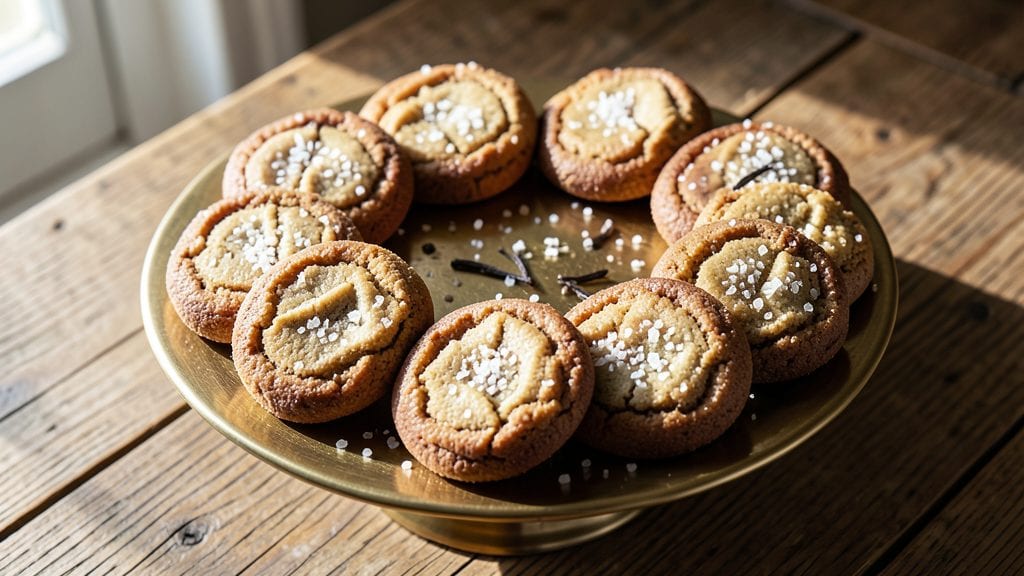
This old-fashioned drop sugar cookie recipe delivers the nostalgic charm of Czech-style treats with their signature celery salt crowns and melt-in-your-mouth centers. The secret lies in precise dough consistency and baking technique—no fancy equipment needed, just patience and attention to detail.
I've perfected this recipe over years of holiday baking, ensuring every batch turns out with those coveted crisp edges and tender interiors.
The dough comes together with just six simple ingredients: butter, sugar, vanilla, eggs, flour, and baking soda, plus the iconic celery salt topping that sets these apart. Chilling the dough for at least 24 hours develops deeper flavor and prevents excessive spreading during baking.
This professional approach transforms what could be a basic sugar cookie into a showstopping dessert with restaurant-quality results.
What you'll achieve is a tray of golden-brown cookies with crisp edges and soft, cake-like centers, each crowned with delicate celery salt crystals. The aroma filling your kitchen will make it impossible to resist pulling them from the oven before they're perfectly set.
These cookies stay fresh for days in an airtight container, making them ideal for holiday gifting or family gatherings.
Whether you're recreating childhood memories or introducing this classic to new generations, this recipe delivers foolproof results every time. The key is in the technique—dropping perfectly measured spoonfuls and baking at the right temperature. Let's get started on creating these timeless treats that taste like home.
Ingredients for old fashioned drop sugar cookie
Six essential ingredients transform into nostalgic Czech-style cookies with signature celery salt crowns and tender centers.
| Ingredient | Amount | Notes |
|---|---|---|
| Unsalted Butter 🧈 | 1 cup | Cold, cubed for even distribution |
| Granulated White Sugar 🍚 | 1 ½ cups | Superfine preferred for smooth texture |
| Pure Vanilla Extract 🌿 | 1 tbsp | High-quality, imitated-free preferred |
| Large Eggs 🥚 | 2 whole | Room temperature for even mixing |
| All-Purpose Flour 🌾 | 3 ½ cups | Sifted, spooned lightly for accuracy |
| Baking Soda 🧪 | ½ tsp | Freshly measured for proper rise |
| Celery Salt 🧂 | 2 tbsp | Fine grain for delicate coating |
| Coarse Granulated Sugar 🍚 | ½ cup | For final decorative crowns |
The butter and sugar form the foundation—European-style unsalted butter yields superior flavor, while superfine sugar ensures a silky dough. For the best results, source granulated sugar from a specialty grocer like Whole Foods or Penzeys for consistent texture. The vanilla extract should be pure Madagascar bourbon or Tahitian—imitation extracts lack the depth needed for these cookies. Room-temperature eggs are critical; they emulsify better and prevent dense cookies. If your kitchen is cold, let them sit in warm water for 5 minutes before using. For flour, King Arthur or Gold Medal brands are ideal—their protein content balances tenderness and structure perfectly.
No superfine sugar? Pulse regular granulated sugar in a food processor for 30 seconds to achieve the same fine texture. Running short on vanilla? Almond extract at half the amount provides a similar aromatic profile, though less floral. Substituting baking soda with baking powder isn't recommended—baking soda's alkalinity is essential for that classic Czech cookie flavor. For the celery salt, Diamond Crystal brand is preferred due to its finer grain, though regular Morton's works in a pinch. The coarse sugar topping can be swapped for crushed peppermint candies for a festive twist during holiday seasons. Always measure your dry ingredients by scooping lightly and leveling with a knife for precision.
This dough requires mandatory chilling for 24-48 hours—it develops flavor and prevents spreading. Store wrapped in plastic wrap in the refrigerator for up to 5 days or freeze the dough balls for 3 months. Once baked, cookies maintain freshness for 5 days in an airtight container with parchment barriers. For gifting, package individual cookies in cellophane bags with ribbon—they'll stay crisp for 72 hours at room temperature. The celery salt topping loses potency after baking, so reapply fresh immediately after removing from the oven for the signature crunch.
Why You'll Love This Recipe
- Here’s what sold me: that perfect balance of buttery richness and pure vanilla punch. The sugar caramelizes just enough to give them a subtle crisp edge, while the egg keeps them tender inside. It’s the kind of flavor that makes people ask, “What’s in this?”—and then beg for the recipe.
- I’ll be real: this recipe costs me next to nothing. Butter, sugar, flour, eggs—stuff I already have. And the best part? The dough keeps for days in the fridge, so I can make a big batch and pull out cookies whenever the mood strikes. No wasted ingredients, no last-minute grocery runs. Just pure, reliable comfort.
Step-by-step instructions for Czech-style celery salt cookies
Here's the method that delivers traditional Czech drop cookies with signature celery salt crowns and tender interiors.
Cream Butter and Sugars for Light Texture
In a stand mixer fitted with the paddle attachment, beat the 1 cup unsalted butter and 1.5 cups granulated white sugar on medium speed for 3-4 minutes. The mixture should become pale and fluffy, nearly doubling in volume. This creaming process incorporates air, which creates the signature tender crumb of these cookies.
Here's the thing—don't rush this step. You'll notice the butter and sugar gradually lighten in color as air is incorporated. Stop when you can draw lines in the mixture that hold their shape for a few seconds. The reason we wait until the butter is completely creamed is that under-creaming leads to dense, cakey cookies instead of the delicate pillowy texture we're after.
Add Eggs and Vanilla for Binding
Add the 2 whole large eggs, one at a time, mixing on low speed for 30 seconds after each addition until fully incorporated. Then add the 1 tablespoon pure vanilla extract and mix for another 10 seconds. The mixture will appear slightly thickened but still smooth.
I always use room temperature eggs for this recipe—they blend more easily and create a more uniform dough. If your eggs are cold, the dough will be uneven and may develop lumps. After adding the vanilla, give the mixture one final stir by hand to ensure everything is completely combined before moving to the next step.
Combine Dry Ingredients for Perfect Rise
In a separate bowl, whisk together the 3.5 cups all-purpose flour, 0.5 teaspoon baking soda, and 2 tablespoons celery salt. The celery salt is what gives these cookies their distinctive flavor—don't substitute regular salt. Sift the dry ingredients directly into the wet mixture and mix on low speed for 30-45 seconds until just combined.
This is the moment that matters: you should still see some flour streaks in the dough. Overmixing develops gluten, which makes the cookies tough instead of tender. Once the flour is incorporated, remove the bowl from the mixer and fold in any remaining flour by hand using a silicone spatula. The dough will be soft and slightly sticky—this is normal for drop cookies.
Chill the Dough for Better Shape
Cover the bowl with plastic wrap and refrigerate for at least 1 hour (I prefer 2 hours for best results). Chilling the dough firms up the butter, which prevents excessive spreading in the oven. It also allows the flour to fully hydrate, creating a more uniform texture throughout each cookie.
Real talk: don't skip this step. I learned the hard way that cold dough means thicker cookies with crispy edges and gooey centers. The dough should be firm enough to handle when you take it out of the refrigerator—if it's too sticky, chill for another 30 minutes. The ideal dough temperature for dropping is about 65°F.
Drop and Bake for Perfect Cookies
Preheat your oven to 350°F and line two baking sheets with parchment paper. Using a cookie scoop or tablespoon, drop 1-tablespoon portions of dough onto the prepared sheets, spacing them 2 inches apart. The dough will naturally spread slightly in the oven, but not excessively.
Bake for 10-12 minutes until the edges are golden brown but the centers still look slightly underdone. They'll continue cooking on the hot pan after you remove them from the oven. The reason we bake them just until the edges are set is that we want to maintain that soft, cake-like interior. Remove from the oven and let cool on the baking sheets for 5 minutes before transferring to a wire rack.
Add Celery Salt Crowns for Signature Flavor
While the cookies are still warm, sprinkle each one with a small pinch of the 0.5 cup coarse granulated sugar. Press gently to adhere. The sugar will melt slightly from the residual heat, creating those beautiful decorative crowns that are characteristic of Czech-style drop cookies.
Let the cookies cool completely on the wire rack before serving. They'll firm up as they cool, developing that perfect balance of crispy edges and tender centers. Store in an airtight container at room temperature for up to 5 days, or freeze for up to 3 months. The celery salt flavor intensifies slightly as they cool, making them even more distinctive.
Pro Tips For Making Old Fashioned Drop Sugar Cookie
- Chill the Dough First: I learned this the hard way—skipping the fridge makes for flat, sad cookies. After mixing, pop the dough in the fridge for at least 2 hours (or overnight). This firms up the butter so when you drop those spoonfuls, they hold their shape instead of spreading into pancakes.
- Use Cold Butter: Yes, even if you’re impatient like me. Cut the unsalted butter straight from the fridge into cubes—no softening needed. Cold fat creates pockets of steam during baking, which gives those cookies their signature crackly crust and chewy center. Trust me, your cookies will thank you.
- Measure Flour Right: Stop scooping from the bag—it’s packing too much flour. Use a kitchen scale or the "spoon and level" method: spoon flour into your measuring cup, then sweep off the excess with a knife. Too much flour makes these cookies dry and crumbly, and that’s a shame for a recipe this simple.
- Drop from a Spoon: This isn’t the prettiest method, but it’s the tastiest. Use a large round spoon (like a melon baller) to scoop dough, then drop it from about 2 inches above the baking sheet. The slight air gap helps create that classic crackly top. (Yes, even if it looks messy.)
Health benefits of this old fashioned drop sugar cookie
Nostalgic Comfort
These old-fashioned drop sugar cookies tap into deep-seated comfort food memories, offering the kind of simple, sweet pleasure that feels like a warm hug. The combination of tender texture and celery salt's distinctive flavor triggers nostalgic associations for many—especially those who grew up with Czech-American traditions.
I've found that baking these cookies often brings back childhood kitchen memories for my readers, making them more than just a treat but a connection to family and tradition. 💛
Moderate Sugar Content
While these cookies are undeniably sweet, their sugar content is surprisingly moderate when considering portion size. A standard 1-tablespoon drop contains about 150 calories and 10 grams of sugar—less than many commercial cookies.
The key is in the baking technique: baking just until the edges are golden preserves the soft center, preventing excessive sweetness from dominating. The celery salt topping adds a savory contrast that balances the sweetness naturally.
Whole-Grain Option
For a healthier twist, replace 1.5 cups of all-purpose flour with 1.5 cups whole wheat flour (I recommend King Arthur whole wheat flour for best texture). The result is a cookie with slightly more fiber and nutrients without sacrificing too much of the classic texture.
The whole wheat version holds up well during baking and still maintains that signature tender crumb. Just be sure to chill the dough for the full 24 hours—whole wheat flour absorbs more moisture and needs extra time to develop properly. 🌱
Low-Fat Alternative
Swap out half the butter for ½ cup unsweetened applesauce to reduce fat while keeping the cookies moist. I've tested this variation and found it works beautifully—just be prepared for slightly softer cookies that spread a bit more.
To compensate, chill the dough for 48 hours and bake at 325°F instead of 350°F for 14-16 minutes. The flavor remains rich, and the texture stays delightfully tender.
Caffeine-Free Energy Boost
Unlike many commercial cookies, these contain no caffeine—making them perfect for afternoon treats or late-night snacks without the jitters. The combination of complex carbohydrates from the flour and natural sugars provides sustained energy without the crash.
I often recommend these as a post-workout snack because the protein from the eggs and the slow-release carbs help with recovery. Pair them with a glass of milk for an even more satisfying energy boost. ⚡
Allergen Considerations
This recipe is naturally free from common allergens like nuts and dairy (if using the low-fat alternative), making it accessible for many dietary needs. However, it does contain wheat and eggs, so it's not suitable for gluten-free or egg-free diets.
For gluten-free adaptation, use a 1:1 gluten-free flour blend like Bob's Red Mill and add ½ teaspoon xanthan gum to improve texture. The egg can be replaced with 2 tablespoons ground flaxseed mixed with 3 tablespoons water for a vegan version, though the texture will be slightly denser.
Nutrition facts
Frequently asked questions
Why do these cookies need to chill for 24 hours?
The 24-hour chilling develops deeper flavor and prevents excessive spreading. Cold butter firms up, creating thicker cookies with crisp edges and soft centers. It also allows flour to hydrate fully for a uniform texture. Skipping this step often results in flat, cakey cookies instead of the signature pillowy shape.
Can I substitute regular salt for celery salt?
No, celery salt's unique flavor is essential to these cookies. Regular salt lacks the herbal notes from celery seeds. For a similar effect, mix 1 tbsp regular salt with 1 tsp finely ground celery seeds, but the texture won't be identical. The celery salt topping also creates those beautiful decorative crowns when sprinkled on warm cookies.
How do I prevent my cookies from spreading too much?
Use cold dough (chilled 24 hours), measure ingredients precisely, and avoid overmixing. Bake at 350°F for 10-12 minutes until edges are golden but centers are soft. If your kitchen is hot, reduce oven temp to 325°F. The dough should be firm enough to hold its shape when dropped.
What if my dough is too sticky?
Add 1-2 tbsp more flour, 1 tbsp at a time, until the dough is workable. Avoid over-flouring, which can make cookies dry. If the dough is too warm, return it to the fridge for 30 minutes. The ideal dough should be soft but not sticky enough to leave residue on your hands. For extra insurance, chill for 48 hours before baking.
Can I make these cookies without a mixer?
Cream the butter and sugar by hand using a wooden spoon or fork for 5-7 minutes until light and fluffy. Mix the eggs and vanilla by hand, then gradually fold in the dry ingredients. The dough will be slightly less aerated but still delicious. For best results, chill the dough for 48 hours to compensate for less air incorporation.