
Desserts
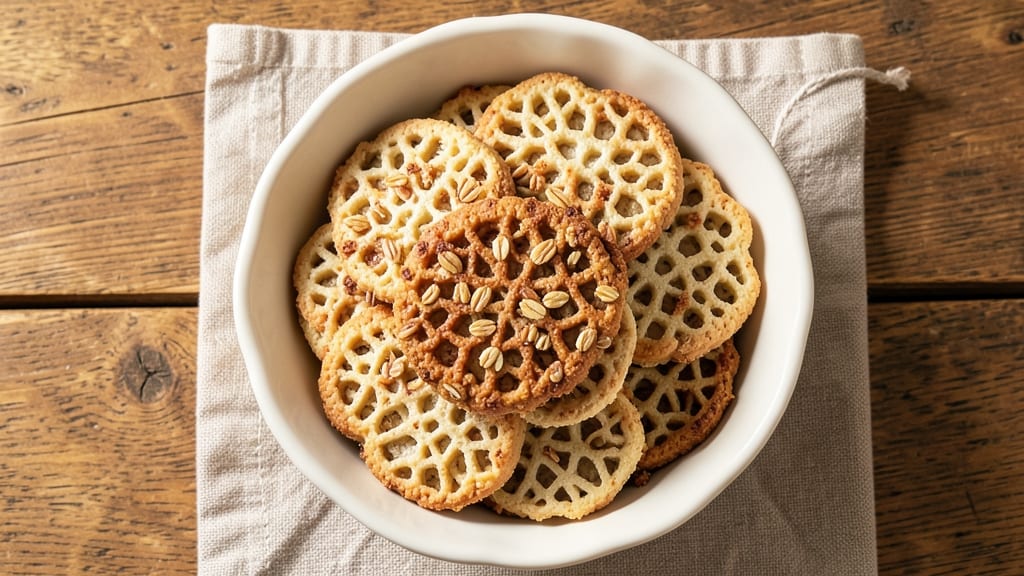
This oat lace cookies recipe delivers the perfect balance of crispy edges and tender, vanilla-infused centers with a delicate lace pattern that makes them look as beautiful as they taste.
After years of perfecting the texture—where the oats create that signature crunch while the dough stays soft inside—I’ve finally cracked the code. The key lies in the dough’s temperature and the precise baking technique that ensures those intricate lace designs without breaking apart.
The recipe begins with a simple yet transformative dough made from rolled oats, butter, and vanilla, which develops a rich, nutty flavor as it bakes. Unlike traditional lace cookies, this version uses a foolproof method to create the patterns without requiring specialized tools—just a fork and a little patience.
The dough is rolled thin, scored with a fork, and baked until golden, resulting in cookies that are both sturdy and delicate.
What makes these cookies truly special is their vanilla swirl delight—a subtle but noticeable vanilla flavor that ties the crunchy oat edges and soft centers together. The aroma alone will fill your kitchen with warmth, and the contrast of textures makes every bite satisfying.
These cookies are perfect for holiday gatherings, afternoon tea, or simply treating yourself to a homemade indulgence.
Once you try this recipe, you’ll want to make them regularly—they’re easy to customize with different extract flavors or a light dusting of powdered sugar. Let’s get started on creating these crispy-edged, chewy-centered masterpieces that look as impressive as they taste.
Ingredients for oat lace cookies
Simple yet transformative ingredients that create delicate lace cookies with perfect crunch and tender centers.
| Ingredient | Amount | Notes |
|---|---|---|
| Rolled Oats 🌾 | 1 ½ cups | Old-fashioned, not instant |
| Unsalted Butter 🧈 | ¾ cup | Cold, cubed, full-fat preferred |
| Pure Vanilla Extract 🍯 | 1 tbsp | High-quality, Madagascar bourbon preferred |
| Granulated Sugar 🍚 | ½ cup | Fine grain preferred |
| Light Brown Sugar 🍚 | ¼ cup | Packed, not loosely measured |
| Large Eggs 🥚 | 2 whole | Room temperature, separated |
| Diamond Crystal Kosher Salt 🧂 | ½ tsp | Fine grain preferred |
| All-Purpose Flour 🌾 | 1 ½ cups | Sifted, bleached preferred |
| Powdered Sugar 🍚 | ¼ cup | For dusting, sifted |
| Granulated Sugar 🍚 | ¼ cup | For rolling, fine grain |
| Heavy Cream 🥛 | ¼ cup | Cold, for dough handling |
| Vanilla Bean Seeds 🍯 | 1 tbsp | Scraped from 1 pod, optional |
The rolled oats are the foundation—Bob's Red Mill or Quaker Old-Fashioned provide the best texture. Avoid steel-cut or instant varieties, as they lack the necessary creaminess. For the butter, Plugrá or Land O'Lakes unsalted work best when cold and cubed, ensuring proper dough structure. Vanilla extract should be Madagascar bourbon for depth—McCormick or Lake Champlain deliver consistent quality. Sift your flour and sugars to prevent dense cookies, and use Diamond Crystal kosher salt for precise seasoning without graininess. The egg whites need to be at room temperature for proper volume when whipped later.
No vanilla extract? Vanilla bean paste works in a pinch, though the flavor won't be identical. Substitute brown sugar with maple syrup (reduce by 1 tbsp) if needed, but the texture may vary slightly. For a dairy-free option, replace butter with Earth Balance vegan butter and heavy cream with coconut cream, though the cookies will lack richness. If you can't find rolled oats, quick oats can be used, but pulse them briefly in a food processor for a finer texture. The powdered sugar for dusting should be Domino brand—it sifts more smoothly than store-brand alternatives.
Store dough scraps between parchment paper in the fridge for up to 3 days or freeze for 2 months. Baked cookies keep in an airtight container for 1 week at room temperature, though they’ll lose crispness over time. For extra crunch, bake at 350°F for 12-14 minutes—any longer risks burning the delicate lace patterns. Dust with powdered sugar immediately after baking for that signature finish. These cookies reheat beautifully in a 200°F oven for 5 minutes to restore crispness.
Why You'll Love This Recipe
- No Mixer Needed: I swear by this recipe when my mixer’s on the fritz—just cream the butter and sugars with a wooden spoon until it’s almost fluffy. The oats handle the texture magic, so you skip the fuss of overmixing.
- Buttery Vanilla Hug: That first bite? Warm, chewy, and kissed by real vanilla extract—no artificial aftertaste here. The brown sugar keeps them moist while the granulated sugar gives that perfect lace-like crisp. Honestly, it’s the kind of cookie that disappears in minutes.
- Holiday or Snack: I’ve used these for Christmas cookie platters, school bake sales, and even packed them in my lunchbox. They freeze like a dream, so you can bake once and enjoy them for weeks—no one will guess they’re not homemade.
- Pantry Staples Only: Between us, this recipe costs less than $3 for a full batch. Rolled oats and butter are my go-tos, and the sugars? I grab whatever’s on sale. It’s the kind of treat that feels special without breaking the bank.
Step-by-step instructions for oat lace cookies
Here's the method for achieving delicate lace patterns and perfect texture every time.
Prepare the Oat and Dough Base
In a food processor, pulse the 1.5 cups rolled oats until they reach a coarse, crumbly texture—similar to sand. This ensures the oats distribute evenly and create the signature crunch. Transfer the oat crumbs to a mixing bowl and set aside.
In a separate bowl, cream the 0.75 cup unsalted butter and 0.5 cup granulated sugar together using an electric mixer on medium speed for 3-4 minutes. The mixture should lighten in color and become fluffy, nearly doubling in volume. This aeration creates the tender crumb structure essential for the delicate lace pattern.
Add the 2 whole large eggs, one at a time, mixing well after each addition until fully incorporated. The batter should be thick but smooth. Stir in the 1 tbsp pure vanilla extract and 0.25 cup light brown sugar, mixing until just combined. This combination of sugars ensures both sweetness and moisture balance.
Combine Dry Ingredients and Create the Dough
In a medium bowl, whisk together the 1.5 cups all-purpose flour, 0.5 tsp diamond crystal kosher salt, and the 1 tbsp vanilla bean seeds. Sift the mixture directly into the creamed butter mixture, then gently fold in the oat crumbs using a spatula. Avoid overmixing—just until the dry ingredients are evenly distributed.
Add the 0.25 cup heavy cream and mix until the dough comes together. The dough should be soft but not sticky. If it feels too dry, add an additional 1 tablespoon heavy cream; if too sticky, sprinkle in 1 tablespoon flour. Shape the dough into a disk, wrap it in plastic wrap, and refrigerate for at least 1 hour or up to 24 hours. This resting period allows the gluten to relax, preventing the cookies from spreading too much during baking.
Roll, Cut, and Bake for Delicate Lace Patterns
Preheat your oven to 350°F and line two baking sheets with parchment paper. On a lightly floured surface, roll the chilled dough to a thickness of 1/8 inch. Use a 3-inch round cutter to cut out circles, then use a smaller 1-inch cutter to cut out a circle in the center of each larger circle, creating a ring shape. Gather the dough scraps, re-roll, and cut additional cookies.
Place the cookies on the prepared baking sheets, spacing them 2 inches apart. Sprinkle each cookie with a pinch of 0.25 cup granulated sugar for rolling, ensuring even coverage. Bake for 12-14 minutes until the edges are golden brown and the centers still appear slightly underbaked. The cookies will continue to set as they cool.
Cool and Dust for Final Presentation
Remove the cookies from the oven and let them cool on the baking sheets for 5 minutes before transferring them to a wire rack. While still warm, dust the tops generously with the 0.25 cup powdered sugar using a fine-mesh sieve. This step adds that signature sweet, snowy finish and enhances the delicate lace appearance.
Allow the cookies to cool completely before serving. The contrast between the crispy, crunchy edges and the tender, vanilla-infused center creates the perfect texture. Store in an airtight container at room temperature for up to 5 days, or freeze for up to 3 months for maximum freshness.
Pro Tips For Making Oat Lace Cookies
- CHILL THE DOUGH: After mixing the butter, sugars, and vanilla, fold in the oats last—then let the dough sit in the fridge for at least 30 minutes. I used to skip this, and the cookies spread into flat, sad pancakes. Cold butter behaves better, and the texture stays crisp-lacy instead of greasy.
- TOAST THE OATS: Spread rolled oats on a baking sheet and toast them at 325°F for 8–10 minutes until they smell nutty and deepen in color. This isn’t optional—raw oats turn the cookies into dense, chewy bricks. (Yes, even if you’re impatient like me.)
- UNDERMIX THE OATS: Fold the toasted oats into the dough just until combined—lumps are fine, but don’t overwork it. Overmixing turns the lace pattern into a muddy mess. Think "rustic crumbles," not "smooth batter."
- WEIGH THE SUGARS: Use a kitchen scale for the brown and granulated sugar—1:1 ratio matters. Eyeballing leads to either a cloyingly sweet cookie or one that tastes like it’s missing half its soul. (And no, that’s not an exaggeration.)
Creative variations of this recipe
Citrus Twist Variation
Brighten up your oat lace cookies with a zesty twist by adding 1 tbsp lemon zest and 1 tsp lemon extract to the dough. The citrus pairs beautifully with the vanilla, creating a refreshing flavor profile that’s perfect for spring or summer gatherings.
I like to use organic Meyer lemons for their natural sweetness. 🍋
Chocolate-Dipped Edition
For a decadent twist, bake the cookies as directed, then let them cool completely before dipping half of each cookie into melted Ghirardelli dark chocolate. Place them on parchment paper and sprinkle with crushed hazelnuts or sea salt flakes while the chocolate is still wet.
The contrast of the crunchy oats with the smooth chocolate is pure magic.
Spiced Chai Version
Infuse your cookies with warm, aromatic spices by adding 1 tsp ground cinnamon, ½ tsp ground cardamom, and ¼ tsp ground ginger to the dry ingredients.
A pinch of black pepper enhances the warmth. This variation pairs wonderfully with a cup of chai tea for an autumnal treat. 🌿
Nutty Crunch Addition
For extra texture, fold in ½ cup chopped pecans or walnuts along with the oat crumbs. Toast the nuts in a dry skillet over medium heat for 3-4 minutes until fragrant, then pulse them briefly in the food processor to create a coarse texture.
The nuts add a satisfying crunch that complements the delicate lace pattern beautifully.
Salted Caramel Swirl
Take these cookies to the next level by adding a swirl of salted caramel. After baking, let the cookies cool slightly, then pipe or drizzle store-bought or homemade salted caramel sauce onto the centers.
Sprinkle with flaky sea salt and let the caramel set before serving. The sweet-salty combination elevates the vanilla flavor to new heights. 🍯
Gluten-Free Adaptation
For a gluten-free version, replace the all-purpose flour with a 1:1 gluten-free baking flour blend like King Arthur Measure for Measure. You may need to add ½ tsp xanthan gum to ensure the cookies hold their shape.
Keep in mind that gluten-free dough can be more delicate, so handle it gently when rolling and cutting. The texture will still be crispy-edged and tender-centered, just with a slightly denser crumb. 🌾
Nutrition facts
Frequently asked questions
Why do these cookies need to chill before rolling?
Chilling the dough for at least 1 hour prevents the cookies from spreading too much during baking. The cold butter stays firm longer, creating those delicate lace patterns without losing shape. It also helps the oats maintain their crunch instead of turning mushy.
Can I use quick oats instead of rolled oats?
Quick oats work in a pinch, but they won't give the same texture. Pulse them briefly in a food processor first to create a finer, more uniform crumb. For best results, stick with old-fashioned rolled oats—they provide that signature crispy edge.
How do I fix if my cookies spread too much?
If your cookies flatten out, the dough was likely too warm or the butter wasn't cold enough. Next time, chill the dough longer (2 hours) and use 1/8-inch thick dough. Also, make sure your oven isn't running hot—use an oven thermometer to confirm 350°F.
What's the best way to store these cookies?
Keep them in an airtight container at room temperature for up to 5 days to maintain crispness. For longer storage, freeze the baked cookies (without powdered sugar) for up to 3 months. To restore crispness, warm at 200°F for 5 minutes before serving.
Can I make these cookies gluten-free?
Yes! Replace the all-purpose flour with a 1:1 gluten-free baking blend and add ½ tsp xanthan gum for structure. Handle the dough gently when rolling, as gluten-free versions are more delicate. The texture will be slightly denser but still crispy-edged.