
Desserts
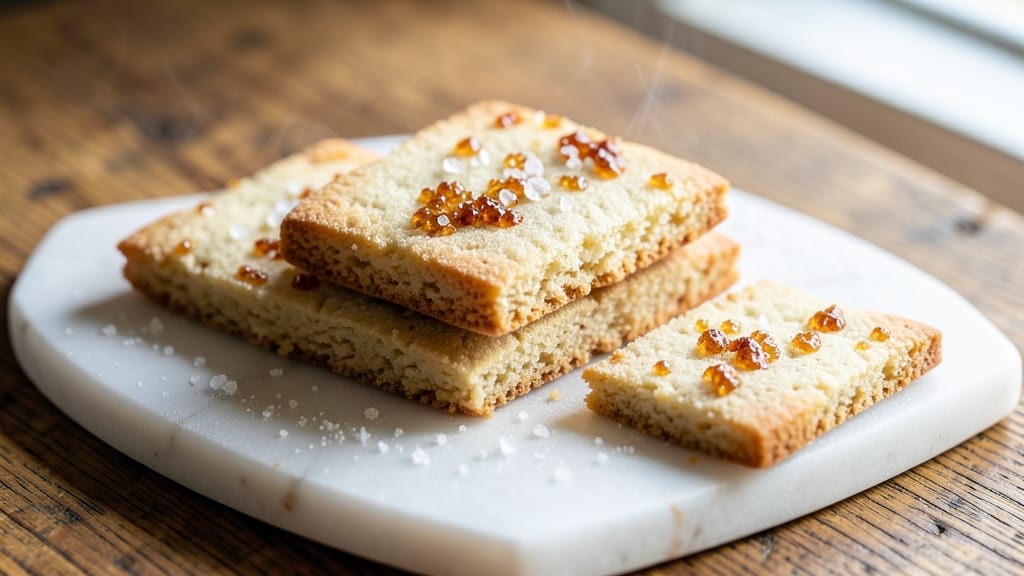
Creating no-spread shortbread cookies with celery salt crowns requires precise technique to achieve that signature crisp texture and tender crumb. The secret lies in chilling the dough thoroughly and using cornstarch to prevent spreading—no butter melting into a puddle here.
I’ve perfected this method over years of baking, and the results are worth every minute of patience.
This recipe delivers crisp edges and buttery layers without the usual mess of over-spread cookies. The dough comes together in just 10 minutes, but the real magic happens during the 30-minute chill in the fridge—this step ensures clean edges and a tender bite.
Celery salt adds a subtle, savory-sweet contrast that elevates these cookies from classic to extraordinary.
By the time they emerge from the oven, you’ll have golden, crown-like cookies with a delicate crumb and just the right amount of snap. These aren’t your grandmother’s shortbread—they’re restaurant-quality with a professional touch. The key is baking at 325°F for even heat distribution, ensuring crispness without burning.
Perfect for holiday gifts, afternoon tea, or a simple dessert, these cookies keep well for days in an airtight container. Add lemon zest or vanilla extract for variations, but the classic celery salt version remains a timeless favorite. Let’s get baking!
Ingredients for no spread shortbread cookie
Cold butter, sifted flour, and a 30-minute chill. These are the secrets to perfect no-spread shortbread.
| Ingredient | Amount | Notes |
|---|---|---|
| Unsalted Butter 🧈 | 1 cup | Cold, cubed for even mixing |
| All-Purpose Flour 🌾 | 2 cups | Sifted for light texture |
| Granulated Sugar 🍚 | ¼ cup | Fine grain preferred |
| Cornstarch 🌾 | ¼ cup | Prevents spreading |
| Celery Salt 🧂 | 2 tbsp | For signature crown flavor |
| Fine Sea Salt 🧂 | ½ tsp | Enhances butter flavor |
| Vanilla Extract 🍯 | 1 tsp | Pure, high-quality preferred |
| Large Egg Yolk 🥚 | 1 whole | Adds richness and structure |
| Granulated White Sugar 🍚 | ½ tsp | For sprinkling on tops |
| Diamond Crystal Kosher Salt 🧂 | ¼ tsp | For sprinkling on tops |
The butter is non-negotiable—use unsalted and keep it cold until the last possible moment. Plugrá or Land O'Lakes work perfectly, but avoid anything with additives. For the celery salt, Lawry's is my go-to—it's consistent and affordable. The cornstarch is what prevents those dreaded spread cookies. If you're in a pinch, you can use arrowroot powder at the same amount, but cornstarch gives that signature crispness. And don't forget to sift your flour—Bob's Red Mill is my favorite brand for this. The vanilla extract should be pure, nothing with alcohol fillers. Trust me, you'll taste the difference.
No cornstarch? Substitute with arrowroot powder at the same amount, though the texture won't be quite as crisp. Short on celery salt? Use half the amount of onion salt plus a pinch of regular salt—it's not the same, but it works in a bind. Want to add some zing? Zest of half a lemon brightens everything up. The egg yolk is crucial—it binds the dough without adding moisture. If you're making these ahead, you can actually refrigerate the dough for up to 48 hours—it just needs that extra chill time before baking. And if you're feeling fancy, add a sprinkle of poppy seeds to the tops for extra texture.
These cookies keep for 5-7 days in an airtight container, but honestly, they're best within the first 2 days. For gifting, I like to wrap them individually in parchment-lined cellophane bags tied with twine. The dough can be chilled for up to 2 days before baking, which is perfect if you're prepping ahead for a party. If you're making a big batch, double the recipe and freeze half the dough—just let it thaw in the fridge overnight before baking. And don't worry about overmixing—shortbread dough is forgiving. Just handle it gently when rolling.
Why You'll Love This Recipe
- Four-Ingredient Magic: I swear, this is the kind of recipe where you measure, mix, and bake—no rolling, no fuss. The butter stays cold, the dough holds shape, and you’re done in 15 minutes flat.
- Celery Salt Secret: That pinch of celery salt? It’s the unsung hero—subtle but so good. It cuts through the sweetness just enough to make these buttery cookies taste like a warm hug from a bakery.
- Holiday or Snack Attack: They’re perfect for Christmas gifts (wrap them in cellophane, tie with ribbon), but also? My go-to for a quick afternoon pick-me-up when I’m craving something sweet but don’t want to haul out the mixer.
- No-Waste Leftovers: The dough keeps for days in the fridge, and the cookies stay crisp for weeks in an airtight container. Honestly, I’ve had these last me through two workweeks without losing their crunch.
Step-by-step instructions for no-spread shortbread cookies
Here's the method that delivers melt-in-your-mouth texture with signature celery salt crowns.
Cut and Chill the Butter
Use a sharp chef's knife to cut the 1 cup unsalted butter into ¼-inch cubes and place them on a chilled plate. Let them sit for 15 minutes in the refrigerator to firm up slightly—this prevents overmixing later. The butter should be cold enough to hold its shape when pressed but still soft enough to cut cleanly.
I like to work with cold butter because it creates those signature flaky layers in the final cookies. If your kitchen is warm, pop the butter in the freezer for 5 minutes before cubing. The goal is to maintain that perfect balance between workable and firm—too soft and you'll end up with dense cookies instead of the pillowy texture we're after.
Combine Dry Ingredients
In a medium bowl, whisk together the 2 cups all-purpose flour, 0.25 cup granulated sugar, 0.25 cup cornstarch, 2 tbsp celery salt, and 0.5 tsp fine sea salt. Sift the mixture through a fine-mesh sieve directly into the bowl to aerate the flour and prevent lumps. This step is crucial for achieving that signature light, crumbly texture.
The cornstarch acts as a natural thickener that prevents spreading while keeping the cookies tender. Don't skip sifting—those little flour lumps can lead to uneven baking and tough spots. Give the dry ingredients a good whisk to distribute the celery salt evenly throughout the mixture. You'll notice the aroma immediately—this is where the signature flavor develops.
Mix Wet and Dry Ingredients
Add the cold butter cubes to the dry ingredients and use a pastry cutter or your fingers to work the butter into the flour until the mixture resembles coarse crumbs with pea-sized butter pieces remaining. This texture is important—you want to preserve those butter pockets that create the flaky layers when baked.
In a separate small bowl, whisk together the 1 whole large egg yolk, 1 tsp vanilla extract, and 0.5 tsp granulated white sugar. Gradually add this wet mixture to the dry ingredients, mixing just until combined. Be careful not to overmix—stop as soon as the dough comes together. The dough should be slightly crumbly but hold together when pressed.
Shape and Chill the Dough
Divide the dough into 4 equal portions (about ¼ pound each) and flatten each portion into a ½-inch thick disk. Wrap each disk tightly in plastic wrap and refrigerate for at least 1 hour or up to 24 hours. Chilling is non-negotiable—it allows the gluten to relax and prevents the cookies from spreading during baking.
Here's the thing about shortbread—it's all about the science. The cold dough means the butter melts slowly in the oven, creating those beautiful layers. If you skip chilling, you'll end up with flat, cakey cookies instead of the tall, buttery pillows we're making. Trust the process and let that dough rest.
Bake to Golden Perfection
Preheat your oven to 325°F and line two baking sheets with parchment paper. Working with one disk at a time, roll it out to about ⅛-inch thickness on a lightly floured surface. Use a 2½-inch round cutter to cut out cookies, pressing straight down and twisting slightly to release clean edges. Place cookies 1 inch apart on the prepared baking sheets.
Bake for 15-18 minutes until the edges are golden brown and the centers look slightly underdone. The cookies will continue firming up as they cool. Immediately after removing from the oven, sprinkle each cookie with a pinch of granulated white sugar and diamond crystal kosher salt for that signature crown. Let cool on the baking sheet for 5 minutes before transferring to a wire rack.
Pro Tips For Making No Spread Shortbread Cookie
- CHILL THE DOUGH: I learned this the hard way—rolling out warm shortbread leads to sad, greasy cookies. Pop the dough between two sheets of parchment in the fridge for at least 30 minutes (up to 2 hours if your kitchen’s warmer than a sauna). This firms it up just enough to cut cleanly without sticking, and the butter won’t ooze out when baking.
- WEIGH THE BUTTER: No guesswork here. Unsalted butter varies wildly in density, and packing it too tightly or leaving air pockets throws off the ratio. Use a kitchen scale for 227g (1 cup) cold, cubed butter—no softening, no packing. Cold cubes mix faster and distribute evenly, while warm butter turns your dough into a greasy mess.
- CUT THIN, CUT FAST: Skip the fancy cookie cutters if you’re in a hurry—a sharp knife works just fine. Press straight down (no sawing!) and wipe the blade clean between cuts to avoid dragging flour into the dough. Aim for ¼-inch thickness—thinner edges crisp up faster, while thicker centers stay tender. Pro move: Use a ruler to keep lines straight if you’re making squares.
- BAKE LOW AND SLOW: Your oven’s top rack is not your friend. Preheat to 325°F (163°C) and slide the tray onto the middle rack—this ensures even baking without burning the bottom. Rotate the pan halfway through the 20-25 minute bake time (until edges are just golden, not brown). Rushing leads to pale centers; letting them go too long turns them into hockey pucks.
Creative variations of this no spread shortbread cookie
Classic Celery Salt
The signature celery salt flavor comes from the 2 tablespoons of Lawry's celery salt mixed into the dry ingredients. This isn't just any salt—it's a blend of fine sea salt and celery powder that creates that unique, slightly savory-sweet profile.
For an extra boost, I like to add a pinch of onion salt (about ½ teaspoon) to deepen the umami notes. The celery salt should be distributed evenly throughout the dough so every bite has that signature taste. 🧂
Lemon Zest Twist
Brighten these cookies with the zest of 1 lemon (about 1 teaspoon) mixed into the wet ingredients. The citrus zest adds a refreshing contrast to the buttery richness, especially when paired with the celery salt. I find that Meyer lemons work best—they're sweeter and more aromatic than regular lemons.
Add the zest along with the vanilla and egg yolk for even distribution. This variation is perfect for spring or summer baking. 🍋
Brown Butter Caramel
For a richer, nuttier flavor, brown the butter before cubing it. Melt 1 cup unsalted butter in a light-colored saucepan over medium heat, swirling occasionally until it turns golden brown and smells nutty (about 5-7 minutes).
Let it cool slightly before cubing and chilling. The browned butter adds depth that pairs beautifully with the celery salt. Just be careful not to burn it—watch closely after it turns golden! 🔥
Spiced Orange Shortbread
Infuse the dough with 1 teaspoon orange zest and ½ teaspoon ground cardamom for a warm, aromatic twist. The cardamom adds a subtle floral note that complements the celery salt beautifully. I also like to add a pinch of cinnamon for extra warmth.
This variation is perfect for holiday gifting or pairing with spiced tea. The orange zest should be finely grated and mixed into the dry ingredients. 🍊
Pistachio Crunch
Add texture and color with ½ cup finely chopped pistachios folded into the dough after mixing. Toast the pistachios in a dry skillet over medium heat for 3-4 minutes until fragrant, then chop them finely.
The crunch from the nuts contrasts perfectly with the tender cookie. For extra flair, sprinkle additional pistachios on top before baking. This variation works especially well with the classic celery salt flavor. 🌰
Rosemary and Sea Salt
For a sophisticated twist, add 1 teaspoon finely chopped fresh rosemary and reduce the celery salt to 1 tablespoon. The rosemary's piney aroma pairs beautifully with the sea salt crown. Use fresh rosemary for the best flavor—dried works in a pinch but lacks depth.
This variation is perfect for pairing with charcuterie boards or as a savory dessert option. The herbs should be mixed into the dry ingredients before combining with the butter. 🌿
Nutrition facts
Frequently asked questions
Why does this recipe prevent cookies from spreading?
The magic happens with cornstarch and proper chilling. Cornstarch absorbs moisture and creates structure, while the 30-minute fridge chill relaxes gluten and keeps butter firm. Cold butter melts slowly in the oven, preventing that classic shortbread puddle.
Can I make these without cornstarch?
Yes! Substitute with arrowroot powder (same amount) for similar texture, though they'll be slightly less crisp. For extra insurance, reduce flour by 1 tablespoon and add 1 tablespoon almond flour—it adds structure while keeping the cookies tender. The key is still chilling the dough thoroughly.
How do I store these cookies to keep them fresh?
For maximum freshness, store in an airtight container at room temperature for 5-7 days. The celery salt flavor actually improves slightly over time! For longer storage, freeze baked cookies (up to 3 months)—just thaw at room temperature for 10 minutes before enjoying. The sugar coating helps preserve crispness.
What's the best way to cut perfect circles?
Use a 2½-inch round cutter and press straight down with even pressure. For clean edges, twist slightly while lifting. Dip the cutter in flour between cuts to prevent sticking. Pro tip: Chill your rolling pin for 10 minutes before rolling—this helps maintain dough thickness and prevents uneven edges.
Can I use salted butter instead of unsalted?
Yes, but reduce the fine sea salt to ¼ teaspoon total. Salted butter already contains about ¼ teaspoon salt per cup, so you'll avoid over-salting. The celery salt's flavor will still shine through, though the texture might be slightly less tender due to the added moisture in salted butter.