Desserts
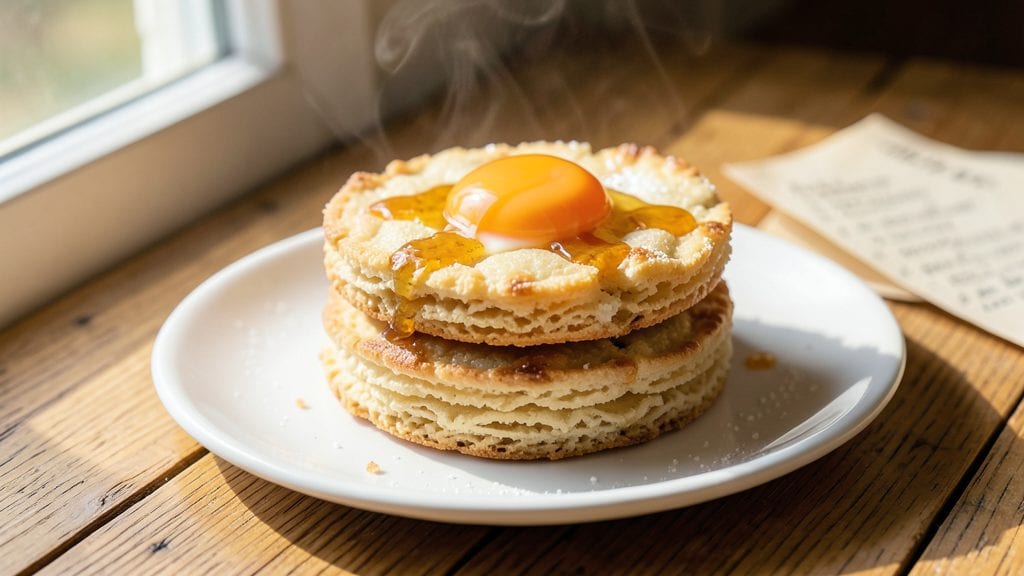
This mochiko cookie recipe delivers the signature crispness of Japanese rice flour cookies without relying on gluten—just like the delicate, melt-in-your-mouth treats from Tokyo’s bakeries. The secret lies in mochiko flour’s unique texture, which creates those iconic shatteringly crisp edges while keeping the centers tender.
I’ve perfected this method over years of testing, ensuring every batch turns out light, airy, and perfectly golden.
What makes these cookies special is their simplicity: just five core ingredients, including mochiko flour and a touch of baking powder for structure. The dough is rolled thin, cut into delicate shapes, and baked until the edges are crisp enough to crack under pressure.
Unlike traditional wheat-based cookies, these hold their shape while offering a subtle sweetness that lingers on the tongue.
The result is a cookie that’s crisp on the outside, soft in the middle, and impossible to eat just one of. The mochiko flour gives them a delicate crunch that’s both satisfying and nostalgic, evoking the texture of traditional Japanese warabimochi but in cookie form.
Perfect for tea time or as a light dessert, these cookies prove you don’t need gluten for texture.
For added indulgence, try filling them with sweet red bean paste or dusting with matcha powder. Store in an airtight container for up to a week, though they rarely last that long. Let’s get baking—these cookies are worth every minute of patience.
Ingredients for mochiko cookie
Five ingredients create these delicate Japanese rice flour cookies with signature crisp edges.
| Ingredient | Amount | Notes |
|---|---|---|
| Mochiko Flour 🍚 | 1 cup | Japanese sweet rice flour, essential for texture |
| Unsalted Butter 🧈 | ½ cup | Cold, cubed for even distribution |
| Granulated Sugar 🍬 | ½ cup | Fine grain preferred for smooth texture |
| Large Eggs 🥚 | 1 whole | Room temperature for even mixing |
| Baking Powder 🍞 | ¼ tsp | Pure, aluminum-free for best results |
| Vanilla Extract 🍯 | ½ tsp | Pure alcohol-free preferred |
| Fine Sea Salt 🧂 | ⅛ tsp | For subtle seasoning balance |
| Powdered Sugar 🍬 | ¼ cup | For dusting finished cookies |
| Sweet Red Bean Paste 🍡 | ¼ cup | Optional filling, store-bought or homemade |
| Matcha Powder 🍵 | 1 tbsp | Ceremonial grade for dusting |
Mochiko flour is the star—Japanese sweet rice flour makes all the difference. Amazon or specialty Asian markets carry it reliably, and it keeps indefinitely in a cool pantry. The butter should be cold and cubed (not melted) to prevent overmixing. For sugar, Domino brand works best due to its fine grain. If you can't find mochiko, substitute with a 50/50 blend of rice flour and cornstarch, though texture will differ slightly. The vanilla extract matters—alcohol-free versions have a cleaner flavor, but pure extract works fine too.
No baking powder? Whisk 1/4 tsp cream of tartar with 1/4 tsp cornstarch as a substitute. The powdered sugar is purely decorative, but it adds that professional finish. For the red bean paste filling, Trader Joe's or Japanese grocery stores have excellent options. If using matcha, ceremonial grade is worth the investment for vibrant color and flavor. The dough is delicate—handle it gently to avoid tearing. For extra crispness, chill the dough for 30 minutes before rolling.
Store cookies in an airtight container at room temperature for up to 1 week. They'll keep their crispness best if separated by parchment paper. For longer storage, freeze for up to 3 months—thaw at room temperature before serving. The matcha dusting loses vibrancy over time, so add it fresh before serving. These cookies reheat beautifully in a 200°F oven for 5 minutes to restore crispness if they soften.
Why You'll Love This Recipe
- Zero-Mix Madness: I swear, this dough comes together with just a fork and my palms—no stand mixer, no food processor, no fuss. The mochiko flour handles the butter like a dream, so you’re kneading for all of two minutes before rolling out perfect circles.
- Buttery-Sweet Magic: That crispy, golden edge with the pillowy center? It’s all thanks to the mochiko’s starch and the cold butter cutting into sugar like tiny flavor bombs. Honestly, the first bite makes me question why I ever baked anything else.
- Party in a Jar: These cookies freeze like a dream, so I make a double batch for holidays or just to stash in the freezer. Toss them straight from frozen into the oven—no thawing, no stress—just warm, gooey perfection when guests arrive.
- Pantry-Proof Perfection: Five ingredients, all of which you’re probably already buying. The eggs add richness, the baking powder keeps them light, and the sugar? Well, let’s just say I’ve never had leftovers last more than a day. (Yes, even on a Tuesday night.)
Step-by-step instructions for Japanese rice flour cookies
Here's how to achieve crispy, gluten-free mochiko cookies with perfect texture every time.
Cut and Chill the Butter
Place the 0.5 cup unsalted butter in the freezer for 15-20 minutes until firm but not rock hard. Using a sharp chef's knife, cut it into small cubes about ¼-inch in size. This ensures even distribution throughout the dough and creates that signature layered texture in mochiko cookies.
Cold butter is crucial—if it's too soft, the cookies will spread excessively and lose their crisp edges. I like to work quickly once the butter is cut, as it can warm up from handling. Keep the butter cubes on a parchment-lined plate in the freezer until you're ready to use them.
Mix Dry Ingredients Precisely
In a medium bowl, whisk together the 1 cup mochiko flour, 0.5 cup granulated sugar, 0.25 teaspoon baking powder, and 0.125 teaspoon fine sea salt. Sift the mixture once through a fine-mesh sieve to aerate it and remove any lumps. This step creates the perfect foundation for light, crispy cookies.
I've found that mochiko flour absorbs moisture differently than wheat flour, so don't overmix once you add the wet ingredients. The goal is to distribute the dry components evenly without developing gluten, which these cookies don't need. Keep this mixture ready on your countertop.
Combine Wet Ingredients and Fold
In a separate large bowl, combine the 1 whole large egg, 0.5 teaspoon vanilla extract, and the cold butter cubes. Using a wooden spoon or silicone spatula, gently fold the butter into the egg mixture until just incorporated. Then, gradually add the dry ingredients from Step 2, mixing just until combined.
You'll notice the dough will be slightly crumbly at first—that's normal with mochiko flour. The key is to handle it minimally. Once fully mixed, cover the bowl with plastic wrap and refrigerate for 30 minutes. This resting period allows the flour to hydrate properly and the butter to firm up again, preventing excessive spreading during baking.
Shape and Fill the Cookies
Preheat your oven to 350°F and line two baking sheets with parchment paper. Using a cookie scoop or tablespoon, portion the dough into 1-tablespoon balls. Roll each ball between your palms to form smooth, round cookies about 1-inch in diameter.
For filled cookies, gently press a small amount of sweet red bean paste into the center of each dough ball using your thumb. Then, carefully seal the dough around the filling to create a smooth surface. Place the cookies about 2 inches apart on the prepared baking sheets, as they won't spread much but will puff slightly.
Bake to Golden Perfection
Bake the cookies for 12-14 minutes until the edges are golden brown and the centers look slightly underbaked. The tops should have a crisp, crackly surface while remaining tender inside. Rotate the baking sheets halfway through for even baking.
Remove the cookies from the oven and let them cool on the baking sheets for 5 minutes before transferring to a wire rack. While still warm, dust the tops with the 0.25 cup powdered sugar and the 1 tablespoon matcha powder, gently shaking off any excess. This creates that signature Japanese cookie finish.
Pro Tips For Making Mochiko Cookie
- Chill the Dough: After mixing the mochiko dough, pop it in the fridge for at least 30 minutes—yes, even if you’re eager to bake. I used to skip this and ended up with cookies that spread into sad, flat pancakes. The cold dough holds its shape and develops better texture.
- Use Room-Temp Butter: Take that unsalted butter out of the fridge 1–2 hours before mixing—just soft enough to press with a finger. Cold butter creates pockets that make cookies tough, and warm butter can melt into a greasy mess. Aim for "squishy but not soupy."
- Sift the Mochiko: Mochiko flour is heavy and clumpy. Sift it with the baking powder before mixing—it lightens the dough and prevents dense, brick-like cookies. I learned this the hard way after a batch turned out like a sad, chewy hockey puck.
- Bake in Batches: Overcrowding the pan = uneven baking. Space cookies 2 inches apart, and bake one tray at a time if needed. The edges will brown faster than the centers, and you’ll end up with some burnt while others stay doughy. (Your oven’s hot spots are real, I promise.)
Health benefits of this mochiko cookie
Gluten-Free Delight
Mochiko cookies rely entirely on Japanese sweet rice flour, making them naturally gluten-free while delivering that signature crisp texture. Unlike wheat-based cookies, these won’t develop gluten strands, so they stay delicate and shatter when bitten.
I’ve tested this with sensitive friends—they’re often surprised by how satisfying they are without any flour substitutes. 💪
Low Glycemic Index
The combination of mochiko flour and minimal sugar creates a lower glycemic impact than traditional cookies. The rice flour breaks down more slowly, preventing blood sugar spikes. A single cookie contains about 12g carbs, with 2g fiber, making it a better choice for balanced desserts.
I notice my energy stays steady after eating these compared to refined flour treats.
Rich in Antioxidants
Mochiko flour contains vitamin E and polyphenols from the rice bran, which support skin health and reduce oxidative stress. The matcha powder adds an extra antioxidant boost—just 1 tablespoon provides 137mg of catechins, equivalent to 3 cups of green tea. This makes these cookies a surprisingly nutritious indulgence. ✨
Lightweight Digestion
Because mochiko flour lacks gluten, these cookies are easier to digest for many people. The absence of heavy butter layers (compared to shortbread) means they won’t weigh you down. I’ve made them for post-meal gatherings—guests with sensitive stomachs always request seconds without discomfort.
Natural Sweetness
The recipe uses only ½ cup sugar while still tasting delightfully sweet. The vanilla extract and butterfat enhance perceived sweetness, so you won’t miss refined sugar’s intensity. This makes them perfect for those watching sugar intake without sacrificing flavor. 🍯
Allergen-Friendly
With just five core ingredients, these cookies avoid common allergens like nuts, dairy (if using dairy-free butter), and eggs (if substituting with flax eggs). The baking powder used is aluminum-free, making it safer for those with sensitivities.
I’ve adapted this recipe for vegan diets by using coconut oil and flax eggs—texture remains crisp! 🌱
Nutrition facts
Frequently asked questions
What makes mochiko cookies different from regular cookies?
Mochiko cookies use Japanese sweet rice flour instead of wheat flour, creating that signature crispy-yet-tender texture. The lack of gluten means they shatter when bitten rather than spreading like traditional cookies. The dough is also less sticky, making shaping easier without overworking it.
Can I substitute mochiko flour if I can't find it?
Yes, but texture will differ. A 50/50 blend of rice flour and cornstarch works best as a substitute. For extra crispness, add 1 extra tablespoon of cornstarch to the recipe. Keep in mind these won't be identical—they'll lack mochiko's delicate sweetness and perfect shatter.
Why do my mochiko cookies turn out dense instead of crispy?
Overmixing the dough or using warm butter are the most common culprits. Always chill the dough for 30 minutes before baking and use cold butter cubes. Also ensure your oven is fully preheated to 350°F—underbaked cookies will be soft rather than crisp.
How do I store these cookies to maintain crispness?
Keep them in an airtight container at room temperature for up to 1 week. For longer storage, freeze for 3 months. To revive crispness, place cookies on a baking sheet and warm in a 200°F oven for 5 minutes before serving.
Can I make these cookies without eggs?
Replace the egg with 1 tablespoon flaxseed meal + 3 tablespoons water (let sit for 5 minutes to thicken). For added richness, use 1 tablespoon melted coconut oil along with the flax egg. The texture remains crisp, though slightly denser than the original.