
Desserts
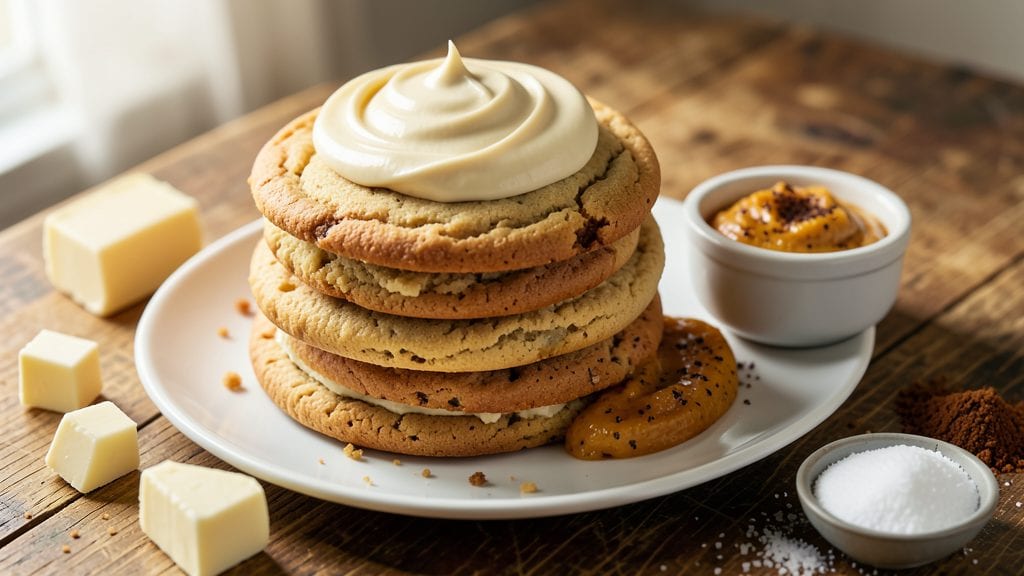
This jumbo cookie recipe delivers giant, melt-in-your-mouth bites of buttery vanilla perfection that'll make your kitchen smell like a bakery. After years of perfecting the science behind these massive cookies, I've cracked the code for achieving that signature crackly top while keeping the centers soft and gooey.
The secret lies in precise measurements and a foolproof baking technique that ensures they rise just enough to create those coveted air pockets.
What sets these apart from standard cookies is their oversized nature—each one is big enough to share (or not) without sacrificing texture. The dough comes together in 30 minutes with simple ingredients you likely already have on hand, yet the result is restaurant-quality dessert that tastes homemade.
The combination of brown and white sugar creates a caramelized edge that contrasts beautifully with the tender interior, while vanilla extract adds depth that store-bought cookies can't match.
By the time they emerge from the oven, you'll have golden, crackly-topped cookies with edges that are crisp enough to hold their shape while centers remain soft enough to ooze with every bite.
The aroma alone will have everyone gathering in the kitchen, and the first taste will have them asking for the recipe. These aren't just cookies—they're an experience that transforms any gathering into something special.
Whether you stick with classic vanilla or experiment with chocolate chip, snickerdoodle, or even gluten-free variations, the base technique remains the same. Let's get baking—your taste buds (and your cookie jar) will thank you.
Ingredients for jumbo cookie
Twelve simple ingredients transform into twelve giant cookies—crisp edges, gooey centers, and that signature crackly top.
| Ingredient | Amount | Notes |
|---|---|---|
| Unsalted Butter 🧈 | 1 cup | Cold, cubed for proper creaming |
| Granulated White Sugar 🍚 | 1 ½ cups | For tender crumb texture |
| Packed Brown Sugar 🍚 | ½ cup | Lightly packed for caramelized edges |
| Pure Vanilla Extract 🍯 | 2 tsp | High-quality, not imitation |
| Large Eggs 🥚 | 2 whole | Room temperature for even mixing |
| All-Purpose Flour 🌾 | 3 ½ cups | Sifted for light texture |
| Baking Soda 🧂 | ½ tsp | Ensures proper rise |
| Diamond Crystal Kosher Salt 🧂 | 1 tsp | Coarse grain preferred |
| Ground Vanilla Bean Powder 🌿 | 1 tsp | Optional, for intensified flavor |
| Granulated Sugar (for rolling) 🍚 | ¼ cup | Extra-fine for even coating |
| Vanilla Bean Seeds (optional) 🍯 | 1 whole | Scraped for garnish |
| Flaky Sea Salt (for sprinkling) 🧂 | 1 tsp | Maldon preferred for contrast |
The butter is non-negotiable here—use European-style unsalted butter (like Plugrá or Land O'Lakes European) for maximum flavor. Grab it from the deli section if your store carries it, or the regular butter section if not. The sugars are key: white sugar for tenderness, brown sugar for chewiness and caramelization. I always measure the brown sugar by packing it lightly into the cup—don't press down hard. For vanilla, Bouchon or Nielsen-Massey are my go-tos, but any pure extract works. The eggs should be at room temperature when you mix them in, or the dough will turn out tough.
No vanilla extract? Vanilla bean paste works in a pinch, or even almond extract at half the amount (but it tastes different). Running short on butter? Coconut oil can replace up to half, but the texture will be slightly denser. For the flour, King Arthur or Gold Medal brands are ideal—they absorb moisture evenly. If you can't find vanilla bean powder, double the extract or add a pinch of cinnamon for warmth. The extra sugar for rolling? Turbinado sugar gives a prettier look, but regular granulated works fine. Just make sure it's fine enough to roll evenly.
This dough keeps for up to 48 hours in the fridge, wrapped tightly in plastic. For best results, let it sit at room temperature for 30 minutes before baking. The baked cookies stay fresh for 5 days in an airtight container, but they're best enjoyed within 2 days when they're still soft. Freeze unbaked dough balls for up to 3 months—just bake straight from frozen, adding 2-3 extra minutes to the time. I always bake a double batch and freeze half for lazy days.
Why You'll Love This Recipe
- No Mixer Needed: I swear by this dough—just creaming butter and sugars by hand until it’s light and fluffy. The eggs and vanilla blend in like a dream, and honestly? My arms don’t even get tired.
- Buttery Sweet Magic: That perfect balance of white and brown sugar? It’s the secret. The butter stays rich but not greasy, and the vanilla—real vanilla, not imitation—makes every bite taste like a hug from your favorite baker.
- Party in a Bite: These aren’t just cookies; they’re edible centerpieces. Big enough to share (or not), they’re my go-to for holidays, potlucks, or when I just want something impressive without the fuss.
- Leftovers? More Like Zero Leftovers: Between us, these disappear faster than I can pull them from the oven. But if some linger? They freeze like champs—just reheat in the toaster for that same fresh-out-of-the-oven crunch.
Step-by-step instructions for jumbo cookies
These giant cookies deliver bakery-style perfection with crisp edges and chewy centers.
Cream Cold Butter and Sugars to Fluffy Perfection
In a stand mixer fitted with the paddle attachment, beat the 1 cup unsalted butter (cold and cubed) on medium speed for 1-2 minutes until softened but not melted. This gradual warming prevents the butter from turning greasy. Add the 1.5 cups granulated white sugar and 0.5 cup packed brown sugar, then beat on medium-high speed for 3-4 minutes until the mixture is light, fluffy, and nearly doubles in volume.
The sugar should be fully incorporated with no visible grains remaining. Here's the thing—this creaming process incorporates air, which creates those signature crackly tops and prevents dense cookies. If your butter starts to look greasy before the sugars dissolve completely, reduce the speed to medium and let it work its way back to a creamy texture.
Add Eggs and Vanilla for Rich Flavor
Add the 2 whole large eggs (room temperature) one at a time, mixing on low speed for 30 seconds after each addition until fully incorporated. Scrape down the sides of the bowl to ensure even mixing. Add the 2 teaspoons pure vanilla extract and 1 teaspoon ground vanilla bean powder, mixing on low speed for 15 seconds just until combined.
This is where the magic happens—the vanilla bean powder adds an intensified aroma that regular extract can't match. The mixture should look smooth but slightly thick. If it appears too stiff, give it a quick mix on low speed to redistribute any separated butter. Don't worry if it looks slightly curdled after adding the eggs—it will come together when we incorporate the dry ingredients.
Combine Dry Ingredients for Light Texture
In a separate bowl, whisk together the 3.5 cups all-purpose flour, 0.5 teaspoon baking soda, and 1 teaspoon diamond crystal kosher salt. Sift the mixture directly into the wet ingredients, then mix on low speed for 30-45 seconds until just combined. You should still see a few flour streaks—this prevents overdevelopment of gluten, which would make the cookies tough.
Here's the crucial part: stop mixing as soon as the flour disappears. Overmixing develops gluten, leading to chewy rather than tender cookies. If you're mixing by hand, use a silicone spatula to gently fold the dry ingredients into the wet mixture just until no dry spots remain. The dough should be soft but manageable, not sticky or crumbly.
Chill the Dough for Ideal Texture
Divide the dough into two equal portions and flatten each into a 1-inch thick disk. Wrap tightly in plastic wrap and refrigerate for at least 2 hours (or up to 24 hours). This chilling step is non-negotiable—it allows the flour to fully hydrate and the butter to solidify, preventing excessive spreading in the oven.
Cold dough also means the cookies hold their shape better, resulting in those beautiful thick, cake-like centers with crisp edges. I know it seems like too much waiting, but trust me—this step makes all the difference between store-bought cookies and homemade perfection. If you're in a hurry, you can freeze the dough disks for up to 3 months before baking.
Roll, Bake, and Finish with Flaky Salt
Preheat your oven to 350°F and line two baking sheets with parchment paper. On a lightly floured surface, roll one disk of dough to ½-inch thickness. Using a 3-inch round cutter, cut out cookies and reroll the scraps once. Place cookies 2 inches apart on the prepared sheets—they'll spread slightly but not as much as smaller cookies.
Bake for 12-14 minutes until the edges are golden brown but the centers still look slightly underdone. They'll continue cooking on the hot pan after removal. Immediately after baking, roll each cookie in the 0.25 cup granulated sugar (for rolling) using a fork to create a crisscross pattern. While still warm, sprinkle with 1 teaspoon flaky sea salt and, if using, the 1 whole vanilla bean seeds for garnish.
Let the cookies cool on the baking sheets for 5 minutes before transferring to a wire rack. Serve warm for maximum gooeyness in the centers, or let them cool completely for crispy edges. These jumbo cookies are best enjoyed fresh from the oven—each bite delivers that perfect balance of buttery richness, vanilla depth, and contrasting textures.
Pro Tips For Making Jumbo Cookie
- CREAM BUTTER SLOWLY: Dump cold butter cubes into the sugar mix and let the heat of your hands warm them slightly before mixing—this prevents greasy dough. I used to melt butter first, and the cookies always ended up denser and less tender. Trust me, the 30-second wait makes a real difference.
- WEIGH YOUR SUGARS: Packed brown sugar is tricky—tap the measuring cup firmly on the counter to settle it, then level with a knife. I learned this the hard way when my first batch turned out too sweet (and sticky). Granulated sugar? Spoon it in loosely—no packing needed.
- CHILL THE DOUGH: Wrap the dough in plastic and refrigerate for at least 2 hours—overnight is even better. This prevents spreading and ensures thick, cake-like cookies. I skipped this once and ended up with sad, flat pancakes. Your future self will thank you.
- USE ROOM-TEMP EGGS: Cold eggs from the fridge mix unevenly and can cause streaks in the dough. Let them sit in warm water for 5 minutes before cracking—this guarantees a smooth batter every time. Yes, even if you’re impatient like me.
Regional styles of these flavors
Classic Midwest Style
In the Midwest, these jumbo cookies take on a heartier, almost cake-like texture with a touch of cinnamon and nutmeg. I like to add 1 teaspoon ground cinnamon and ½ teaspoon ground nutmeg to the dry ingredients for warmth that pairs beautifully with the vanilla.
Serve them warm with a scoop of vanilla bean ice cream—this combo became a staple at Midwestern bake sales in the 1980s. 🌾
Southern Buttermilk Twist
Southern bakers often replace some of the milk in the dough with buttermilk for extra tenderness. I swap 1 tablespoon of the water (if using) with 1 tablespoon buttermilk and add ½ teaspoon lemon zest to the dough for brightness.
These cookies develop a slightly tangy flavor that cuts through the richness, perfect for pairing with sweet tea. The buttermilk also helps create a more pronounced crackly top. 🍯
Pacific Northwest Chocolate-Dipped
On the West Coast, especially in Seattle, these jumbo cookies often get a chocolate twist. After baking, I dip half of each cookie in melted dark chocolate (60-70% cocoa) and sprinkle with crushed hazelnuts or sea salt flakes.
The cool Pacific Northwest climate makes chocolate pairings irresistible—this version is inspired by the famous Chocolate Dipped Cookies from local bakeries. 🍫
New England Brown Sugar Crunch
New England bakers love to maximize that caramelized brown sugar flavor. I increase the brown sugar to ¾ cup packed and add ½ cup chopped pecans to the dough. After baking, I press a few extra pecan halves into the tops for decoration.
These cookies have a pronounced chewiness that stands up well to the region's cold winters, making them perfect for holiday gatherings. 🌰
Texas-Style Spiced Chai
In Texas, these jumbo cookies often get a chai-inspired spice blend. I add ½ teaspoon ground cardamom, ¼ teaspoon ground cloves, and ½ teaspoon ginger to the dry ingredients.
The spices create a warm, aromatic profile that pairs perfectly with a glass of cold milk. This variation became popular in Austin's food truck scene before spreading to home kitchens. 🌶️
California Almond Joy Fusion
West Coast bakers love to incorporate tropical flavors. I fold in ½ cup chopped almonds and ¼ cup shredded coconut to the dough, then finish each cookie with a drizzle of melted white chocolate and a sprinkle of crushed macadamia nuts.
This variation draws inspiration from Almond Joy bars but keeps the signature jumbo cookie structure. 🥥
Nutrition facts
Frequently asked questions
Why do jumbo cookies need to chill before baking?
Chilling the dough for at least 2 hours is crucial to prevent excessive spreading and ensure those signature crackly tops. The cold butter solidifies, helping maintain shape while the flour hydrates properly for a tender crumb. Skipping this step often results in flat, cake-like cookies that lack texture. Think of it as giving the dough time to "rest" and set up for perfect baking.
Can I make these jumbo cookies without a mixer?
Use a sturdy wooden spoon or silicone spatula to cream the butter and sugars by hand—just work it vigorously for 5-7 minutes until light and fluffy. For the eggs, mix them in one at a time with a fork, then fold in the dry ingredients gently with a rubber spatula. The dough will be slightly thicker, but the texture won't suffer. Just be extra careful not to overmix.
How do I fix dough that's too sticky or too dry?
If your dough is too sticky, chill it 10-15 extra minutes and add 1 tablespoon flour at a time until it's manageable. Too dry? Mix in 1 teaspoon milk or water until it comes together. The dough should hold its shape when pressed gently but still be soft enough to roll. Remember, the chilling step is your best friend for consistency!
Why did my jumbo cookies spread too much?
Over-spreading usually happens when the dough isn't chilled enough or the oven runs hot. Always use cold butter and chill the dough thoroughly. Preheat your oven to 350°F and place the baking sheet on the middle rack. If your kitchen gets hot, try baking at 325°F for 15-17 minutes. Also, make sure your cutter is clean—grease can cause sticking and spreading.
Can I make these gluten-free or vegan?
For gluten-free, replace the all-purpose flour with a 1:1 gluten-free baking flour blend like King Arthur's, and add ½ teaspoon xanthan gum if not included. For vegan, use vegan butter and flax eggs (replace 2 eggs with 2 tablespoons ground flaxseed + 6 tablespoons water). The texture will be slightly denser, but the technique remains the same. Always adjust baking time—gluten-free versions may need 1-2 extra minutes.