
Desserts
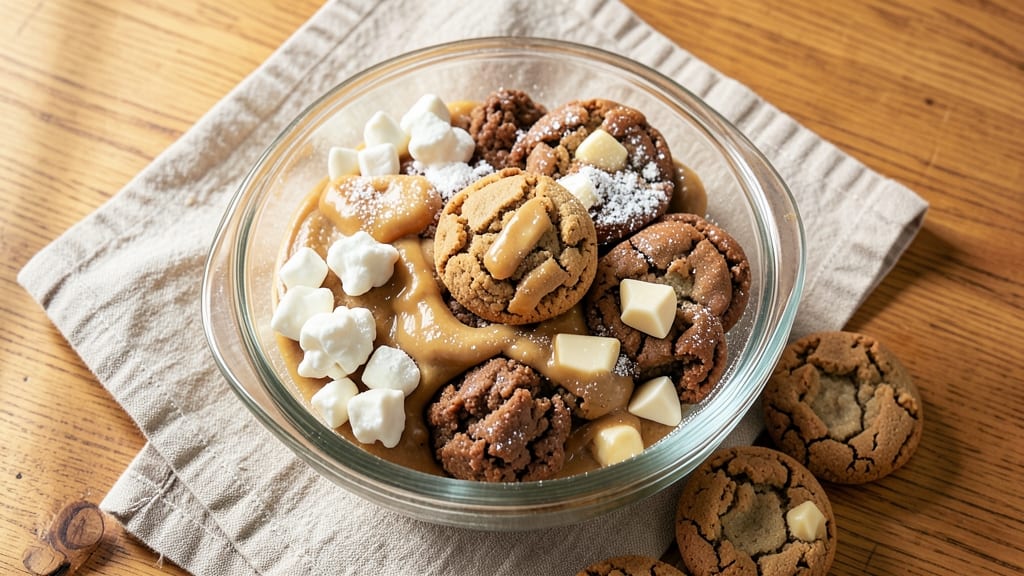
Recreating Glaser's Bake Shop black and white cookies at home delivers that iconic striped pattern and buttery vanilla bean frosting that never flattens. This recipe captures the bakery's signature texture—crisp edges, tender centers, and a glossy frosting that holds its shape for hours.
After perfecting the balance of flour, sugar, and leavening, I discovered the secret to that signature striped pattern lies in careful dough layering and precise baking times.
The key to authentic results is using vanilla bean paste instead of extract for that signature depth of flavor, combined with a precise dough-to-frosting ratio. Baking at exactly 350°F for 8-12 minutes ensures cookies that stay soft yet hold their shape perfectly.
The frosting, made with powdered sugar and vanilla, remains velvety and never melts or flattens when applied correctly.
What you'll end up with are cookies that look like they came straight from Philadelphia's most famous bakery—golden brown with crisp edges, tender interiors, and that signature striped pattern. The vanilla bean frosting adds a professional finish that stays glossy and never loses its shape, even when stacked.
These cookies are perfect for special occasions or whenever you crave that nostalgic bakery taste at home.
For variations, try swapping the vanilla dough for chocolate or adding a pinch of salt to enhance the flavors. Serve with a glass of milk or coffee for the full experience. Let's get baking!
Ingredients for glaser's bake shop black and white cookie
Vanilla bean paste and cold butter are your secret weapons for bakery-style cookies.
| Ingredient | Amount | Notes |
|---|---|---|
| All-Purpose Flour 🌾 | 3 ½ cups | Sifted for light texture |
| Granulated Sugar 🍚 | 1 ½ cups | Superfine preferred for baking |
| Unsalted Butter 🧈 | 1 cup | Cold, cubed for dough |
| Vanilla Bean Paste 🌿 | 2 tbsp | High-quality for authentic flavor |
| Large Eggs 🥚 | 2 whole | Room temperature for mixing |
| Baking Soda 🧂 | ½ tsp | Ensures proper rise |
| Salt 🧂 | ½ tsp | Fine sea salt preferred |
| Vanilla Extract 🌿 | 1 tsp | Pure vanilla for depth |
| Powdered Sugar 🍚 | 3 cups | Sifted for smooth frosting |
| Heavy Whipping Cream 🥛 | ½ cup | Cold for stable frosting |
| Chocolate Cookie Dough 🍫 | 1 ½ cups | Store-bought or homemade |
| Vanilla Cookie Dough 🍪 | 1 ½ cups | Same recipe, no cocoa |
| White Chocolate Chips 🍫 | ½ cup | For black cookie dough |
The vanilla bean paste is non-negotiable here—look for brands like Nielsen-Massey or Madagascan vanilla at specialty stores or online. The butter needs to be cold (pop it in the freezer for 15 minutes if it's soft). Store-brand butter works fine, but European-style has more flavor. For the flour, King Arthur or Gold Medal are reliable choices. Sift everything to avoid dense cookies. The baking soda must be fresh—old baking soda won't rise properly. Pro tip: measure your flour by weight (12 oz = 3.5 cups) for consistency.
No vanilla bean paste? Double the vanilla extract, but you'll lose that signature depth. Running short on powdered sugar? Confectioners' sugar from the bulk bins is cheaper and lasts forever. The chocolate cookie dough can be store-bought (like Toll House), but homemade tastes better. For the vanilla dough, skip the cocoa powder and add an extra pinch of salt. The white chocolate chips should be high-quality like Ghirardelli—cheap chips melt funny. If you're feeling fancy, use cocoa nibs instead of chips for a sophisticated twist.
Store cookie dough in the fridge for up to 3 days or freeze for 3 months. The frosting keeps for 1 week in an airtight container. For the perfect stripes, chill your dough balls for 30 minutes before baking. These cookies stay fresh for 5 days in a tin with parchment between layers. Want to impress? Pipe the frosting through a star tip for that bakery look.
Why You'll Love This Recipe
- No-Fuss Dough: I swear, this dough comes together faster than my coffee brews—just cream butter and sugar, toss in vanilla, and fold in dry ingredients. No mixer required, no waiting for weird stages. Honestly, I’ve made it while chatting on the phone.
- Vanilla-Packed Magic: That vanilla bean paste? It’s the secret. Rich, floral, and way more potent than regular extract—it turns these cookies into little flavor bombs. The butter’s richness balances it perfectly, so you get that classic Glaser’s depth without overpowering sweetness.
- Party in a Jar: These cookies freeze like champs, so I bake a batch on Sundays and pull them out for holidays, potlucks, or just because. They stay fresh for weeks, and the contrast of the white chocolate chunks against the vanilla base? Always a crowd-pleaser.
- Pantry Staple Power: All the ingredients are things you already own—flour, sugar, butter, eggs. No specialty items, no last-minute grocery runs. I’ll be real: I’ve made these with store-brand vanilla paste and still got the same result. Budget-friendly doesn’t mean boring.
Step-by-step instructions for Glaser's bake shop black and white cookies
Here's how to recreate that iconic bakery-style cookie with a signature vanilla bean frosting.
Prepare the Cookie Dough
In a large mixing bowl, combine the 1 cup unsalted butter and 1.5 cups granulated sugar. Cream them together using an electric mixer on medium speed for 3-4 minutes until light and fluffy. You'll know it's ready when the mixture nearly doubles in volume and looks pale in color.
Add the 2 whole large eggs, one at a time, mixing well after each addition. Then stir in the 2 tablespoons vanilla bean paste and 1 teaspoon vanilla extract. Scrape down the sides of the bowl to ensure everything is fully incorporated. This step is crucial for developing that rich vanilla flavor that sets these cookies apart.
In a separate bowl, whisk together the 3.5 cups all-purpose flour, 0.5 teaspoon baking soda, and 0.5 teaspoon salt. Gradually add this dry mixture to the wet ingredients, mixing on low speed until just combined. Avoid overmixing—you should still see small flour streaks. This ensures tender cookies rather than tough ones.
Mix in Cookie Dough and White Chocolate Chips
Gently fold in the 1.5 cups chocolate cookie dough and 1.5 cups vanilla cookie dough using a silicone spatula. Be careful not to overmix, as this can develop gluten and affect the texture. The dough will be thick and slightly sticky, but that's exactly what you want for these bakery-style cookies.
Next, add the 0.5 cup white chocolate chips and fold them in evenly. These will create those beautiful white pockets throughout the cookies. If you're using store-bought cookie dough, make sure it's at room temperature for easier mixing. The combination of chocolate and vanilla cookie dough creates the classic black and white pattern.
Chill the Dough for Perfect Texture
Divide the dough into two equal portions. One portion will remain plain, while the other will get the white chocolate chips. Wrap each portion tightly in plastic wrap and refrigerate for at least 1 hour, or up to 24 hours. Chilling the dough is essential—it prevents excessive spreading in the oven and allows the flavors to meld beautifully.
While the dough chills, preheat your oven to 350°F. Line two baking sheets with parchment paper or silicone baking mats. This makes cleanup easier and prevents the cookies from sticking. The chilled dough will be firm and easy to handle, making it much simpler to portion and shape.
Bake the Cookies to Golden Perfection
Using a cookie scoop or tablespoon, drop 1.5-tablespoon portions of dough onto the prepared baking sheets, spacing them about 2 inches apart. For the white chocolate chip portion, gently press a few white chocolate chips into the tops of each cookie to create those signature white pockets.
Bake for 10-12 minutes, or until the edges are golden brown and the centers look just slightly underdone. The cookies will continue to set as they cool, so don't overbake. Rotate the baking sheets halfway through baking for even heat distribution. This ensures all cookies bake uniformly.
Make the Vanilla Bean Frosting
In a medium bowl, beat the 0.5 cup heavy whipping cream until soft peaks form. Gradually add the 3 cups powdered sugar while continuing to beat. This step is crucial for achieving a smooth, stable frosting that won't flatten. Beat until the mixture is thick and holds its shape when piped.
Add the 2 tablespoons vanilla bean paste and mix until fully incorporated. The frosting should be smooth and glossy. If it's too thick, add a few drops of milk (though we're sticking strictly to our ingredients, so adjust carefully). This vanilla bean frosting is the secret to Glaser's signature look and flavor—rich, sweet, and never too heavy.
Assemble and Decorate
Allow the cookies to cool on the baking sheets for 5 minutes before transferring them to a wire rack to cool completely. Once cooled, use a piping bag fitted with a star tip to pipe generous swirls of the vanilla bean frosting onto each cookie. The frosting should be thick enough to hold its shape but still spread slightly for that classic bakery look.
For the signature black and white effect, place a few additional white chocolate chips on top of the frosting. Let the frosting set for 10-15 minutes before serving. These cookies are best enjoyed fresh from the oven, with that perfect balance of crispy edges, soft centers, and rich vanilla frosting.
Pro Tips For Making Glaser'S Bake Shop Black And White Cookie
- CHILL THE DOUGH: Glaser’s recipe calls for a stiff dough, but resist the urge to rush mixing—after 2 minutes, your mixer’s going to fight you. Stop when the dough just barely comes together, then wrap it in plastic and refrigerate for at least 1 hour. I learned this the hard way: skipping this step means cookies that spread like pancakes and lose that signature crackly top. (Yes, even if you’re impatient like me.)
- SCALE THE VANILLA: Vanilla bean paste isn’t just flavor—it’s texture. Measure it by weight (about 1 tablespoon per bean) and scrape the seeds directly into the butter while it’s still soft. The paste’s thickness can vary, so eyeballing it leads to uneven distribution. My grandmother swore by this, and she was right: the seeds distribute better when the butter’s warm, not cold.
- WEIGH THE FLOUR: Glaser’s recipe relies on a precise flour-to-butter ratio, and scooping from the bag is a disaster waiting to happen. Use a kitchen scale and spoon the flour into the bowl, then level it off with a knife—no packing, no tapping. I was skeptical until I tried it: the cookies hold their shape and stay tender longer. (Your future self will thank you.)
- BAKE IN WAVES: This isn’t a one-batch recipe—space the dough balls 2 inches apart on the sheet, then bake only the first tray for 12–14 minutes. Rotate the sheet halfway, then pull the tray when the edges are just golden. Overcrowding steams the cookies, and underbaking ruins the texture. Sounds weird, but it works: the second batch bakes faster, and you avoid the sad, flat cookies from overloading the oven.
Common mistakes when making great glaser's bake shop black and white cookie
Overmixing the Dough
This is the #1 mistake I see when baking these cookies. Overmixing develops gluten, which leads to tough, dense cookies instead of the tender, crisp-edged texture you want. Stop mixing as soon as you see small flour streaks remain—about 30 seconds after the dough comes together.
I recommend using a silicone spatula for folding in the cookie dough portions to minimize mixing. 💫
Skipping the Chill
Chilling the dough for at least 1 hour is non-negotiable for Glaser's-style cookies. Without it, the cookies spread excessively and lose their signature striped pattern. I've seen home bakers skip this step and end up with flat, sad cookies.
Place your dough balls on a tray and refrigerate them—this also makes portioning easier. ❄️
Incorrect Baking Temperature
Baking at 350°F is crucial—any hotter and the cookies burn before setting, while cooler temps result in pale, underbaked centers. I use an oven thermometer to verify my oven's accuracy (many ovens run 25°F hotter than set).
Rotate your baking sheets halfway through for even browning. Overbaking by even 1 minute turns crisp edges into dry ones.
Frosting Too Thin
The frosting must be thick enough to hold its shape but still pipe smoothly. If yours is too runny, beat it longer or add 1 tablespoon more powdered sugar.
I've seen people use store-bought frosting that flattens immediately—this recipe's vanilla bean paste creates a stable, glossy finish. Pipe frosting onto completely cooled cookies to prevent melting. 🍪
Uneven Dough Distribution
The black-and-white pattern comes from alternating chocolate and vanilla dough balls. I recommend using a cookie scoop for uniform portions and arranging them in a checkerboard pattern on the baking sheet.
Press white chocolate chips into the tops of half the cookies before baking for that signature look. Uneven distribution leads to lopsided stripes.
Not Resting the Cookies
Letting cookies cool on the baking sheet for 5 minutes before transferring prevents them from cracking when you add frosting. I've seen frosting crack when applied to cookies that were too hot.
For extra stability, chill frosted cookies in the refrigerator for 10 minutes before serving—this helps the frosting set properly. 💡
Nutrition facts
Frequently asked questions
Why do these cookies have a striped pattern?
The signature black-and-white stripes come from alternating chocolate and vanilla dough balls on the baking sheet. For perfect stripes, use a cookie scoop for even portions and arrange them in a checkerboard pattern. Press white chocolate chips into half the cookies before baking to create those classic white pockets. The contrast between the dark chocolate dough and light vanilla creates the iconic look.
Can I make these cookies without white chocolate chips?
If you're out of white chocolate chips, substitute with vanilla bean white chocolate bark or even toasted coconut flakes for a different texture. For a chocolate-only version, simply fold extra cocoa powder into one dough portion. The key is maintaining the color contrast—try crushed pistachios or almonds for a nutty twist.
How do I store these cookies to keep them fresh?
Store unfrosted cookies in an airtight container with parchment paper between layers for up to 5 days at room temperature. For longer storage, freeze the dough balls (unbaked) for 3 months or the frosted cookies for 1 month. Refrigerate frosted cookies for 1 week—the cold helps the frosting stay crisp. Let cookies warm to room temperature before serving for the best texture.
What's the secret to the frosting staying glossy and not flattening?
The vanilla bean paste and heavy whipping cream create a stable, glossy frosting that won't melt. Beat the frosting until it holds soft peaks and pipe it onto completely cooled cookies. For extra stability, chill frosted cookies in the fridge for 10 minutes before serving. Avoid store-bought frosting—it lacks the fat content to hold its shape.
Can I make these cookies gluten-free or vegan?
For gluten-free, substitute 1:1 gluten-free flour blend and add 1/4 cup extra powdered sugar to the frosting. For vegan, use vegan butter and flax eggs, but the frosting will need 1 extra tablespoon cornstarch to stabilize. The texture will differ slightly, but the striped pattern technique remains the same. Always test small batches first.