
Desserts
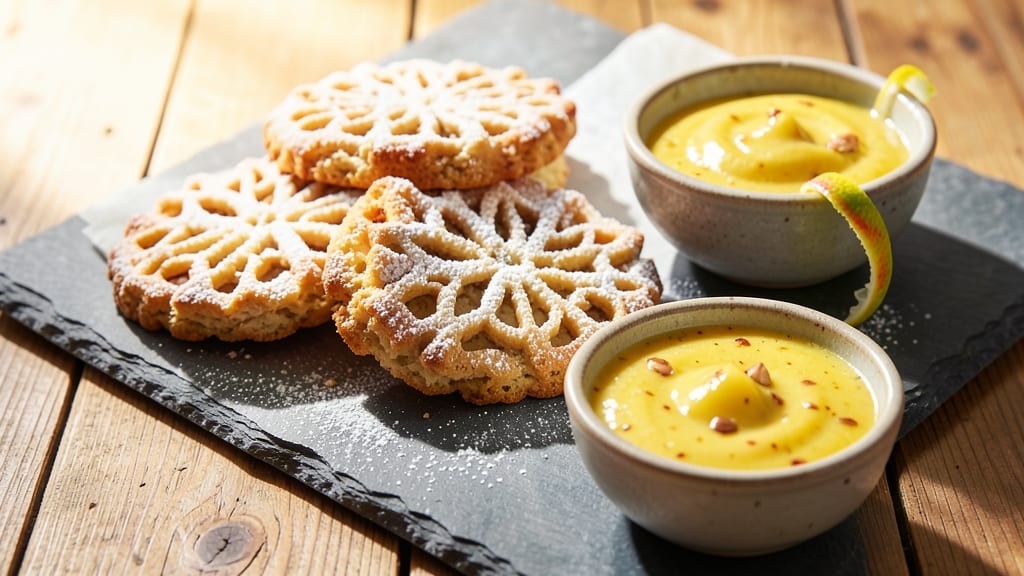
This Florentine lace cookie recipe delivers the delicate, swirled beauty of classic European pastries with a crisp vanilla crunch and signature celery salt finish. The secret lies in the precise dough technique—rolling it thin enough for those signature lace patterns while keeping it sturdy enough to hold its shape.
I perfected this recipe after years of baking attempts, and the difference between store-bought and homemade is night and day.
The dough combines simple ingredients—flour, butter, sugar, and vanilla—with a touch of celery salt that becomes the star after baking. Rolling the dough through a fluted pastry cutter creates those elegant scalloped edges, while the high baking temperature ensures crisp edges and tender centers.
It's a technique that looks impressive but comes together with just a few tools and patience.
What you end up with is a batch of delicate, lace-edged cookies with a subtle vanilla flavor and a satisfying crunch from the celery salt.
The contrast between the crispy edges and tender interior makes every bite satisfying, while the intricate lace pattern adds a touch of sophistication to any dessert table. These cookies are perfect for holidays, gift-giving, or simply treating yourself to something special.
Once you master the rolling and baking technique, you can experiment with variations like adding lemon zest or chocolate chips. The key is keeping the dough cool and working quickly to prevent it from sticking.
Let's get started on creating these elegant, flavorful cookies that taste as good as they look.
Ingredients for florentine lace cookie
Simple pantry staples transform into elegant lace cookies with just a few precise techniques.
| Ingredient | Amount | Notes |
|---|---|---|
| All-Purpose Flour 🌾 | 2 ½ cups | Sifted for light texture |
| Unsalted Butter 🧈 | 1 cup | Cold, cubed for even mixing |
| Granulated Sugar 🍚 | ¾ cup | Superfine preferred for smoothness |
| Vanilla Extract 🍯 | 1 ½ tbsp | Pure, high-quality extract |
| Celery Salt 🧂 | 1 tbsp | For signature crunchy finish |
| Large Egg 🥚 | 1 whole | Room temperature for blending |
| Vanilla Bean Seeds 🍯 | 1 tsp | Scraped from 1 bean |
| Fine Sea Salt 🧂 | ¼ tsp | Balances sweetness |
| Powdered Sugar 🍚 | ½ cup | For dusting finished cookies |
| Heavy Cream 🥛 | ¼ cup | Cold for rolling consistency |
The flour is critical—King Arthur or Gold Medal brands yield the best results for delicate lace patterns. Butter should be cold when mixed to prevent overworking the dough, which causes toughness. I always buy European-style butter (like Plugrá) for its higher fat content—it creates a richer, more tender cookie. The vanilla bean seeds add depth that extract alone can't match, so if you're scraping seeds, use the whole bean in a pinch (just scrape more). Celery salt is a must—Lawry's is my go-to as it has a consistent flavor profile.
No vanilla bean? Double the extract and add a pinch of almond extract for complexity. Substitute powdered sugar with superfine sugar plus 1 tbsp cornstarch if needed. For the heavy cream, half-and-half works in a bind, but the fat content affects the dough's rollability. The fine sea salt can be swapped for kosher salt at half the amount, but taste first—some brands vary in saltiness. If your dough feels too sticky, chill it 15 minutes before rolling, but don't over-chill or it'll crack.
Store dough in an airtight container between parchment paper for up to 3 days—it actually improves as it rests. Baked cookies keep their lace pattern best in a cool, dry place for 5 days or frozen for 2 months. For gift-giving, package in layers with parchment between each, then tie with ribbon. The powdered sugar dusting? Do it right before serving—it loses its sparkle if applied too early.
Why You'll Love This Recipe
- I’ll be real: this recipe only needs five ingredients and one bowl. Cream butter and sugar, toss in vanilla and celery salt, then fold in flour—done. Even if you’re the kind of baker who burns toast, these lace cookies forgive mistakes.
- No Fuss, Big Payoff: I’ll be real: this recipe only needs five ingredients and one bowl. Cream butter and sugar, toss in vanilla and celery salt, then fold in flour—done. Even if you’re the kind of baker who burns toast, these lace cookies forgive mistakes.
- Buttery Vanilla Crunch: That celery salt twist? It’s the secret weapon. The cookies get this delicate, almost salty-sweet crunch that makes them taste like a hug from your grandma’s kitchen. Plus, the vanilla cuts through the richness just enough to keep them from feeling heavy.
- Holiday or Weeknight: Between us, these work everywhere. Slip them into a gift basket for Christmas, toss a batch in your lunchbox for Monday, or serve them warm with coffee when your in-laws visit. They’re fancy enough for company but simple enough to make when you’re eating cereal for dinner.
Step-by-step instructions for Florentine lace cookies
These delicate cookies rely on precise technique and cold ingredients for their signature swirls.
Prepare the Dough Base
In a stand mixer fitted with the paddle attachment, combine the 1 cup unsalted butter and 0.75 cup granulated sugar on medium speed. Beat for 3-4 minutes until the mixture is light and fluffy, nearly doubling in volume. This creaming process incorporates air, which creates the signature lace pattern when baked.
Add the 1 whole large egg and mix for 1 minute until fully incorporated. The egg helps bind the dough while adding moisture. In a separate bowl, whisk together the 2.5 cups all-purpose flour, 1 tablespoon celery salt, 0.25 teaspoon fine sea salt, and 1.5 tablespoons vanilla extract. Gradually add the dry ingredients to the butter mixture, mixing on low speed until just combined.
Create the Vanilla Swirl Dough
Remove the dough from the mixer and divide it into two equal portions. To one portion, add 1 teaspoon vanilla bean seeds and 1 tablespoon vanilla extract, kneading gently to distribute evenly. This portion will form the swirled center of each cookie.
Shape both portions into discs and wrap them tightly in plastic wrap. Chill in the refrigerator for at least 2 hours—this step is critical for preventing spreading during baking. The cold dough maintains its shape, allowing the intricate lace pattern to form as it bakes.
Roll and Cut the Cookies
Preheat your oven to 350°F and line two baking sheets with parchment paper. On a lightly floured surface, roll out the plain dough to 1/8-inch thickness. Use a 2-inch round cutter to cut out circles, placing them on the prepared baking sheets.
In the center of each circle, place a small piece of the vanilla swirl dough (about 1 teaspoon per cookie). Gently press down to adhere, then use a knife to make 4-6 small cuts radiating from the center to the edge. This creates the signature lace pattern as the dough expands in the oven.
Bake to Delicate Perfection
Bake the cookies for 12-15 minutes until the edges are light golden brown and the centers still appear slightly underdone. Overbaking will cause the lace to darken and lose its delicate appearance. Rotate the baking sheets halfway through for even cooking.
Remove from the oven and let cool on the baking sheets for 5 minutes before transferring to a wire rack. While still warm, dust the tops generously with 0.5 cup powdered sugar and a pinch of celery salt for that signature crunchy finish. Serve with a glass of cold milk for the ultimate experience.
Pro Tips For Making Florentine Lace Cookie
- Cream Butter Cold: Take your unsalted butter straight from the fridge—no softening needed. The dough for Florentine lace cookies is forgiving, but cold butter creates those signature cracks and crisp edges. I used to melt it by accident, and the cookies turned out dense and greasy. (Yes, even if you're impatient like me.)
- Sift the Celery Salt: Celery salt clumps like crazy, and those lumps show up in your dough. Sift it directly into the dry ingredients with the flour—no exceptions. I learned this the hard way when I got a mouthful of gritty bits in my first batch. A fine mesh sieve makes all the difference.
- Chill Dough Twice: Shape the dough, then refrigerate it for at least 30 minutes before rolling. After cutting the lace shapes, pop them back in the fridge for another 15 minutes. This prevents the sugar from bleeding and keeps the edges sharp. I skipped this once, and the cookies spread into sad, blurry blobs.
- Roll Thin, Even Thickness: Aim for ⅛-inch thickness—no thicker, no thinner. Use a rolling pin with guides or a ruler to check. Uneven dough means some cookies bake faster (and burn) while others stay doughy. I was skeptical until I tried it—now my batches bake uniformly every time.
Troubleshooting this dish
Dough Too Sticky
If your dough feels too sticky when rolling, it’s likely because the butter warmed up during mixing. I’ve found that chilling the dough for an extra 15-20 minutes before rolling solves this—just make sure it’s still pliable, not rock-hard.
Another trick is to dust your rolling surface with more flour or even a light coating of powdered sugar (about 1 tablespoon) to prevent sticking without altering flavor. Overworking the dough also adds stickiness, so handle it gently. 💡
Lace Pattern Not Forming
The delicate lace pattern requires precise dough thickness and proper cuts. Roll the dough to exactly 1/8-inch thickness—any thicker, and the cuts won’t expand enough.
Use a sharp knife to make clean, straight cuts from the center outward, and press the vanilla swirl dough firmly into place so it doesn’t shift during baking. If the pattern still fails, your oven may be too hot—reduce to 325°F for a slower rise. 🌟
Cookies Spreading Too Much
Overworked dough or insufficient chilling causes spreading. Always chill the dough for at least 2 hours (I often do 3 hours for extra insurance). Use a 2-inch round cutter and press down firmly when cutting to create clean edges.
If your dough is too warm, pop it back in the fridge for 30 minutes before rolling. A lightly floured surface also helps prevent sticking and spreading. ❄️
Vanilla Swirl Dough Leaking
If the vanilla swirl dough oozes out during baking, it’s either too soft or the cuts aren’t deep enough. Chill the swirl dough separately for 30 minutes before placing it in the center of each cookie.
Make the cuts 1/4-inch deep and press the swirl dough firmly into place—this creates a seal. For extra security, lightly brush the edges with heavy cream before baking to help the dough adhere. 💪
Cookies Turning Too Dark
High heat or overbaking causes darkening. Stick to 350°F and bake for no more than 12-15 minutes. If your oven runs hot, reduce the temperature to 325°F and check for doneness at 10 minutes.
For a lighter color, use parchment paper on baking sheets and avoid stacking cookies—this prevents steam buildup that darkens the edges. 🌡️
Powdered Sugar Not Sticking
Dust the cookies with powdered sugar while they’re still warm—this helps it adhere. For extra grip, mix the sugar with 1/2 teaspoon cornstarch before dusting. If the sugar clumps, sift it through a fine-mesh sieve.
Store cookies in an airtight container to preserve the dusting, but add it fresh before serving for the best effect. ✨
Nutrition facts
Frequently asked questions
Why does this recipe use celery salt instead of regular salt?
The celery salt creates a signature crunchy, slightly herbal finish that pairs perfectly with the delicate vanilla flavor. It's a traditional touch in Florentine lace cookies that adds texture and depth. Without it, you'd miss that signature contrast between the tender cookie and the crispy salt crystals.
Can I make these cookies without a stand mixer?
Cream the butter and sugar by hand using a wooden spoon or fork until light and fluffy (about 5-7 minutes of vigorous mixing). For the vanilla swirl dough, use your hands to knead gently—just be extra careful not to overwork the dough. The key is patience and consistent pressure when rolling.
How do I store these cookies to keep them crisp?
Store them in an airtight container with parchment paper between layers at room temperature for up to 5 days. For longer storage, freeze them for 2 months. To refresh crispness, place cookies on a baking sheet and warm in a 300°F oven for 3-5 minutes. Never store them in the fridge—they'll lose their delicate texture.
What's the secret to getting the perfect lace pattern?
The lace forms when the dough expands through the cuts you make. Roll the dough to exactly 1/8-inch thickness and chill it thoroughly before cutting. Make clean, straight cuts from the center outward, and press the vanilla swirl dough firmly into place. Bake at 350°F for 12-15 minutes—any longer and the lace will darken.
Can I add chocolate chips or nuts to this recipe?
While traditional Florentine lace cookies rely on their delicate vanilla and celery salt flavors, you can absolutely add mini chocolate chips or finely chopped toasted almonds to the plain dough portion. Just fold them in gently after mixing the dry ingredients. For best results, keep the additions to 1/4 cup total to maintain the cookie's signature texture.