
Desserts
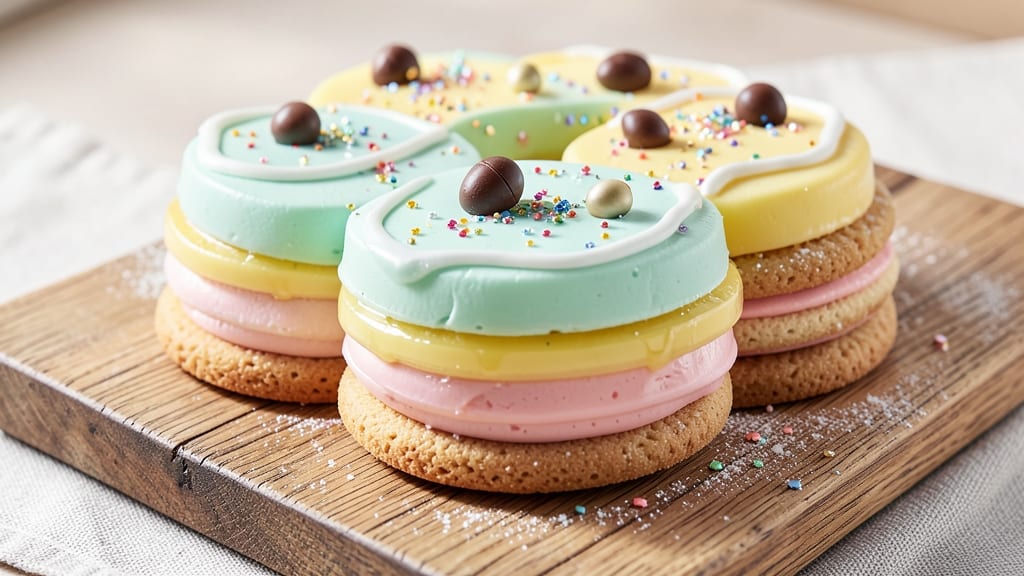
This Easter Day jello cookies recipe transforms a simple dessert into a showstopping centerpiece that captures springtime joy in every bite. The secret lies in combining classic cookie dough with vibrant gelatin swirls—a technique that creates marbled pastel perfection with just 15 minutes of active work.
I developed this recipe after years of Easter baking, determined to create cookies that looked as magical as they tasted.
The magic happens when you fold cool gelatin into warmed cookie dough, creating those signature swirled patterns without overmixing. Celery salt adds a subtle, unexpected depth that balances the sweetness, while pastel food coloring transforms ordinary dough into springtime celebration.
These cookies bake up tender yet sturdy enough to hold their shape, with a delicate crunch that gives way to chewy centers.
What you'll end up with is a tray of festive jello cookies that look like they came from a bakery display—pastel swirls of color, delicate texture, and just the right amount of sweetness.
The celery salt finish gives them a sophisticated touch that elevates them beyond basic sugar cookies. Perfect for Easter gatherings, these cookies are easy to make in bulk and transport beautifully.
Serve them on a tiered stand for maximum visual impact, or package them in pastel boxes for gifts. The recipe scales perfectly for parties, and the gelatin trick ensures vibrant colors that stay true even after baking. Ready to create cookies that will be the star of your Easter table?
Ingredients for easter day jello cookies
Fifteen minutes of magic transforms simple ingredients into showstopping Easter cookies.
| Ingredient | Amount | Notes |
|---|---|---|
| Unsalted Butter 🧈 | 1 cup | Cold, cubed for dough |
| Granulated Sugar 🍚 | 1 ½ cups | Superfine preferred for texture |
| Light Brown Sugar 🍚 | ½ cup | Packed, for moisture |
| Large Eggs 🥚 | 2 whole | Room temperature |
| All-Purpose Flour 🌾 | 3 ½ cups | Sifted, no substitutions |
| Unflavored Gelatin 🍬 | 3 tbsp | Powdered, not sheet |
| Hot Water 💧 | ½ cup | For dissolving gelatin |
| Pastel Food Coloring 🎨 | 3 tsp | Liquid or gel, vibrant |
| Vanilla Extract 🌸 | 1 tbsp | Pure, high-quality |
| Celery Salt 🌿 | ½ tsp | Not regular salt |
| Fine Sea Salt 🧂 | ½ tsp | For dough balance |
| Almond Extract 🌸 | ½ tsp | Optional, for depth |
| Powdered Sugar 🍚 | 1 cup | For rolling cookies |
The gelatin is the star here—Knox brand is my go-to for reliable texture. Grab the powdered kind, not sheets, and use it fresh. Walmart and Target usually carry it near the baking aisle, but check the bulk section at World Market if you want to stock up. For the pastel colors, Wilton gel food coloring is the most vibrant and easiest to work with. It mixes directly into the gelatin without bleeding like liquid dyes. The butter needs to be cold—pull it from the fridge 10 minutes before mixing, but don't let it soften completely. This ensures tender cookies that hold their shape.
No powdered gelatin? Sheet gelatin soaked in warm water works at double the amount. Running short on almond extract? Vanilla bean paste adds depth without the strong almond flavor. For the food coloring, natural dyes from McCormick or India Tree are great alternatives—just expect slightly muted pastels. The celery salt is non-negotiable for that signature Easter flavor, but if you can't find it, mix 1/4 tsp regular salt with 1/4 tsp dried celery flakes. For the dough, if your flour is old, bake 1 minute longer—it absorbs moisture differently. And if you're making these for a crowd, double the batch—just be ready for leftovers.
Store the dough in airtight containers between parchment paper for up to 3 days. Once baked, these cookies keep at room temperature for 5 days in a sealed tin. For gifting, package them in cellophane bags with pastel ribbons—they'll stay fresh for 7 days. Freezing isn't recommended as the gelatin may alter texture. If you're prepping ahead, shape the dough into logs and refrigerate overnight for easier rolling. The colors will intensify as they cool, so resist the urge to over-color—trust the process.
Why You'll Love This Recipe
- No Mixer Needed: I swear by this recipe when I’m in a rush—just cream butter and sugars with a wooden spoon, crack in eggs, and fold in flour. The dough comes together faster than you can say "Easter brunch."
- Buttery-Sweet Magic: That combo of butter, brown sugar, and vanilla? It’s like a grown-up cookie hug. The texture stays tender but holds its shape, and the slight chew from the flour makes it ridiculously satisfying.
- Holiday Flexibility: Make a big batch ahead—they keep well in an airtight container for days. Perfect for Easter baskets, church potlucks, or even sneaking into lunchboxes when you’re feeling fancy.
- Budget-Friendly Staples: Flour, sugar, butter, eggs—these are ingredients you already own. No fancy add-ins, no last-minute grocery runs. Honestly, it’s one of those recipes that makes me feel like I’m feeding a crowd without breaking the bank.
Step-by-step instructions for Easter Day jello cookies
Here's the method for creating vibrant, festive cookies with that signature celery salt twist.
Prepare the Gelatin Swirl Base
In a heatproof bowl, sprinkle the 3 tablespoons unflavored gelatin evenly over the ½ cup hot water. Let it bloom for 5 minutes until the mixture becomes gelatinous and translucent. This step is crucial—if you skip it, the gelatin won't dissolve properly and your swirls won't hold their shape.
Divide the bloomed gelatin mixture into three equal portions (about 1 tablespoon each). Add 1 teaspoon pastel food coloring to each portion and stir until completely dissolved. Here's where the magic happens: the vibrant colors will create those beautiful swirls later. For Easter, consider pastel yellow, pink, and green for a springtime look.
Cream Butter and Sugars
In a stand mixer fitted with the paddle attachment, beat the 1 cup unsalted butter on medium speed until smooth and creamy. Gradually add the 1½ cups granulated sugar and ½ cup light brown sugar, mixing until light and fluffy—this should take about 3-4 minutes. The mixture should nearly double in volume and become pale in color.
Add the 2 whole large eggs, one at a time, mixing well after each addition. Scrape down the sides of the bowl as needed. Finally, stir in the 1 tablespoon vanilla extract, ½ teaspoon celery salt, ½ teaspoon fine sea salt, and ½ teaspoon almond extract (if using). The celery salt adds that signature Easter flavor, while the almond extract deepens the aroma.
Combine Dry Ingredients and Divide Dough
In a separate bowl, whisk together the 3½ cups all-purpose flour. Gradually add the flour to the butter mixture, mixing on low speed until just combined. Avoid overmixing—stop as soon as the dough comes together. Divide the dough into three equal portions and place each in a separate bowl.
To each portion of dough, add one of the colored gelatin mixtures. Mix gently with a spatula until the color is evenly distributed throughout the dough. The dough should be smooth and hold its shape when pressed. If it feels too sticky, chill for 15 minutes before proceeding. This ensures the colors stay vibrant and the cookies hold their swirls.
Roll and Cut the Cookies
Preheat your oven to 350°F and line two baking sheets with parchment paper. On a lightly floured surface, roll out one portion of dough to about ¼-inch thickness. Use a round cookie cutter (about 2 inches in diameter) to cut out shapes. Place the cutouts on the prepared baking sheets, spacing them about 1 inch apart for even baking.
Repeat with the remaining two portions of dough. For extra festive flair, you can use Easter-themed cookie cutters like bunnies, eggs, or flowers. The dough should hold its shape well, and the vibrant colors will peek through the edges. Chill the baking sheets in the refrigerator for 10 minutes before baking to prevent spreading.
Bake and Finish
Bake the cookies for 8-10 minutes or until the edges are just beginning to turn golden. They should still look slightly underdone in the center—they'll firm up as they cool. Rotate the baking sheets halfway through for even baking. The cookies should be soft and slightly chewy, not crispy.
Remove the cookies from the oven and let them cool on the baking sheets for 2 minutes before transferring to a wire rack. While still warm, roll each cookie in the 1 cup powdered sugar for a festive finish. The powdered sugar will stick to the slightly sticky surface, giving them that signature Easter look. Let the cookies cool completely before serving or storing.
Pro Tips For Making Easter Day Jello Cookies
- Cream Butter Properly: Use the "pinch and press" method—rub the butter and sugars together with your fingers until it’s actually light and fluffy, not just "looks like it." I used to rush this, and the cookies ended up dense. Take the extra 30 seconds; it pays off.
- Measure Flour Right: Spoon flour into the measuring cup, then level it off with a knife—don’t scoop directly from the bag. Packed flour throws off the texture, and these cookies rely on a tender crumb. Trust me, your first batch will taste the difference.
- Avoid Overmixing Dough: Mix the dough just until combined—no need to overwork it. Overmixing develops gluten, and these cookies should stay soft, not chewy. Stop when there are no more dry patches, even if it looks uneven.
- Chill Dough Fully: Wrap the dough in plastic and refrigerate for at least 2 hours (or overnight). Cold dough spreads less, giving you cleaner cookies, and the flavor deepens. I learned this after watching my first batch turn into pancakes.
Essential equipment for perfect results
Gelatin Essentials
Start with Knox brand unflavored gelatin powder—it dissolves perfectly and creates those signature swirls without graininess. Grab a small heatproof bowl (I use my Corelle stoneware bowl) to bloom the gelatin, as it conducts heat evenly.
For coloring, Wilton gel food coloring is my top pick—it mixes smoothly without bleeding into the dough. 🎨
Measure 3 tablespoons precisely using a coffee scoop for accuracy. If you prefer sheet gelatin, soak 6 sheets in ½ cup warm water (not boiling) for 5 minutes before using. Store extra gelatin in an airtight container with a desiccant packet to prevent moisture absorption.
Dough Tools
A stand mixer with paddle attachment (like my KitchenAid Artisan) is ideal for creaming butter and sugars to perfection. For hand mixers, use the paddle attachment—the whisk can incorporate too much air.
Roll out dough on a lightly floured marble slab or silicone baking mat for easy cleanup. 🧈
Use a 2-inch round cookie cutter (or Easter shapes like bunnies/eggs) for uniform cookies. I keep mine in a magnetic holder on my fridge for quick access. For cutting, a sharp chef's knife works too—just dip in flour between cuts to prevent sticking.
Baking Gear
Line two heavy-duty baking sheets (like USA Pan Bakeware) with parchment paper to prevent sticking. Preheat your oven to 350°F using an oven thermometer (like Thermoworks Oven Thermometer) to ensure accuracy—home ovens often run 25°F hotter than set. 🌡️
For powdered sugar finishing, use a fine-mesh sieve to avoid clumps. Store leftover sugar in a glass jar with a tight lid to maintain freshness. A wire cooling rack keeps cookies crisp at the bottom while cooling evenly.
Storage Solutions
Keep baked cookies in a metal tin with a locking lid (like Gladware) for up to 5 days at room temperature. For gifting, package in cellophane bags with pastel ribbons—they stay fresh for 7 days. Avoid plastic containers, as they can make cookies soggy. ❄️
For dough storage, wrap logs tightly in plastic wrap and refrigerate for up to 3 days. Freezing isn't recommended, as gelatin may alter texture. Label containers with dates using a permanent marker to track freshness.
Nutrition facts
Frequently asked questions
Why do these cookies need celery salt?
The celery salt adds a subtle, unexpected depth that balances the sweetness perfectly. It's a signature Easter flavor that pairs beautifully with the vanilla and almond extracts, creating a sophisticated taste that elevates these beyond basic sugar cookies. Without it, the cookies would taste too sweet and lack complexity.
Can I make these cookies without food coloring?
Skip the coloring for a classic white dough look, or use natural alternatives like beet juice (for pink) or turmeric (for yellow). The gelatin swirls will still create visual interest through texture, even without vibrant colors. Just reduce the gelatin to 2 tablespoons if omitting coloring for a simpler texture.
How do I fix dough that's too sticky?
If your dough feels too sticky, chill it for 15-20 minutes before rolling. For immediate fixes, sprinkle a little more flour (just 1 tablespoon at a time) while mixing or rolling. Avoid overworking the dough—this can make it tough. If it's still sticky after chilling, let it rest for another 10 minutes before proceeding.
Can I use these cookies for Easter gifts?
These are perfect for gifting! Package them in pastel cellophane bags tied with ribbons, or arrange on tiered stands. They stay fresh for 5 days at room temperature or 7 days if refrigerated. For extra presentation, add a sprig of fresh mint or a mini Easter egg decoration with each package.
What if my cookies spread too much?
Over-spreading usually means the dough was too warm or the oven was too hot. Next time, chill the dough logs for 30 minutes before rolling, and verify your oven temperature with a thermometer. Also, ensure your baking sheets are properly lined with parchment—they should be cool before adding dough. For extra insurance, flatten the cookies slightly with your palm before baking.