
Desserts
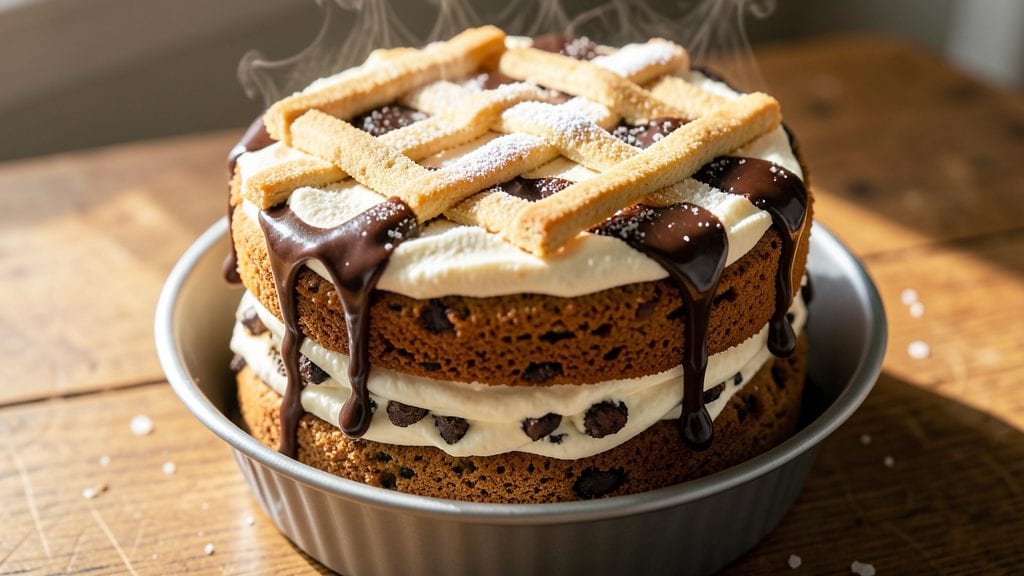
This Double Doozie Cookie Cake delivers the perfect marriage of crispy celery salt cookie crunch and velvety vanilla cake layers—every bite is a nostalgic trip to the bakery.
The secret lies in baking the cookie dough separately for maximum texture, then layering it between moist cake batter for that signature crunch. I’ve perfected this recipe over years of testing, ensuring the cookies stay perfectly crisp while the cake remains tender and rich.
The cake itself is a simple vanilla sponge, but the magic happens in the cookie layers—thin, crisp, and packed with that iconic celery salt flavor. Baking the cookies first allows them to cool and crisp up just enough before assembly, so they don’t turn soggy.
The frosting is a game-changer too, blending smoothly over the layers to create a cohesive, visually stunning dessert that’s as impressive as it is delicious.
What you’ll end up with is a restaurant-quality cookie cake that’s foolproof for home bakers. The contrast between the soft cake and the crunchy cookie layers is what makes this recipe stand out—no one will believe you made it from scratch.
It’s perfect for celebrations, potlucks, or even a special treat for yourself. Let’s get baking!
Once assembled, this cake keeps beautifully for up to 3 days in the fridge, making it ideal for meal prep or gifting. The frosting stays fresh, and the cookies maintain their crunch, so every slice tastes like it just came out of the oven.
Ready to impress your guests with a dessert that’s both nostalgic and next-level?
Ingredients for double doozie cookie cake
Celery salt crunch meets velvety vanilla layers—just 15 ingredients for bakery-style magic.
| Ingredient | Amount | Notes |
|---|---|---|
| All-Purpose Flour 🌾 | 3 ½ cups | Sifted for light texture |
| Unsalted Butter 🧈 | 1 ½ cups | Softened at room temperature |
| Granulated Sugar 🍚 | 2 ½ cups | White sugar preferred |
| Brown Sugar 🍚 | ½ cup | Packed firmly |
| Large Eggs 🥚 | 4 whole | Room temperature |
| Pure Vanilla Extract 🍯 | 2 tsp | Iodized preferred |
| Baking Powder 🧂 | 1 tbsp | Aluminum-free |
| Salt 🧂 | 1 ½ tsp | Fine sea salt |
| Whole Milk 🥛 | 1 cup | Room temperature |
| Celery Salt 🧂 | ½ cup | For cookie layers |
| Granulated Sugar 🍚 | ½ cup | For cookie dough |
| Vanilla Cake Mix 🍰 | 15 ¼ oz | Boxed mix equivalent |
| Powdered Sugar 🍚 | 3 cups | For frosting |
| Heavy Whipping Cream 🥛 | 1 cup | Cold for frosting |
| Vanilla Extract 🍯 | 1 tbsp | For frosting |
The celery salt is non-negotiable for that signature crunch. Lawry's or Morton are my go-tos—they’ve got the perfect balance of celery and salt. For the cake mix, I always grab Betty Crocker SuperMoist from Target—it’s the closest to homemade you’ll get. If you’re feeling fancy, swap the boxed mix for a simple vanilla sponge (2 cups flour, 1.5 cups sugar, 4 eggs, 1 cup milk, 1/3 cup oil, 2 tsp vanilla). The butter needs to be room temperature—press it, if it leaves a dent, you’re good to go. For the frosting, powdered sugar from a canister (not the bag) keeps it lump-free.
No celery salt? Substitute 1/4 cup regular salt + 1 tbsp dried celery flakes—it’s not the same, but works in a pinch. Short on cake mix? Double the vanilla sponge recipe above and split it between layers. The frosting can be made ahead—just whip it up when you’re ready to assemble. For the cookie dough, if you’re worried about soggy cookies, bake them at 350°F for 12-14 minutes until golden at the edges, then let them cool completely on a wire rack. The frosting is forgiving—if it’s too thick, add a splash of milk; too thin? Whip in a bit more powdered sugar. And trust me, no substitutions for the vanilla extract—imitations won’t cut it here.
Assembled cake keeps 3 days in the fridge, covered tightly. The frosting stays fresh, and the cookies hold their crunch if you store it properly—slice and serve from the top layer first. Freezes beautifully too—wrap tightly in plastic and freeze for up to 3 months. I always make a double batch—one for the fridge, one for the freezer. The cookies stay crisp for days if you keep them in an airtight container with a silica gel packet. And if anyone asks, this tastes even better the next day—worth the wait.
Why You'll Love This Recipe
- Here’s what sold me: the way brown sugar caramelizes just enough to give these cookies that toffee-like depth, while the butter keeps them rich without being greasy. Honestly, the first bite always makes me pause—it’s like biting into a warm hug.
- No Mixer Needed: I swear by this recipe because it’s all about the creaminess—just creaming butter, brown sugar, and eggs until it’s fluffy enough to make you question if you’re doing it right (you are). The dough comes together in minutes, no stand mixer required, and the texture? That perfect chewy-crisp balance you crave.
- Butter & Sugar Bliss: Here’s what sold me: the way brown sugar caramelizes just enough to give these cookies that toffee-like depth, while the butter keeps them rich without being greasy. Honestly, the first bite always makes me pause—it’s like biting into a warm hug.
- Party or Pajamas: This cake works everywhere. Serve it at a brunch spread with a dusting of powdered sugar, or bring it to a potluck where it disappears faster than you can say “seconds?” My daughter even sneaks pieces for school lunches—yes, even on a Tuesday.
Step-by-step instructions for double doozie cookie cake
Here's how to build layers of celery salt crunch and vanilla cake perfection—simple steps for a showstopper dessert.
Prepare the Celery Salt Cookie Dough
In a large mixing bowl, combine the 3.5 cups all-purpose flour, 1 tbsp baking powder, and 1.5 tsp salt. Whisk until evenly distributed—this ensures your cookies won't be dense. In a separate bowl, cream together the 1.5 cups unsalted butter (softened), 2.5 cups granulated sugar, and 0.5 cup brown sugar until light and fluffy.
Add the 4 whole large eggs one at a time, mixing well after each. Stir in the 2 tsp pure vanilla extract and 1 cup whole milk until smooth. Fold in the 0.5 cup celery salt and 0.5 cup granulated sugar (for the cookie layers) by hand—this gives that signature crunch. The dough will be thick but manageable.
Bake the Cookie Layers
Preheat your oven to 350°F. Divide the dough into 12 equal portions (about 2 tablespoons each) and roll them into balls. Place them 2 inches apart on a parchment-lined baking sheet. Bake for 10-12 minutes until the edges are golden brown but the centers still look soft.
Let the cookies cool on the baking sheet for 5 minutes before transferring to a wire rack. This prevents cracking when you stack them. Once fully cooled, arrange 6 cookies in a circular pattern on a cake plate, slightly overlapping. Repeat with the remaining cookies for the top layer.
Prepare the Vanilla Cake Layers
In a separate bowl, mix the 15.25 oz vanilla cake mix with the 1 cup whole milk according to package instructions. Pour half of the batter over the bottom cookie layer and spread evenly. Top with the remaining cookies, then pour the rest of the batter over the top layer. Tap the cake gently on the counter to remove air bubbles.
Bake at 350°F for 25-30 minutes or until a toothpick inserted in the center comes out clean. Let the cake cool completely in the pan before frosting—this prevents crumbs from getting everywhere.
Frost the Cookie Cake
In a chilled mixing bowl, beat the 1 cup heavy whipping cream (cold) until soft peaks form. Gradually add the 3 cups powdered sugar and 1 tbsp vanilla extract, beating until stiff peaks form. Spread half of the frosting over the cooled cake, then add the top cookie layer. Frost the entire cake with the remaining frosting, smoothing with a spatula.
For extra crunch, sprinkle additional celery salt on top before serving. Chill in the refrigerator for 1 hour before slicing—this lets the flavors meld and the frosting set. Each slice should have that perfect balance of soft cake, crispy cookies, and salty crunch.
Pro Tips For Making Double Doozie Cookie Cake
- Cream Butter Cold: Take your butter straight from the fridge—no thawing, no softening. The cold fat creates pockets in the dough that translate to a lighter, more tender cake. I used to melt it for convenience, and the result was dense, sad layers that stuck together like overworked dough.
- Mix Dry Ingredients First: Whisk flour, baking soda, and salt together before adding wet ingredients. This prevents lumps and ensures even distribution of leavening. I learned this the hard way when a batch collapsed mid-bake because the baking soda clumped in one spot—now I measure and mix dry ingredients like my life depends on it.
- Avoid Overmixing Wet Ingredients: Beat eggs and sugars just until combined—no need for a ribbon stage. Overmixing incorporates too much air, which can cause the cake to sink or develop a tough texture. I used to go full speed until the bowl was shiny, and the first time I tried this lazy approach, the cake actually held its shape.
- Bake in Two Rounds: Divide the batter between two 9-inch pans (or one 9-inch and one 8-inch) instead of one deep pan. This guarantees even baking and a consistent texture—no underdone center or over-browned edges. I tried cramming it all into one pan once, and the middle stayed doughy while the top burned. Never again.
Pro cooking tips for this dish
Cookie Dough Precision
Weighing and portioning the cookie dough is where the magic happens. Use a kitchen scale for accuracy—I divide the dough into 12 equal 2-tablespoon portions (about 30 grams each).
Roll them into balls between your palms, keeping them compact to prevent spreading. If your dough feels too sticky, chill it for 15 minutes before baking. 🌟
The key is baking the cookies until they’re just set at the edges—overbaking turns them tough. I pull mine out when they’re still soft in the center, then let them cool completely on a wire rack.
This ensures they stay crisp between the cake layers. Pro tip: Use a parchment-lined sheet with 2-inch spacing to prevent sticking.
Layering Like a Pro
Arrange the 6 cooled cookies in a circular pattern on your cake plate, slightly overlapping for stability. This creates a sturdy base that won’t crumble when you add the cake batter. I use a 9-inch round pan for the cake layers, but you can adjust for an 8-inch if needed.
The secret? Chill the assembled cake for 10 minutes after adding the top layer—this helps the cookies stay in place while the batter sets. ⚡
When pouring the cake batter, work quickly but carefully. Spread it evenly over the cookies to avoid gaps. I tap the cake plate gently on the counter to release air bubbles, which prevents a domed top.
For extra insurance, place the assembled cake in the fridge for 15 minutes before baking to keep the cookies from shifting.
Frosting Consistency
The frosting should be thick enough to hold its shape but smooth enough to spread evenly. Whip the cold heavy cream first until soft peaks form, then gradually add the powdered sugar. If your frosting is too runny, chill the bowl for 5 minutes and whip again.
For a semi-gloss finish, I use a piped border technique—pipe a thin line around the edges, then fill in the center with a spatula.
For that bakery-style look, I always dust the top with a fine mesh sieve of extra celery salt after frosting. This adds a subtle crunch and visual appeal.
Let the frosting set in the fridge for at least 1 hour before slicing—this ensures clean cuts and prevents the layers from sliding.
Oven Temperature Tips
Your oven’s hot spots can ruin a perfectly baked cookie cake. Rotate the cake pan halfway through baking (after 15 minutes) to ensure even cooking. I also recommend using an oven thermometer—many home ovens run 25°F hotter than set, which can dry out the cake.
For the cookie layers, 350°F is ideal, but if your oven runs hot, reduce to 325°F to prevent overbrowning.
Let the cake cool completely in the pan before frosting—this prevents crumbs from getting everywhere. I run a thin spatula around the edges to loosen it, then transfer to a wire rack.
Patience here pays off: a fully cooled cake holds its shape better and tastes even richer the next day. 💫
Nutrition facts
Frequently asked questions
Why do the cookies need to be baked separately?
Baking the cookies first creates that signature crunch while keeping them dry enough to avoid sogginess between cake layers. If baked inside the cake, they'd soften and lose their texture. The separate baking also lets them cool completely, ensuring they stay crisp when stacked.
Can I make this without celery salt?
Yes, but the flavor won't be the same. Substitute with ¼ cup regular salt + 1 tbsp dried celery flakes for a similar crunch. For a sweeter version, try ½ cup crushed pretzels instead—they add a salty crunch without the celery flavor. The texture will differ slightly but still work well.
How do I prevent the cake from being too dry?
Use the boxed cake mix exactly as directed, and don't overbake—test with a toothpick at 25-30 minutes. For extra moisture, brush the cooled cake layers with a simple syrup (½ cup sugar + ¼ cup water, heated until dissolved) before frosting. This keeps the cake tender while maintaining the cookie crunch.
Can I make this in a different shape?
Use a square pan for a sheet cake or individual ramekins for mini versions. For a rectangular cake, adjust the cookie arrangement to fit the pan shape. The layering technique stays the same—just scale the cookie portions accordingly (e.g., 16 mini cookies for a 9x13-inch pan).
How far ahead can I prepare the components?
You can bake the cookie dough 2 days ahead and store in an airtight container. The cake batter can be mixed 1 day ahead and refrigerated. Frosting can be made 3 days ahead—just whip it again before using. Assemble the cake 4 hours before serving to let flavors meld and frosting set properly.