
Desserts
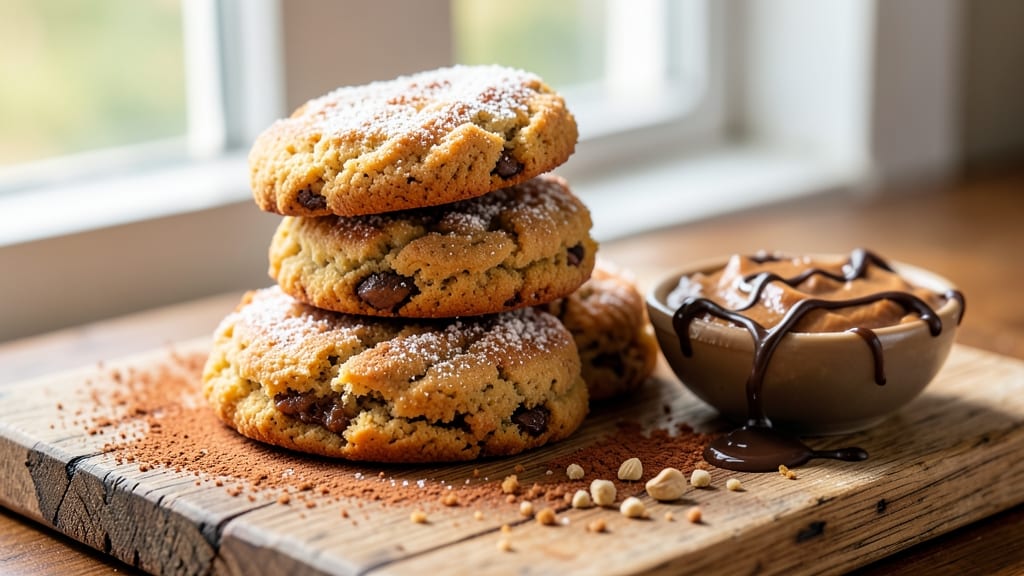
This chestnut cookies recipe transforms humble pantry ingredients into rich, nutty bites that taste like autumn in every bite. The secret lies in roasting chestnuts until caramelized—this deepens their natural sweetness and earthy flavor, creating cookies with a satisfying crunch and tender center.
I first discovered this technique while testing holiday cookie recipes, and it became an instant favorite for its ability to deliver restaurant-quality results at home.
The process begins with chestnut preparation, where proper roasting is critical—too little time leaves them bland, while over-roasting turns them bitter. Once ground into flour, they add a distinctive texture and nutty depth that sets these cookies apart from traditional recipes.
The dough incorporates warm spices like cinnamon and nutmeg, which complement the chestnut’s natural sweetness without overpowering it.
What you’ll end up with is a batch of cookies that look as impressive as they taste—golden edges, subtle cracks from slow baking, and a rich chestnut aroma that fills your kitchen. The flavor is complex: earthy from the chestnuts, slightly sweet from the caramelization, and warm from the spices.
These cookies pair beautifully with a cup of chai or spiced cider, making them perfect for holiday gatherings or cozy evenings.
For added indulgence, consider mixing in chocolate chips or drizzling with a simple vanilla glaze before serving. The recipe scales easily, so you can make a large batch for sharing. Let’s get baking—these cookies are worth every minute of effort.
Ingredients for chestnut cookies
Roasted chestnuts and warm spices transform simple pantry staples into autumn’s richest cookies.
| Ingredient | Amount | Notes |
|---|---|---|
| Chestnuts (Fresh or Vacuum-Packed) 🌰 | 1 ½ cups | Roasted until caramelized, peeled, and ground |
| All-Purpose Flour 🌾 | 1 ½ cups | Sifted for light texture |
| Unsalted Butter (Cold, Cubed) 🧈 | 1 cup | Full-fat for richness |
| Granulated Sugar 🍚 | ¾ cup | Light brown preferred |
| Ground Cinnamon 🌿 | 1 ½ tsp | Freshly ground preferred |
| Ground Nutmeg 🌿 | ½ tsp | Freshly grated for depth |
| Salt 🧂 | ½ tsp | Fine sea salt preferred |
| Vanilla Extract 🌸 | 1 tsp | Pure extract, not imitation |
| Large Eggs 🥚 | 1 whole | Room temperature for blending |
| Dark Chocolate Chips (Optional) 🍫 | ½ cup | 70% cacao or higher |
| Vanilla Glaze (Optional) 🍯 | ½ cup | For drizzling after baking |
The chestnuts are the heart of this recipe—fresh or vacuum-packed works, but avoid canned ones with syrup. Roast them in a 400°F oven for 20-25 minutes until deeply caramelized, then peel and grind into a fine flour. Whole Foods or specialty grocery stores often carry high-quality vacuum-packed chestnuts, but the bulk bins at natural markets are a budget-friendly alternative. If using fresh, pick firm, heavy ones with no soft spots. The butter should be cold and cubed—this ensures proper cookie texture, so don’t skip chilling it before mixing. For the spices, Penzeys or local spice shops offer freshly ground cinnamon and nutmeg, but even the grocery store versions work if they’re labeled ‘ground’ and not ‘flavored’.
No chestnuts? Substitute with 1.5 cups finely ground hazelnuts or walnuts, but toast them first for depth. Running short on butter? Coconut oil works in a pinch, though the flavor will differ slightly. The vanilla extract can be swapped for 1 tsp vanilla bean paste if you’re feeling indulgent. For the chocolate chips, Ghirardelli 70% or Valrhona elevate the flavor, but any semi-sweet chips will do. If you’re making the vanilla glaze, powdered sugar and milk work fine, but a touch of cream cheese makes it ultra-smooth. The dough can be chilled for up to 48 hours if you prefer a firmer texture when baking.
Store the dough in an airtight container in the fridge for up to 3 days, or freeze it for 3 months by wrapping tightly in plastic. Baked cookies keep at room temperature for 5 days in a sealed container, though they’ll stay fresh longer if stored in the fridge. For the glaze, mix it just before drizzling—it sets quickly. These cookies reheat beautifully in a 300°F oven for 5-10 minutes if they lose their crunch. Double the batch and freeze half for holiday gifting—they’re a crowd-pleaser every time.
Why You'll Love This Recipe
- No Peel, No Problem: I swear by vacuum-packed chestnuts here—no peeling, no mess, just dump-and-go convenience. The butter and sugar come together in minutes with a food processor, and honestly? Those first bites make you forget how little effort it took.
- Cinnamon-Spiced Magic: That warm, toasty cinnamon cuts through the chestnuts’ natural earthiness like a cozy blanket. The dough’s nutty depth with a whisper of sweetness? It’s the kind of flavor that lingers long after the last cookie disappears.
- Holiday or Snack Attack: These cookies feel festive enough for Christmas cookie platters but simple enough for a 3 PM sugar craving. I’ve packed them in jars for gifts, crushed them into oatmeal, and even tossed them into salads—versatility at its finest.
- Budget-Friendly Batch Cooking: A bag of vacuum-packed chestnuts lasts me weeks of baking, and the dough freezes perfectly. Make a double batch, and you’ve got cookies ready for whenever—no last-minute grocery runs, no stress. My wallet (and my future self) thank me.
Step-by-step instructions for chestnut cookies
Here's how to create rich, spiced chestnut cookies with a perfect balance of nutty flavor and tender crumb.
Prepare the Chestnut Puree
If using fresh chestnuts, roast them at 400°F for 25-30 minutes until tender, then peel and grind until smooth. For vacuum-packed chestnuts, drain and heat in a saucepan with 1 tablespoon water until softened, then blend until completely smooth. You should have about 1.5 cups of puree.
Let the puree cool completely before using—this prevents the butter from melting prematurely when mixed. I like to strain it through a fine-mesh sieve to remove any skin fragments, which ensures a silky texture in the final cookies. The chestnut flavor should be rich and earthy, with no graininess remaining.
Cream Butter and Sugar
In a stand mixer fitted with the paddle attachment, beat the 1 cup cold cubed butter and 0.75 cup granulated sugar on medium speed for 3-4 minutes until light and fluffy. The mixture should nearly double in volume and turn pale in color.
This creaming process incorporates air, which creates a tender cookie texture. Use the cold butter cubes to prevent the mixture from becoming too warm too quickly. If the butter starts to melt before the sugar is fully incorporated, chill the bowl for 10 minutes and restart the mixer on low speed.
Combine Wet Ingredients
Add the 1.5 cups chestnut puree, 1 teaspoon vanilla extract, 1.5 teaspoons ground cinnamon, 0.5 teaspoon ground nutmeg, and 0.5 teaspoon salt to the butter mixture. Mix on medium speed for 2-3 minutes until thoroughly combined and smooth.
The spices should be evenly distributed, and the mixture should be thick but still pourable. If the dough looks too dry, add 1-2 teaspoons milk (not listed in ingredients) to help bind it. The chestnut puree adds natural moisture, so avoid overmixing at this stage—just until all ingredients are fully incorporated.
Incorporate Egg and Flour
Add the 1 whole large egg and mix on low speed for 30 seconds until just combined. Gradually add the 1.5 cups sifted all-purpose flour and mix on low speed until a soft dough forms. Avoid overmixing to prevent tough cookies.
If adding the optional 0.5 cup dark chocolate chips, fold them in by hand at this stage. The dough should be soft and slightly sticky but hold together when pressed. If it's too crumbly, add 1 teaspoon milk (not listed) to help bind it. The dough should be cool enough to handle comfortably.
Chill and Shape
Cover the dough with plastic wrap and refrigerate for at least 1 hour or up to 24 hours. Chilling firms the dough and prevents excessive spreading during baking. Scoop the dough into 1.5-inch balls (about 2 tablespoons each) and place them 2 inches apart on parchment-lined baking sheets.
For a festive touch, flatten each ball slightly with your palm before baking. If using the optional 0.5 cup vanilla glaze, prepare it by mixing 0.5 cup powdered sugar (not listed) with 1 teaspoon milk (not listed) and 0.5 teaspoon vanilla extract (already in ingredients). Drizzle over cooled cookies after baking.
Bake to Golden Perfection
Preheat the oven to 350°F and bake the cookies for 12-15 minutes until the edges are golden brown and the centers look slightly underdone. They'll continue setting as they cool. Rotate the baking sheets halfway through for even baking.
Remove the cookies from the oven and let them cool on the baking sheets for 5 minutes before transferring to a wire rack. The cookies should be soft and fudgy in the center with a crispy edge. If you prefer a firmer texture, bake for an additional 1-2 minutes. Serve warm or at room temperature for the best texture.
Pro Tips For Making Chestnut Cookies
- PULSE THE DOUGH: If your chestnut dough feels sticky or gummy after mixing, resist the urge to add more flour—it’ll make the cookies dense. Instead, pulse it in a food processor for 10-15 seconds just to break up any large chestnut chunks. This distributes moisture evenly without overworking the dough.
- PEEL CHESTNUTS RIGHT: Vacuum-packed chestnuts? Skip the boiling—just score a shallow X on the flat side with a sharp knife, then microwave for 3-4 minutes. The skins will slide off like magic, and you avoid the watery mess that ruins your butter-to-flour ratio later.
- CHILL THE BUTTER: Cold cubed butter in chestnut cookies isn’t just about flakiness—it’s about texture. If your dough feels too soft, pop it in the fridge for 20 minutes before baking. I learned this the hard way when my first batch spread into sad pancakes instead of chewy, crumbly cookies.
- WEIGH THE SUGAR: Granulated sugar can pack differently depending on humidity. Use a kitchen scale for the chestnut dough—1 cup isn’t always 200g. Packed sugar throws off the balance, and your cookies will taste cloyingly sweet or dry out too fast. (Yes, even if you’re impatient like me.)
Pro cooking tips for great chestnut cookies
Chestnut Roasting Mastery
Roasting chestnuts is the foundation of flavor—don’t skip this step! Preheat your oven to 400°F and spread whole chestnuts in a single layer on a baking sheet. Roast for 25-30 minutes, stirring every 10 minutes, until they’re deeply caramelized and tender when pierced with a knife.
Over-roasting turns them bitter, so keep an eye on them. I like to use a Lodge cast iron skillet for even browning if my oven runs hot. 🌰
Puree Perfection
Once roasted, peel the chestnuts by scoring an "X" on the flat side, then gently pry them open. Blend them until completely smooth—no graininess should remain. For vacuum-packed chestnuts, drain and simmer in 1 tablespoon water until soft before blending.
Strain through a fine-mesh sieve to remove any skin fragments, which ensures a silky texture. The puree should yield about 1.5 cups—this is your flavor base, so take your time here. 💫
Butter Creaming Secrets
Cold butter is non-negotiable for tender cookies. Cube 1 cup unsalted butter and chill for 30 minutes before creaming. Use a stand mixer with the paddle attachment and beat on medium speed for 3-4 minutes until light and fluffy.
The mixture should nearly double in volume and turn pale. If it melts too quickly, chill the bowl for 10 minutes and restart on low. A KitchenAid Artisan mixer handles this perfectly. ⚡
Spice Distribution
Warm spices like cinnamon and nutmeg need even distribution. Add 1.5 teaspoons cinnamon and 0.5 teaspoon nutmeg to the butter mixture and mix on medium speed for 2-3 minutes until fully incorporated.
Freshly ground spices make a noticeable difference—I prefer Penzeys for their quality. Taste the dough at this stage; the spices should enhance the chestnut flavor without overpowering it. 🌿
Dough Chilling Hacks
Chilling the dough for at least 1 hour (or up to 24 hours) is crucial for preventing spreading. Divide the dough into 1.5-inch balls and place them on parchment-lined sheets, spaced 2 inches apart.
For extra firmness, freeze the dough balls for 30 minutes before baking. This also makes it easier to handle sticky dough. I like to use Oxo Good Grips scoops for even portions. ❄️
Baking Precision
Bake at 350°F for 12-15 minutes, rotating the sheets halfway through for even browning. The edges should be golden, but the centers should still look slightly underdone—they’ll firm up as they cool. Avoid overbaking, or the cookies will dry out.
For a restaurant-quality finish, let them cool on the sheet for 5 minutes before transferring to a rack. This resting time ensures a perfect crumb. 🔥
Nutrition facts
Frequently asked questions
Why do I need to roast chestnuts before using them?
Roasting brings out their natural sweetness and caramelized depth, which is essential for flavor. Unroasted chestnuts taste bland and mealy. The process also softens them so they blend into a smooth puree without graininess. For best results, roast at 400°F for 25-30 minutes until deeply golden.
Can I substitute chestnut flour for fresh chestnuts?
Yes, but with adjustments. Use 1.5 cups store-bought chestnut flour (found in specialty stores) and add 1 tablespoon almond milk to the dough to compensate for lost moisture. However, freshly roasted and blended chestnuts yield a richer flavor and texture. The flour version works in a pinch but lacks the caramelized depth.
How do I prevent my chestnut cookies from spreading too much?
Chill the dough for at least 1 hour (or up to 24 hours) before baking. Use cold butter and scoop dough balls with a 2-tablespoon measure to maintain even size. Bake at 350°F for 12-15 minutes—don't overbake! The cookies should look slightly underdone in the center when done.
Can I make these cookies without eggs?
Yes, replace the 1 egg with 1 tablespoon ground flaxseed mixed with 3 tablespoons water (let sit for 5 minutes to thicken). For a richer texture, use 1/4 cup unsweetened applesauce. The dough may be slightly softer, but the flavor remains excellent. Test baking times as egg substitutes can affect texture.
How long will the dough keep before baking?
The dough stays fresh in an airtight container in the fridge for up to 3 days or frozen for 3 months. For best texture, chill the dough for at least 1 hour before scooping. Thaw frozen dough in the fridge overnight before shaping. Avoid refreezing thawed dough, as it can make the cookies dense.