Main Courses
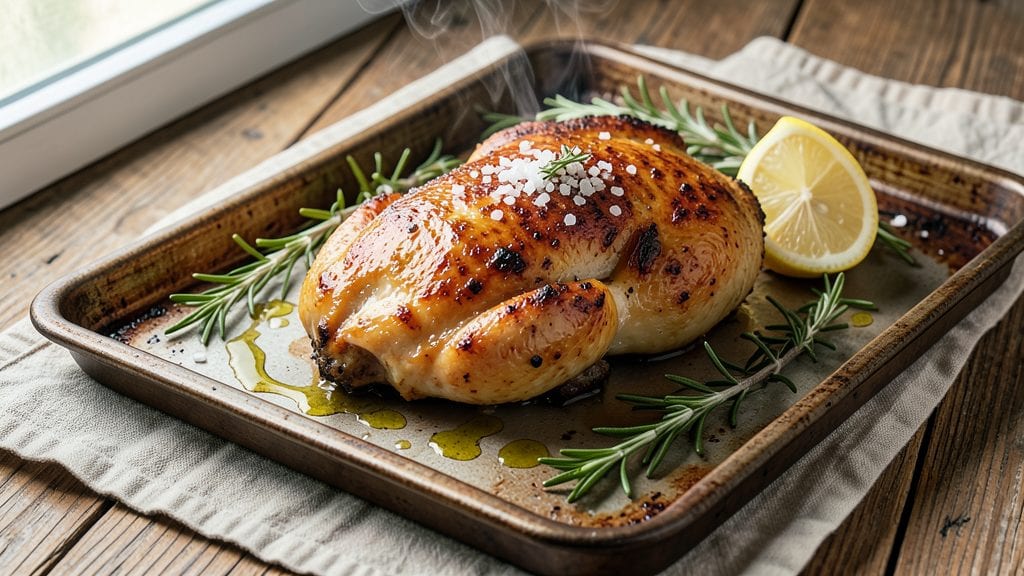
Baking chicken on a cookie sheet delivers juicy, even results—preheat your oven to 375°F, season generously, and bake breasts for 20-25 minutes or thighs/drumsticks for 30-35 minutes on a wire rack. This method promotes crispier skin while preventing overcrowding, and high heat ensures perfect browning.
Cookie sheets excel at this because their flat surface allows heat to circulate evenly around the chicken, creating that perfect sear without drying it out. 🔥 The wire rack trick is especially clever—it lets hot air flow underneath, lifting the skin for that coveted crispiness.
I’ve found that thighs and drumsticks benefit most from this method because their higher fat content needs extra airflow to render properly without becoming greasy.
For best results, arrange pieces in a single layer with space between them—this ensures every side gets equal exposure to the heat. A light spray of oil before seasoning helps the rub stick better, and flipping halfway through guarantees even browning.
If your chicken starts sticking, don’t panic—just slide a thin metal spatula underneath to lift it gently.
💡 In This Article
- Why Baking Chicken on Cookie Sheets Works Best
- Best Cookie Sheet Baking Techniques for Chicken
Why baking chicken on cookie sheets works best
Here's what's actually happening when you bake chicken on a cookie sheet: the flat, uninsulated surface creates an ideal environment for convection cooking—where hot air circulates around the chicken instead of relying on conduction through a pan.
This method prevents steam buildup that would otherwise trap moisture under the skin, which is why you get that perfect golden-brown crust while keeping the meat juicy inside. The key factor is how heat transfers differently on a cookie sheet versus a heavy skillet or Dutch oven.
That crispy skin comes from the wire rack trick. When you place chicken on a rack elevated over the sheet, hot air flows underneath, creating what's called a Maillard reaction on both sides of the skin.
This chemical reaction between amino acids and reducing sugars happens best at 350-400°F, which is why we aim for 375°F—hot enough to brown without turning the meat dry. The rack also prevents the chicken from sitting in its own juices, which would otherwise make the skin soggy.
Different cuts need different temperature ranges because of their fat content and density. Chicken breasts, with their leaner profile, cook best at 375°F for 20-25 minutes—any hotter and they'll dry out before the center reaches 165°F.
Thighs and drumsticks, with their higher fat content, can handle 375-400°F for 30-35 minutes because the fat renders slowly, keeping them moist while the skin crisps. The fat also acts as a natural insulator, protecting the meat from overcooking.
What most people don't realize is how high heat improves browning without drying out the meat. When you use 400°F for the last 5-10 minutes of cooking, you're accelerating the Maillard reaction while the chicken's internal temperature rises more slowly due to the insulating effect of fat.
This creates that perfect contrast: crispy exterior, tender interior. The cookie sheet's thin metal conducts heat quickly, so you get even browning across all pieces without hot spots.
Consider these key factors when choosing your method:
- Airflow: Space pieces 1/2 inch apart for optimal circulation—crowding leads to uneven cooking
- Surface area: Use a half-sheet pan for 4-6 pieces, full sheet for larger batches
- Heat source: Position racks in the middle rack for even exposure
- Seasoning: Pat dry before seasoning—moisture creates steam that blocks browning
The science behind this method explains why so many professional kitchens use sheet pans for baking chicken—it's efficient, consistent, and delivers restaurant-quality results at home.
The combination of convection heat, proper airflow, and controlled temperatures creates the perfect balance of texture and flavor that's hard to achieve with other methods. 💫