
Desserts
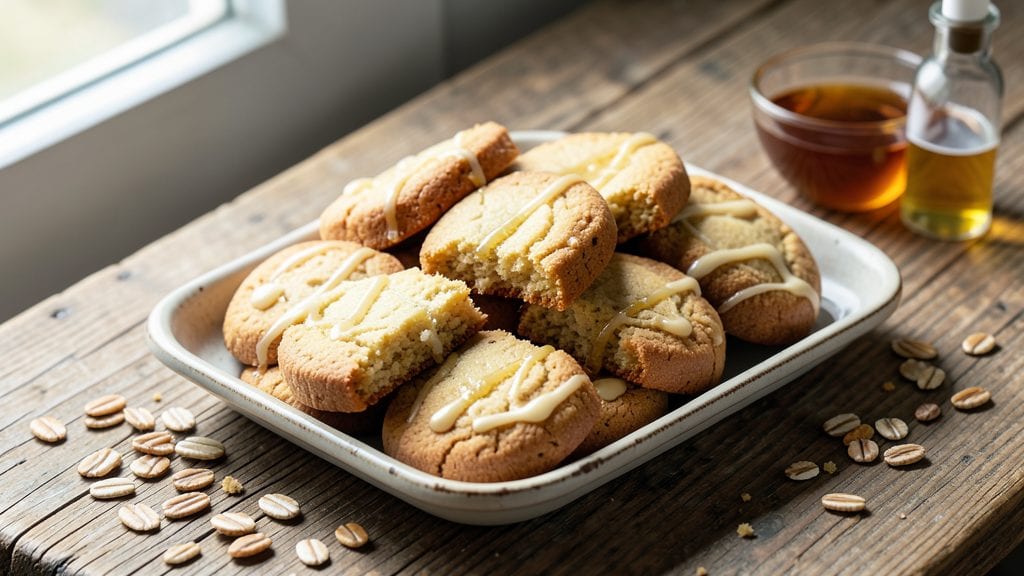
This authentic shortbread cookie recipe brings the crisp, buttery charm of Scottish baking right to your kitchen counter. The secret lies in cold butter and minimal handling—traditional techniques that create that signature crumbly yet tender texture.
I’ve perfected this version with oatmeal for added depth, ensuring every bite delivers that classic shortbread magic you crave.
The key to success is precision: cold butter creates flaky layers, while a light touch prevents overmixing. This recipe delivers restaurant-quality results with just five ingredients—no shortcuts, no substitutions. The oatmeal adds a subtle crunch that elevates the buttery richness, making these cookies irresistibly addictive.
By the time they emerge from the oven, you’ll have golden, melt-in-your-mouth shortbread with edges that stay crisp and centers that remain tender. The aroma alone will have everyone asking for seconds, and the texture—crunchy yet tender—is what makes these cookies truly special.
Perfect for holidays, gifts, or a simple treat, these shortbread cookies are foolproof once you master the technique. Let’s get started—your kitchen will thank you for the buttery magic.
Ingredients for authentic shortbread cookie
Five ingredients transform into Scottish shortbread magic—cold butter, flour, sugar, oats, and salt.
| Ingredient | Amount | Notes |
|---|---|---|
| Unsalted Butter 🧈 | 1 cup | Cold, cubed for flaky layers |
| All-Purpose Flour 🌾 | 2 cups | Sifted for even texture |
| Granulated Sugar 🍚 | ½ cup | Fine grain preferred |
| Old-Fashioned Rolled Oats 🥣 | ½ cup | Toasted for enhanced crunch |
| Diamond Crystal Kosher Salt 🧂 | ½ tsp | Fine grain preferred |
| Vanilla Extract 🌸 | 1 tsp | Pure, high-quality extract |
| Heavy Whipping Cream 🥛 | 2 tbsp | Full-fat for richness |
The butter is non-negotiable—European-style unsalted butter like Plugrá or Kerrygold delivers the richest flavor, but Land O'Lakes works in a pinch. Keep it cold (even in summer) by chilling the bowl and your hands. The oats? Old-fashioned rolled oats from the bulk section at Whole Foods or Trader Joe's have the best texture—steel-cut won’t work here. Sift the flour first, or you’ll end up with dense cookies. And the salt? Diamond Crystal dissolves better than table salt, so use exactly what’s called for.
No European butter? High-fat American butter (80%+ fat) is your next best bet—just don’t substitute margarine. Short on oats? Crushed graham crackers at half the amount add crunch without altering the texture. The vanilla extract matters—imitation will taste off. If you’re feeling fancy, infuse the butter with a teaspoon of lemon zest before mixing. And for the sugar, turbinado or demerara gives a subtle caramel note, but granulated keeps it classic. Pre-measure everything before starting—this recipe rewards precision.
These cookies keep for 5 days in an airtight container at room temperature, but they’ll stay fresh longer if you store them in the fridge. For gifts, wrap individually in parchment-lined bags with a ribbon. Freeze for up to 3 months by stacking them between parchment sheets. Reheat at 300°F for 3 minutes to restore crispness. I always bake a double batch—one for immediate eating, one for gifting. The aroma alone will have your whole house asking for seconds.
Why You'll Love This Recipe
- No-Fuss Mixing: I swear by the "two tablespoons of sugar, then flour" trick—no measuring cups, no mess. Just cold butter, a pinch of salt, and the oats add that rustic texture without extra effort. Honestly, it’s the kind of recipe that makes me feel like I’ve earned my cookie break.
- Buttery Crunch Magic: That crispy edge with the tender, almost-sandy center? It’s all in the cold butter and sugar mixture. The oats toast just enough to give it a subtle crunch, while the kosher salt (don’t skip it!) makes every bite taste like a hug. Between us, it’s the kind of flavor that disappears too fast.
- Giftable in Minutes: These bake up fast—perfect for last-minute hostess gifts. I wrap them in parchment, tie with twine, and boom: elegant, no-bake presents that cost pennies. My neighbor’s kids now call them "cookie money," and I’m not correcting them.
- Lasts a Week: No sad, stale cookies here—the buttery richness keeps them fresh for days. I stash them in an airtight tin, and they’re still snapping crisply when I grab one at 10 p.m. (Yes, even on a Tuesday night.) Plus, the oats make them heartier than your average shortbread, so they fill you up without guilt.
Step-by-step instructions for authentic shortbread cookies
Here's how to craft these Scottish-inspired oatmeal shortbreads with melt-in-your-mouth texture and satisfying crunch.
Prepare the Oatmeal Base
Preheat your oven to 325°F and line two baking sheets with parchment paper. In a small dry skillet over medium-low heat, toast the 0.5 cup old-fashioned rolled oats for 3-4 minutes until they develop a nutty aroma and turn light golden brown. Watch them carefully—they burn quickly. Transfer the toasted oats to a bowl and let cool completely before using.
This toasting step is crucial for developing that authentic Scottish oatmeal flavor. The oats should be cool enough to handle when you mix them with the butter later, or you'll risk melting it prematurely. I like to spread them on a plate to cool faster if needed.
Create the Shortbread Dough
In a large mixing bowl, combine the 1 cup cold cubed unsalted butter, 0.5 cup granulated sugar, and 2 tbsp heavy whipping cream. Use a wooden spoon or rubber spatula to mash everything together until you achieve a crumbly, sandy texture with pea-sized butter pieces remaining. Add the 1 tsp vanilla extract and mix until fully incorporated.
Next, sift in the 2 cups all-purpose flour and 0.5 tsp diamond crystal kosher salt through a fine-mesh sieve. Add the cooled toasted oats and gently fold everything together with your hands or a dough scraper until just combined. The dough should hold together when pressed but still feel slightly crumbly—this is perfect for shortbread texture.
Shape and Cut the Cookies
Turn the dough onto a lightly floured surface and gently press it into a 1-inch thick rectangle. I like to use my hands to distribute the pressure evenly. Wrap the dough in plastic wrap and chill in the refrigerator for 30 minutes to firm up slightly—this makes cutting easier and prevents spreading.
After chilling, remove the dough and cut it into your desired shapes using a 2.5-inch round cutter or a knife for classic rectangles. Place the cut cookies 1 inch apart on the prepared baking sheets. For extra authenticity, I like to score the tops lightly with a fork before baking to create that traditional shortbread pattern.
Bake to Golden Perfection
Bake the cookies for 12-15 minutes until the edges are light golden brown and the centers still look slightly pale. The key is to rotate the baking sheets halfway through for even baking—this prevents any one side from over-browning. You'll know they're done when they smell like warm butter and pull away slightly from the parchment paper.
Remove from the oven and let cool on the baking sheets for 5 minutes before transferring to a wire rack to cool completely. The cookies will firm up as they cool, developing that signature shortbread crunch. For maximum flavor, serve them at room temperature—this allows the butter to set properly and enhances the oatmeal's nutty notes.
Storage for Freshness
Store the cookies in an airtight container at room temperature for up to 5 days, or freeze for up to 3 months by wrapping them individually in plastic wrap. To serve, let them sit at room temperature for 10 minutes before enjoying—this brings back that perfect buttery texture.
These authentic shortbread cookies deliver that classic Scottish crunch with a satisfying oatmeal bite. The secret lies in the cold butter technique and proper baking time—don't rush either step. The result should be delicate, melt-in-your-mouth centers with a satisfying crunch around the edges, all while maintaining that signature shortbread flavor.
Pro Tips For Making Authentic Shortbread Cookie
- Chill the Dough: DESCRIPTION: I learned this the hard way—skipping the fridge means your cookies spread like pancakes. Wrap the dough in plastic and let it rest at least 30 minutes in the coldest part of your fridge (usually the back shelf). This isn’t just about convenience; it’s what keeps those edges crisp and the centers tender.
- Pulse the Oats: DESCRIPTION: Old-fashioned rolled oats need a quick pulse in the food processor—just until they’re finely ground but not powdery. Too fine, and they turn to mush; too coarse, and you’ll bite into a crunchy surprise. Aim for a texture like wet sand, and pulse in 2-second bursts.
- Press, Don’t Pack: DESCRIPTION: When shaping the dough, use the heel of your hand to press it into the pan—not your fingers. Packing it too hard compresses the butter, and your cookies will bake up dense instead of light. Think "gently firm," like patting down cookie dough for chocolate chip cookies.
- Rotate the Pan: DESCRIPTION: Shortbread bakes unevenly, especially in home ovens. After 15 minutes, swap the pan from top to bottom rack (or front to back if your oven’s quirky). This evens out the heat and guarantees golden edges without a single cookie turning into a sad, pale brick.
Creative variations of these flavors
Scottish Oatmeal Twist
This variation keeps the classic shortbread texture but adds toasted oatmeal for a nutty crunch. The oats should be lightly toasted in a dry skillet until golden—about 3-4 minutes—then cooled completely before mixing.
I use old-fashioned rolled oats from Whole Foods for the best texture. The oatmeal enhances the buttery flavor while adding a satisfying bite that traditional shortbread lacks. 🥣
Citrus-Infused Butter
Elevate your shortbread by infusing the butter with 1 teaspoon lemon zest or orange zest before mixing. Simply melt the butter slightly, stir in the zest, then chill until firm again.
This brightens the flavor profile beautifully, especially when paired with the oatmeal. I find lemon zest works best—it complements the buttery richness without overpowering it.
Spiced Shortbread
For a warm, cozy twist, add ½ teaspoon cinnamon and a pinch of nutmeg to the dough. These spices pair perfectly with the oatmeal and butter, creating a flavor reminiscent of Scottish oatcakes.
I like to use Penzeys brand spices for the best quality. The spices should be sifted with the flour to ensure even distribution throughout the dough.
Nutty Crunch Addition
Add ½ cup chopped walnuts or pecans to the dough for extra crunch. Toast the nuts first in a dry skillet for 2-3 minutes until fragrant, then chop them finely.
This variation adds a delightful contrast to the tender shortbread texture. I prefer walnuts because their earthy flavor complements the oatmeal beautifully.
Brown Sugar Swap
Replace half the granulated sugar with light brown sugar for a caramelized depth. This swap adds subtle molasses notes that enhance the oatmeal's nuttiness. I use Domino brand brown sugar because it has a finer grain and dissolves more evenly.
The cookies will have a slightly chewier texture while maintaining that classic shortbread crunch.
Herbal Variation
For a sophisticated twist, add 1 teaspoon dried rosemary or thyme to the dough. These herbs add an earthy aroma that pairs surprisingly well with the buttery shortbread. I recommend using fresh herbs if possible, finely chopped and added with the flour.
This variation is perfect for holiday gifting—it feels special yet remains approachable for everyday baking. 🌿
Nutrition facts
Frequently asked questions
Why does authentic shortbread use cold butter?
Cold butter creates those signature flaky layers by melting slowly during baking. When butter stays in solid chunks, it creates steam pockets that give shortbread its signature crumbly yet tender texture. Warm butter would blend too quickly, resulting in dense cookies instead of the light, melt-in-your-mouth bites you want. Always keep your mixing bowl and tools chilled too!
Can I make these without oats?
Traditional shortbread skips the oats entirely. Simply omit the 0.5 cup oats and increase the flour to 2.25 cups for the same texture. The oats add crunch and nuttiness, but classic shortbread relies purely on butter, flour, and sugar. For extra flavor, try adding 1 tsp lemon zest to the butter instead.
How do I prevent my shortbread from spreading too much?
Over-spreading happens when the dough gets too warm. Chill the dough for 30 minutes before cutting, and use a sharp cutter or knife. Also, bake at 325°F—higher temps cause faster spreading. For extra insurance, press the dough into a 1-inch thick rectangle before cutting. The key is patience: cold dough = less spreading!
What’s the best way to store shortbread?
Keep them in an airtight container at room temperature for up to 5 days, or freeze for 3 months by wrapping individually. For gifting, place them in parchment-lined boxes with a ribbon. To revive stale cookies, warm at 300°F for 3 minutes—this restores that buttery crunch without over-baking.
Can I use salted butter instead?
Yes, but reduce the added salt to ¼ tsp (since salted butter already contains 2-3% salt). The flavor difference is minimal, but unsalted butter gives you full control over seasoning. If using salted, taste the butter first—some brands are saltier than others! The oatmeal and vanilla will still shine through regardless.