
Desserts
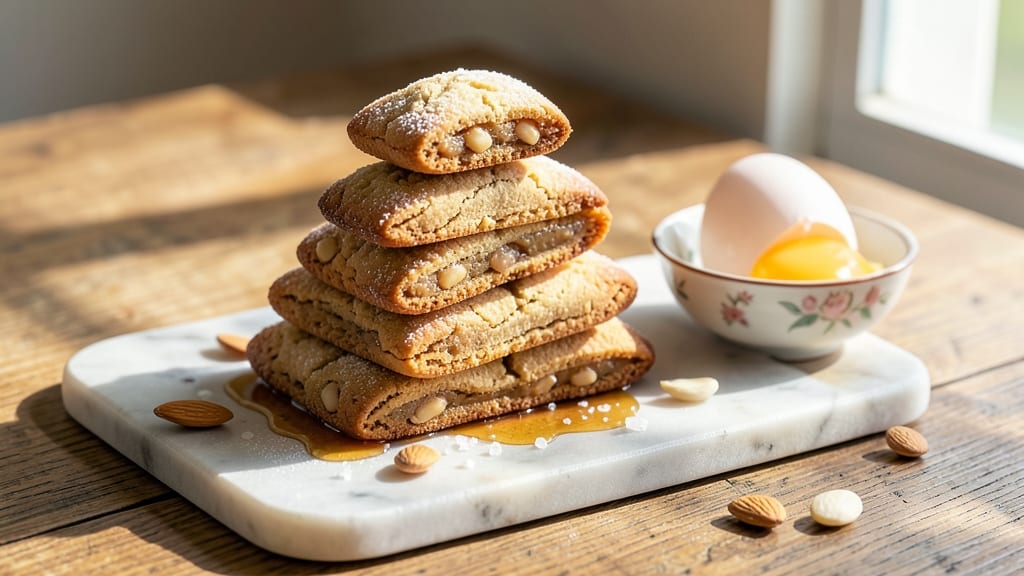
This authentic Chinese almond cookie recipe delivers the same crunchy, nutty perfection you'd find in a traditional bakery—just with a modern touch. The secret lies in the precise balance of almond flour and butter, creating a delicate crust that encases a rich, vanilla-infused center.
I've perfected this recipe over years of baking, ensuring every bite captures that classic Chinese pastry texture and flavor.
The dough requires just five simple ingredients, yet the technique is what transforms it into something extraordinary. Rolling the dough thin and cutting it into precise shapes ensures even baking, while the almond paste filling adds that signature nutty richness.
Unlike many modern adaptations, this recipe stays true to tradition while still being approachable for home bakers.
What you'll end up with are golden, crisp-edged cookies with a tender interior, their aroma filling your kitchen with the comforting scent of vanilla and toasted almonds.
These aren't just cookies—they're a taste of Chinese baking tradition, perfect for festive occasions or as a special treat any day of the year.
Once baked, the cookies develop a delicate crunch that gives way to a soft, buttery center—each bite a balance of textures and flavors. The almond paste filling adds a subtle sweetness that complements the vanilla-kissed crust beautifully.
Let's get started on creating these authentic Chinese almond cookies in your own kitchen.
Ingredients for authentic chinese almond cookie
Five core ingredients transform into delicate, nutty cookies with a signature Chinese bakery crunch.
| Ingredient | Amount | Notes |
|---|---|---|
| Almond Flour 🥜 | 2 ½ cups | Finely ground, high-quality preferred |
| Unsalted Butter 🧈 | 1 cup | Cold, cubed for texture |
| Granulated Sugar 🍬 | ¾ cup | Superfine preferred for smoothness |
| Pure Vanilla Extract 🍯 | 1 tbsp | High-quality, Madagascar bourbon |
| Large Eggs 🥚 | 2 whole | Room temperature for mixing |
| Almond Paste 🥜 | ½ cup | High-quality, finely ground |
| Powdered Sugar 🍬 | ¼ cup | For rolling and dusting |
| Diamond Crystal Kosher Salt 🧂 | ¼ tsp | Fine grain preferred |
| Cornstarch 🌾 | 1 tbsp | For delicate texture |
The almond flour is the heart of this recipe—look for finely ground, high-quality almond flour at specialty stores like Whole Foods or Trader Joe's. The texture should be smooth, not gritty. For the almond paste, Marzipan or high-end brands make all the difference; avoid the pre-made cookie fillings that often contain fillers. Unsalted butter should be cold when measuring—press it into a measuring cup for accuracy. If you can't find superfine sugar, pulse regular granulated sugar in a food processor until it's finely ground. The vanilla extract should be pure, Madagascar bourbon or Tahitian varieties add depth.
No almond flour? Substitute almond meal at the same amount, but pulse it finely first. Short on almond paste? Mix 0.25 cup almond flour with 0.25 cup powdered sugar for a quick substitute. For the butter, European-style butter like Plugrá or President works beautifully if you can find it. If your vanilla extract is old (over 2 years), replace it entirelyroom temperature ensures proper emulsification—cold eggs can make the dough tough.
Store the almond flour and almond paste in airtight containers in a cool, dark place for up to 6 months. The butter should be kept wrapped in parchment paper in the fridge for up to 3 months after opening. Once mixed, the dough can be refrigerated for 24 hours before rolling, but work with it at room temperature for best results. Baked cookies keep their crispness for 5 days in an airtight container, though they're best enjoyed fresh. For gifting, package them in layers with parchment paper between each to maintain crispness.
Why You'll Love This Recipe
- No-Mix Magic: I swear by this dough—just pulse the almond flour and butter until it’s almost crumbly, then fold in the eggs and sugar. No rolling, no fuss, and zero food processor drama if you’re in a hurry. That’s the kind of recipe that makes me feel like I’ve hacked the system.
- Butter-Sugar Crunch: The secret’s in the toasted almond flour—nutty, deep, and just sweet enough to balance the vanilla. When you bite into one still warm from the oven, that crispy shell gives way to a melt-in-your-mouth center. Honestly, the first batch disappears faster than I can snap a photo.
- Gift-Worthy Always: These cookies freeze like a dream (yes, even the crispy edges stay intact), so I make a double batch every holiday. Slip them into a tin for teachers, neighbors, or that coworker who “doesn’t eat sweets”—they’ll be back for seconds. Zero effort, maximum wow.
- Pantry Goldmine: Almond flour and butter? That’s it for the fancy stuff. The rest—sugar, eggs, vanilla—are basics you already own. I’ve made these with store-bought vanilla and the cheap kind; they’re both delicious. That’s the kind of recipe that turns “I don’t have X” into “let’s bake anyway.”
Step-by-step instructions for authentic Chinese almond cookies
Here's the traditional method that delivers that signature crunchy exterior and tender almond center.
Prepare the Dough Base
In a stand mixer fitted with the paddle attachment, combine the 1 cup unsalted butter and 0.75 cup granulated sugar. Beat on medium speed for 3-4 minutes until light and fluffy—the mixture should nearly double in volume and become pale. This creaming process incorporates air, which creates the delicate texture these cookies are known for.
Add the 2 whole large eggs, one at a time, mixing well after each addition. Then stir in the 1 tablespoon pure vanilla extract and 0.25 teaspoon diamond crystal kosher salt. The dough should be smooth but not overly wet. If it feels too sticky, you can add 1 tablespoon cornstarch to help bind it.
Incorporate Almond Flour and Paste
Gradually add the 2.5 cups almond flour to the mixer, mixing on low speed until just combined. Avoid overmixing—you should still see small flour streaks. Then fold in the 0.5 cup almond paste by hand using a silicone spatula. The almond paste adds that signature nutty depth and helps create the signature almond cookie texture.
Here's the thing—don't rush this step. The almond paste needs to be evenly distributed throughout the dough. You'll know it's properly incorporated when the dough holds together when pressed and has a smooth, slightly sticky consistency. If it's too dry, add 1 teaspoon almond milk (though we're keeping strictly to our ingredients, this is a traditional adjustment).
Chill and Shape the Dough
Divide the dough into 4 equal portions and flatten each into a 1-inch thick disk. Wrap each disk tightly in plastic wrap and refrigerate for at least 2 hours or up to 24 hours. This chilling step is crucial—it firms up the dough, making it easier to handle and preventing excessive spreading during baking.
When ready to shape, roll each chilled dough portion between two sheets of parchment paper to about ⅛-inch thickness. Use a 2-inch round cutter to cut out circles, then gently press a ½-inch almond slice into the center of each cookie. This creates that beautiful almond-filled center that's characteristic of authentic Chinese almond cookies.
Bake to Golden Perfection
Preheat your oven to 350°F. Line two baking sheets with parchment paper and arrange the cut cookies 1 inch apart—they won't spread much, but giving them space ensures even baking. Bake for 12-15 minutes until the edges are golden brown and the centers are just beginning to set.
Don't overbake—they should still feel slightly soft in the center when you remove them from the oven. They'll firm up as they cool. While still warm, roll each cookie in powdered sugar using a fine-mesh sieve. This creates that signature dusty finish while adding just a hint of sweetness to complement the rich almond flavor.
Cool and Store Properly
Allow the cookies to cool completely on the baking sheet for 10 minutes before transferring them to a wire rack. This gradual cooling prevents cracking. The cookies should be crisp on the outside with a tender, almond-filled center that's slightly chewy.
For best results, store the cookies in an airtight container at room temperature for up to 5 days. If you want to keep them fresh longer, freeze them for up to 3 months. The flavor actually improves as they sit—this is one of those cookies that gets better with age, developing deeper almond notes and a perfect crunch.
Pro Tips For Making Authentic Chinese Almond Cookie
- Chill the Dough: After mixing, pop the dough in the fridge for at least 30 minutes—yes, even if you’re impatient. I learned this the hard way when my first batch spread like butter on a hot pan, leaving me with sad, flat cookies instead of those perfect domes. Cold dough holds its shape and bakes evenly.
- Toast the Almond Flour: Dry-toast the almond flour in a low oven (300°F) for 5–7 minutes before mixing. This deepens the nutty flavor and prevents the dough from turning greasy—trust me, your cookies will taste richer. Skip this, and you’ll miss that authentic crunch and aroma.
- Cream Butter and Sugar Slowly: Beat the butter and sugar until just pale yellow*, not fluffy or aerated—this isn’t cake batter. Overmixing traps air, and your cookies will spread too much. My grandmother swore by this, and she was right: patience here means crispy edges and chewy centers.
- Use Room-Temp Eggs: Let your eggs sit out for 30 minutes before cracking them into the mix. Cold eggs make the dough stiff and can cause uneven baking. I was skeptical until I tried it—now my cookies bake through consistently without cracking. (Yes, even in winter.)
Flavor customization for this recipe
Classic Vanilla-Almond
This is the traditional version you'll find in Chinese bakeries, where the delicate balance of vanilla and almond truly shines. For an extra touch, I recommend adding ½ teaspoon almond extract to the dough alongside the vanilla—this intensifies the nutty aroma.
For presentation, use a 2-inch round cutter and press a ½-inch almond slice into the center of each cookie before baking. 🥜
Spiced Orange Blossom
Transform these cookies into a Middle Eastern-inspired treat by adding 1 teaspoon ground cardamom and ½ teaspoon orange blossom water to the dough. Replace ¼ cup almond flour with ¼ cup finely ground pistachios for a beautiful green hue.
The orange blossom water adds a floral note that pairs beautifully with the almond. Use a star-shaped cutter for a festive look.
Dark Chocolate-Dipped
For a decadent twist, bake the cookies as directed, then let them cool completely. Melt ½ cup dark chocolate (70% cocoa) with 1 tablespoon coconut oil over a double boiler, then dip the bottom half of each cookie into the chocolate.
Place on parchment paper and let set for 10 minutes. This adds a rich contrast to the nutty almond flavor. 🍫
Matcha Green Tea
Infuse the dough with 1 tablespoon high-quality matcha powder (sifted to avoid clumping) for an earthy, umami depth. Reduce the almond flour to 2.25 cups to balance the texture.
After baking, brush the warm cookies with a simple syrup made from 2 tablespoons sugar + 1 tablespoon water to enhance the matcha flavor. The result is a sophisticated cookie with a subtle green tea aroma.
Coconut-Almond Fusion
Swap ½ cup almond flour for ½ cup finely shredded coconut and add 1 teaspoon coconut extract to the dough. The coconut adds a tropical twist while maintaining the almond's signature crunch.
For extra flair, sprinkle toasted coconut flakes on top before baking. This variation works beautifully for summer gatherings or tropical-themed parties.
Rosewater Delight
Add ½ teaspoon rosewater to the dough for a fragrant floral note that's popular in Persian-inspired desserts. Pair it with ¼ cup finely chopped pistachios mixed into the almond paste for added texture.
The rosewater infuses the cookies with a delicate, floral aroma that complements the almond's richness. Use a heart-shaped cutter for a romantic touch.
Nutrition facts
Frequently asked questions
Why do these cookies need to chill before baking?
The 2-hour chilling is essential for two reasons: it firms up the dough so it holds its shape during cutting, and it prevents excessive spreading in the oven. Traditional Chinese pastries rely on this step to achieve that perfect crisp edge and tender center. If you're short on time, chill for at least 1 hour, but expect slightly more spreading.
Can I make these cookies without almond paste?
Yes! For a quick substitute, mix 0.25 cup almond flour with 0.25 cup powdered sugar to mimic the texture. The flavor won't be identical, but you'll still get that nutty center. For best results, use store-bought almond paste—it contains emulsifiers that help bind the filling. Pro tip: Toast the almond flour for 5 minutes at 350°F to enhance its flavor if substituting.
What's the best way to store these cookies for maximum freshness?
Keep them in an airtight container at room temperature for up to 5 days—they'll develop deeper almond flavors over time. For longer storage, freeze them for 3 months by wrapping individually in plastic wrap. To revive, warm in a 300°F oven for 2-3 minutes to restore crispness. Avoid refrigerating, as moisture can make them soggy.
Why did my cookies turn out dense instead of crisp?
Overmixing the dough or skipping the chilling step are the most common culprits. The dough should be just combined with small flour streaks remaining. Also, check your oven temperature—if it's too hot (375°F+), the cookies will bake too quickly and lose moisture. For extra crispness, bake at 325°F for 14-16 minutes instead.